
Strike Enters Fifth Week
Lecturers at Marien Ngouabi University in Brazzaville walked out on 17 November, launching an unlimited strike to demand payment of five months of salary arrears. The stoppage, still in force after four weeks, has frozen lectures, seminars and administrative services across the capital’s leading campus.
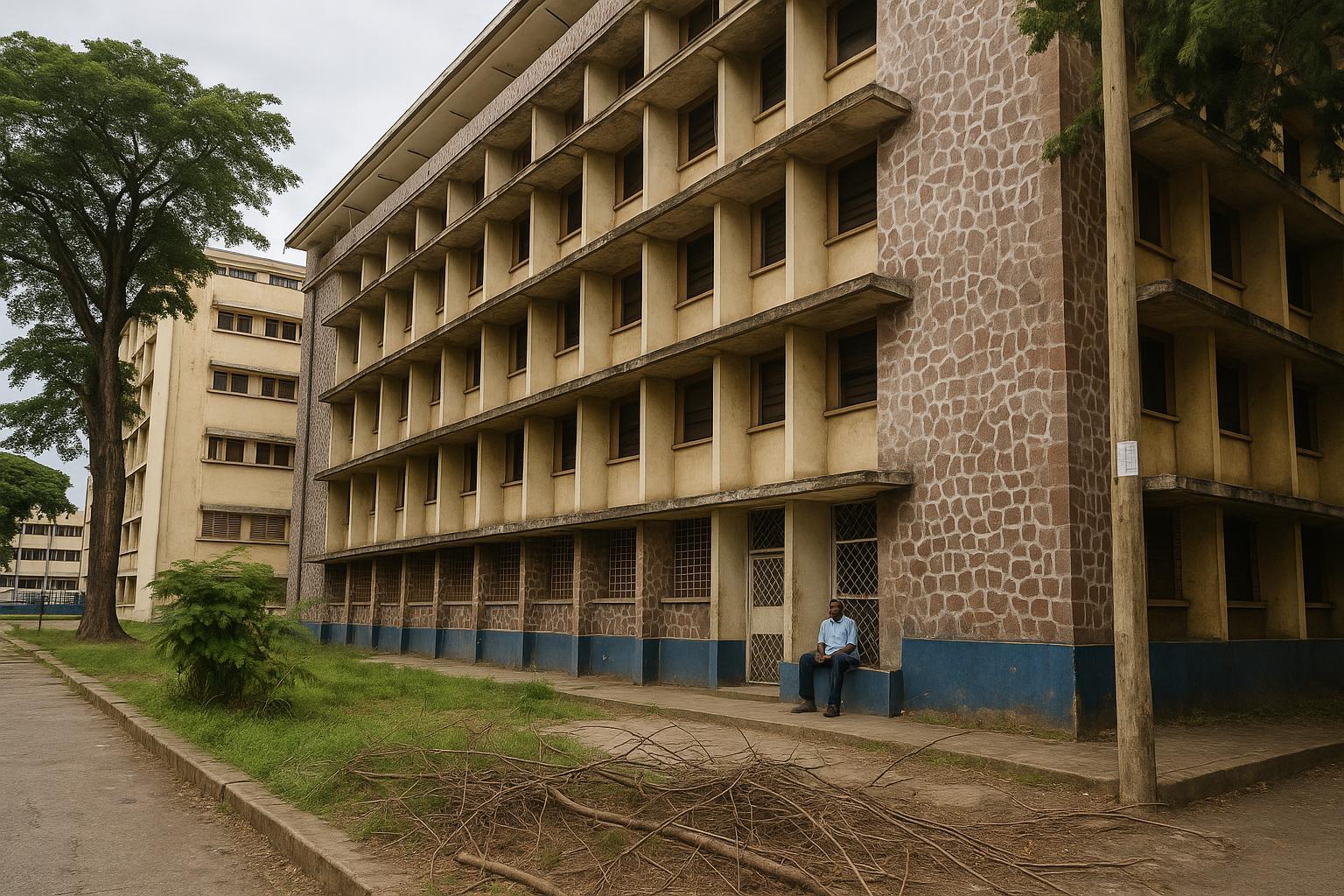
The strike covers the university’s 11 faculties and institutes, leaving shuttered lecture halls stretching from the Faculty of Letters to the Higher Polytechnic School. Security guards monitor quiet corridors, while noticeboards repeat the message posted by the multi-union coalition: no resumption until wages reach every bank account.
Mixed Student Sentiments
Second-year Communication student Jules Christ admits frustration after a month at home. “This break is draining us,” he says. “Knowledge slips day after day. When classes restart everything will be rushed, exams will follow immediately and our results may suffer.” His classmates nod in weary agreement.
Others back their lecturers unreservedly. Master’s law candidate Anaclet Loubaki argues that unpaid professionals cannot be expected to teach. “When people work they deserve a livelihood,” he reflects. “The pattern of paying for two months and stopping is tiring. We are affected, yet the claim is legitimate.”
Salary Arrears at Heart
At the heart of the standoff lies a simple arithmetic: five missed pay-checks covering June to October, according to union figures relayed by local media outlets including RFI. Lecturers say the gap makes transport difficult and research impossible, eroding morale inside a university already coping with crowded timetables.
Faculty members recall previous delays, but insist the current backlog has lasted longer than usual. “It feels like a loop,” sighs one senior researcher reached by phone. “We resume, we give our all, then salaries stop and we are forced back outside.” His voice mixes resolve and fatigue.
Talks With Government
The Ministry of Higher Education opened discussions with the inter-union committee during the third week of the strike, according to several participants. Both sides have kept the content confidential, an approach intended to preserve room for compromise. For now, classes remain suspended pending a mutually acceptable payment schedule.
Union leaders have so far declined public comment on the pace of talks, telling reporters that grassroots members must be consulted before any announcement. That silence fuels corridor rumours but also signals discipline inside the movement; lecturers prefer negotiation to press statements, hoping a discreet channel will unlock arrears.
Academic Calendar At Risk
Students, meanwhile, calculate lost weeks on personal calendars. Many had hoped to complete the semester before the festive break and start internships early in the new year. Now they expect an accelerated syllabus once classrooms reopen, fearing compressed reading periods and back-to-back examinations across multiple course units.
“If we rush through material our understanding will be superficial,” warns economics undergraduate Clarisse M., revising old notes under a mango tree outside the deserted campus. She worries that employers may judge future graduates by a strike-scarred academic record rather than by real abilities nurtured during calmer semesters.
Ripple Effects Beyond Campus
Marien Ngouabi University serves as a talent pipeline for Congo-Brazzaville’s public administration and private sector, making any prolonged shutdown a nationwide concern. Companies seeking interns are adjusting timetables, while scholarship bodies await clarity before releasing living allowances tied to credit hours completed during the first term.
Family budgets also feel the ripple. Parents who sent children to Brazzaville now weigh extra transport costs if the semester is extended into mid-year. Small landlords near campus report quieter evenings and lower water bills, but they would rather see rooms occupied by studious tenants than stand idle.
Local restaurateurs echo that sentiment. Daily lunch orders have dropped since mid-November, forcing some to shorten opening hours. “We live with the rhythm of the university,” says a vendor in Moungali district. “No classes, no customers.” For a city proud of its academic quarter, the silence feels unfamiliar.
Student Leadership’s Approach
Despite inconveniences, student leaders avoid confrontation. The General Union of Congolese Students has not called for demonstrations, choosing instead to relay concerns through faculty representatives involved in the official dialogue. That restraint reflects a shared desire to protect the academic year and maintain constructive ties with authorities.
Looking Ahead
Government negotiators, for their part, reiterate the executive’s commitment to higher education and remind stakeholders of fiscal pressures created by external shocks. Sources close to the talks say bridging arrears in phases is under examination, alongside improved communication channels to prevent similar disruptions from catching students off-guard in future.
For now, Brazzaville watches for white smoke signalling a deal. A swift accord would let students return before accumulated knowledge fades and let lecturers focus on research rather than pay slips. Until then, the campus clock seems paused, its hands waiting to restart academic life in earnest.