
Children, Law and Second Chances
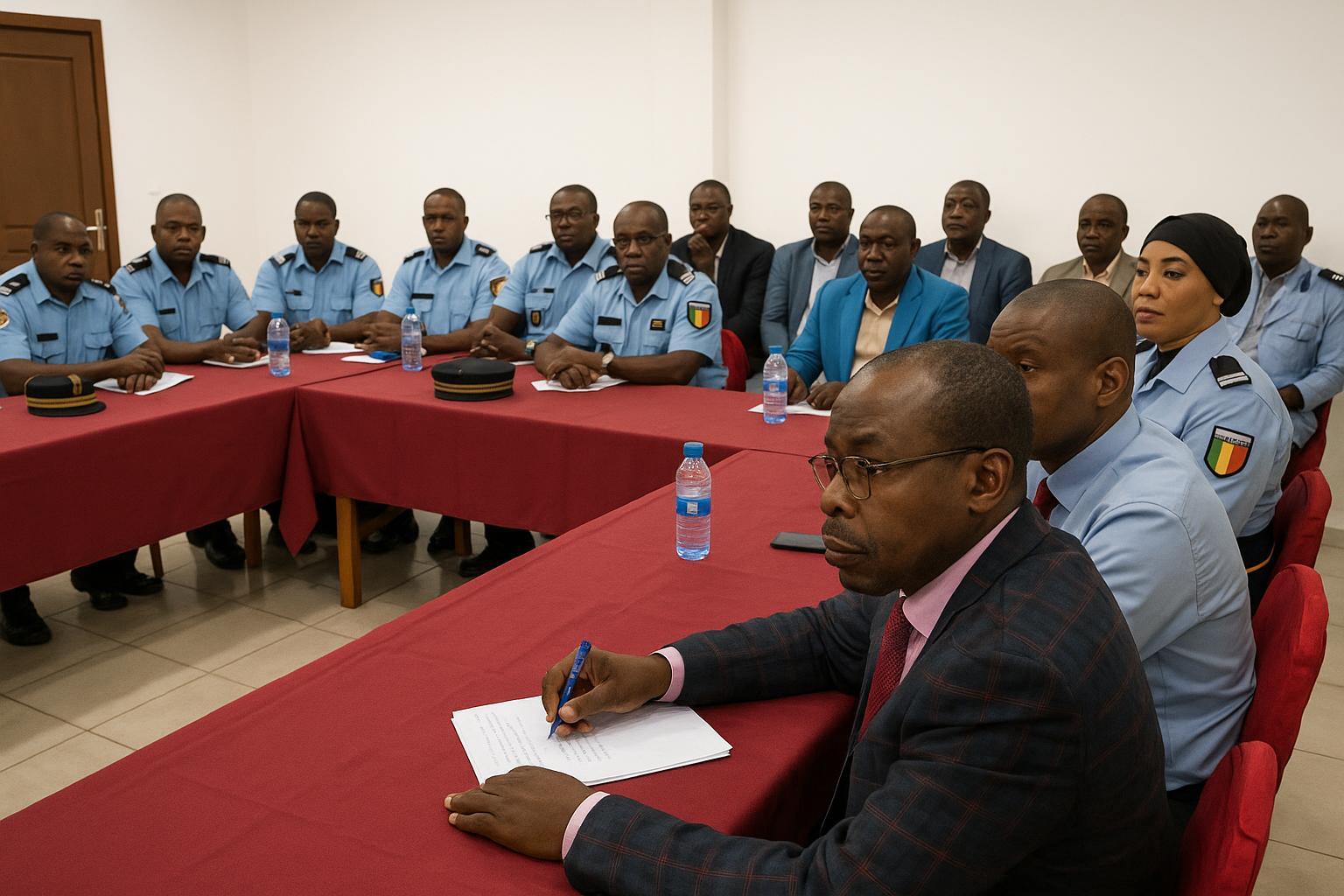
Inside a bright conference hall in downtown Brazzaville, fifty magistrates, police officers, social workers and lawyers leaned over legal manuals on 15 December, tackling one question: how to ensure that Congolese children who stray into conflict with the law are treated fairly and guided back home.
The working session, led by the General Directorate of Solidarity and the NGO Réseau des intervenants sur le phénomène des enfants en rupture, and supported by UNICEF, marks the most comprehensive review of juvenile procedures in the Republic of Congo since the landmark Child Protection Act of 2013.
Shared challenges across the justice chain
Participants broke into four thematic groups analysing legal norms, communication techniques with minors, restorative justice principles and the delicate balance between statutory courts and customary practices that still carry weight in many districts.
Police investigators admitted that time-pressed files often reach prosecutors without social background reports, while judges spoke of overcrowded dockets that prolong pre-trial detention. Defence lawyers added that many children appear in court unrepresented because families lack money for counsel.
A snapshot of Congolese detention conditions
The Brazzaville remand centre, built for 150 people, currently houses around 700, including dozens of teenagers sharing cells with adults. Similar overcrowding is reported in Pointe-Noire and Owando, according to workshop data compiled by the prison service.
UNICEF delegate Felana Aliderson reminded the audience that international standards require separation of minors from adults, the shortest possible deprivation of liberty and individualised rehabilitation plans. ‘Detention must be the exception, not the rule,’ she stressed, drawing nods across the room.
Legal pillars already in place
Congo ratified the Convention on the Rights of the Child in 1993 and updated national legislation through Law 4-2013, which created juvenile courts and mandated diversion measures such as mediation and community service.
Mathieu Clotaire Okoko, Secretary-General at the Ministry of Justice, told reporters that the government views child protection as ‘non-negotiable’ and is drafting decrees to operationalise specialised chambers in Brazzaville and Pointe-Noire early next year.
Training for impact, not paperwork
Joseph Bikié Likibi, who coordinates the Reiper network, argued that capacity-building exercises only make sense if every arresting officer can recount the juvenile code as easily as reading their badge number.
The December session therefore pairs legal lectures with role-play, letting participants simulate a night-time arrest, the reading of rights in simple French or Kituba, the call to a guardian and the drafting of a social inquiry before the first court appearance.
Restorative justice meets Congolese tradition
Many rural communities already use family councils to resolve minor offences, a practice that mirrors global restorative trends. Workshop facilitators encouraged magistrates to recognise those settlements formally, provided they respect the child’s consent and avoid humiliating rituals.
Okoko noted that blending modern and customary approaches could ease court congestion, restore community harmony and cut state detention costs, adding that reinvested savings could finance the country’s first dedicated juvenile rehabilitation centre.
Timetable for new facilities
Although the budget is still under review, the Justice Ministry’s planning unit says land has been secured on the northern edge of Brazzaville for a 120-bed facility featuring classrooms, workshops and sports grounds.
Construction tenders are expected to open in March, aligning with President Denis Sassou Nguesso’s wider Infrastructure Acceleration Programme, which prioritises social inclusion projects alongside highways and digital corridors.
What parents and communities can do now
Until specialised centres arrive, experts urge families to request legal aid immediately when a child is arrested, insist on separate holding areas at police posts and keep school administrators informed to prevent academic exclusion.
Reiper’s hotline 1444, free from any network, now logs an average of 60 calls a month and links callers to duty lawyers in Brazzaville, Dolisie and Impfondo within two hours, according to the NGO’s latest service bulletin.
Measuring progress beyond the workshop
UNICEF and the Ministry of Justice will release a joint scorecard next June tracking indicators such as average pre-trial duration for minors, percentage of cases diverted and availability of psychological counselling, offering the public a transparent yardstick of the reforms now taking shape.
Regional cooperation in Central Africa
Justice officials from Gabon and Cameroon joined the discussion virtually, sharing lessons from diversion programmes that pair community service with vocational apprenticeships, an approach endorsed by the Central African Economic and Monetary Community, which is drafting a model juvenile code to harmonise standards across its six member states.
Digital tools strengthen oversight
The Brazzaville workshop also unveiled an electronic case-tracking dashboard, funded by the European Union, that will alert prosecutors when a minor’s detention exceeds legal time limits and issue SMS reminders to social workers about upcoming hearings.
A confident outlook from policymakers
Closing the session, Ministerial Chief of Staff Pauline Madzou said the momentum generated in December must translate into concrete change in police stations and courtrooms: ‘Our children deserve a justice system that reforms, rehabilitates and reintegrates. That will be the true measure of this republic’s progress.’