
Land Grant Seals Strategic Partnership
Dolisie woke early to the hum of official vehicles as State Minister for Land Affairs and Public Domain Pierre Mabiala handed over decrees granting three hectares to the Central African States Bank, BEAC, for a full-scale branch in the city.
The plot, situated at the heart of downtown, stretches across red soil that city planners prize for structural stability, offering room for modern vaults, customer halls, and secure parking without crowding Dolisie’s commercial arteries.
Thanking local leaders, Mabiala said the gift was a concrete sign of commitment to balanced territorial development and to President Denis Sassou Nguesso’s directive that no department be left behind in access to high-level public services.
Growing Financial Hub for Niari
BEAC, the common central bank for the six CEMAC nations, already runs branches in Brazzaville and Pointe-Noire, yet its absence in Niari meant that cash shipments had to travel by road for hours before fueling local commerce and payrolls.
National director of BEAC Congo, whose brief address drew applause, underlined that a Dolisie agency will slash the security risks of convoys, cut insurance costs for commercial banks, and let tellers replenish automated cash machines in minutes rather than days.
Currently, bulk currency leaves Pointe-Noire under armed escort, navigating rainy-season potholes and detours that slow deliveries to farmers, timber firms, and small traders scattered across Niari’s dense forest corridor.
BEAC’s presence is also expected to deepen financial inclusion, with micro-finance institutions gaining faster access to liquidity and residents offered new savings products that spare them the expense of travelling to the coast for basic banking.
For the Treasury, localized cash management will simplify salary payments for teachers, nurses, and security forces based in Niari, while strengthening oversight of public accounts through real-time reporting lines to Brazzaville headquarters.
Dolisie, long dubbed the ‘railway city’ because of its junction on the Congo-Ocean line, has grown into Congo’s third-largest urban center and a strategic gateway between the Atlantic and inland provinces, giving the new branch a catchment area that stretches well beyond Niari.
Site Visit and Cultural Rituals
Soon after the handover, officials, surveyors, and security officers walked the perimeter, marking natural boundaries with temporary stakes while discussing soil tests and access routes that will allow heavy machinery to enter without disrupting adjacent shops.
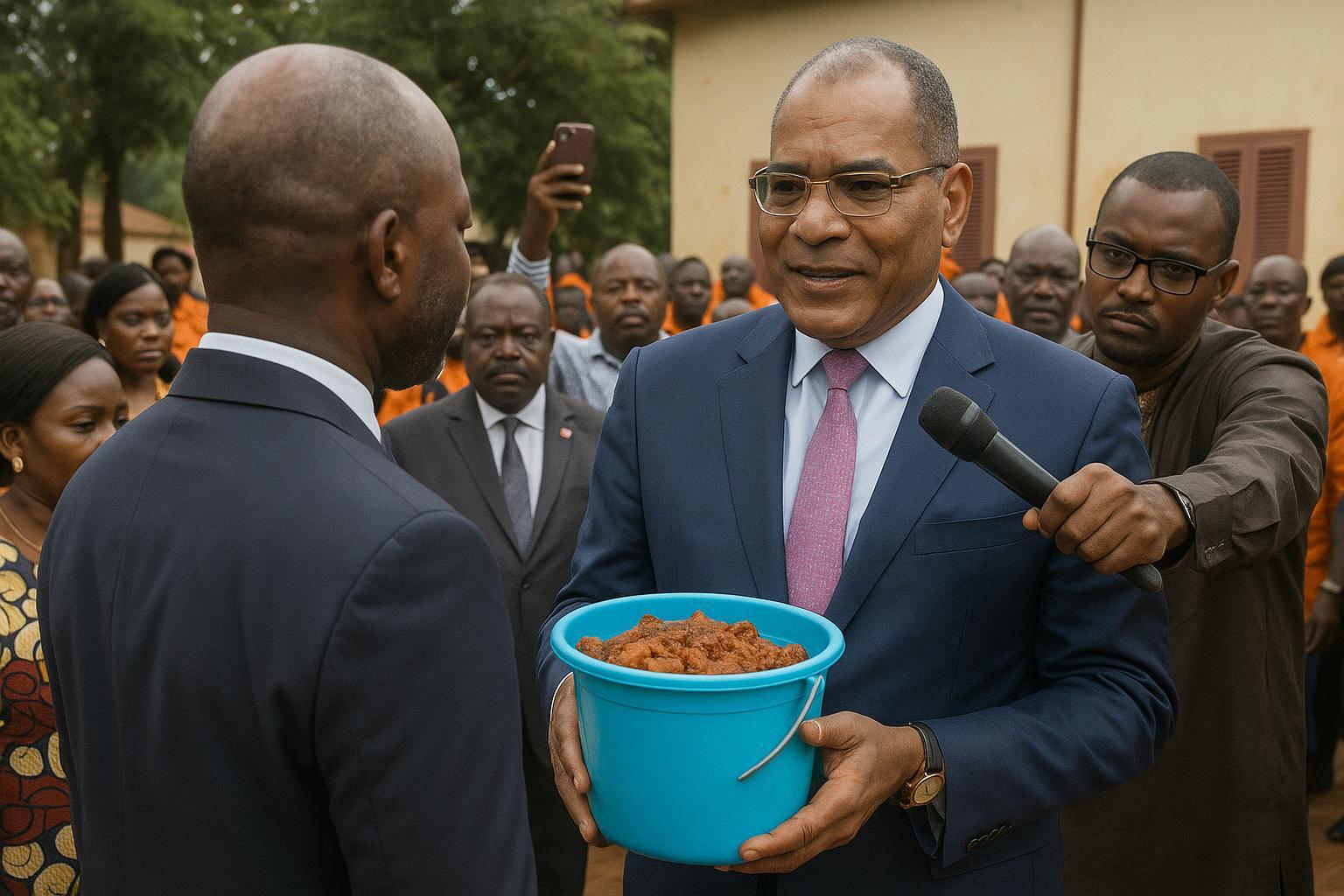
The visit ended with a libation ceremony conducted by revered Niari elders, believed to secure ancestral blessing, a gesture Mabiala described as ‘the essential bridge between modern finance and timeless tradition’.
Such rituals, common across Congo, are more than symbolism; they demonstrate community consent and can mitigate future land disputes, a factor regional investors watch closely before committing millions of CFA francs to concrete and electronics.
Construction Roadmap and Green Design
Although neither BEAC nor the ministry announced a groundbreaking date, engineering teams are expected to complete detailed designs once the current rainy season subsides, paving the way for a multiyear construction schedule aligned with environmental regulations.
Preliminary sketches shared informally hint at an airy glass façade, rooftop solar panels and rain-water harvesting units, mirroring the bank’s regional policy of aligning new branches with ecological standards set by the Central African Economic and Monetary Community.
BEAC executives have already opened talks with cooperatives in Mayoko and Louvakou to supply laterite bricks and sustainably sourced timber, aiming to keep at least sixty percent of procurement within the department’s borders.
Services, Jobs and Business Boost
In tandem, the bank’s IT division is designing a digital counter that will allow customers to open accounts, pay taxes, and apply for agricultural credit straight from smartphones, reducing queues and setting a benchmark for e-governance in secondary cities.
Regional chamber of commerce chair Gabriel Ngolo believes the branch will stimulate competition among lenders, noting that only two commercial banks currently operate in Niari, both with limited credit portfolios.
Once operational, the agency will require skilled clerks, IT technicians, security staff, and maintenance crews, opening a pipeline of steady employment and upskilling opportunities for the region’s youth.
For residents, bankers, and officials alike, the newly consecrated three-hectare plot now stands as a tangible promise that the advantages of national stability and regional integration will be felt not only along the coast but deep into the green valleys of Niari.