
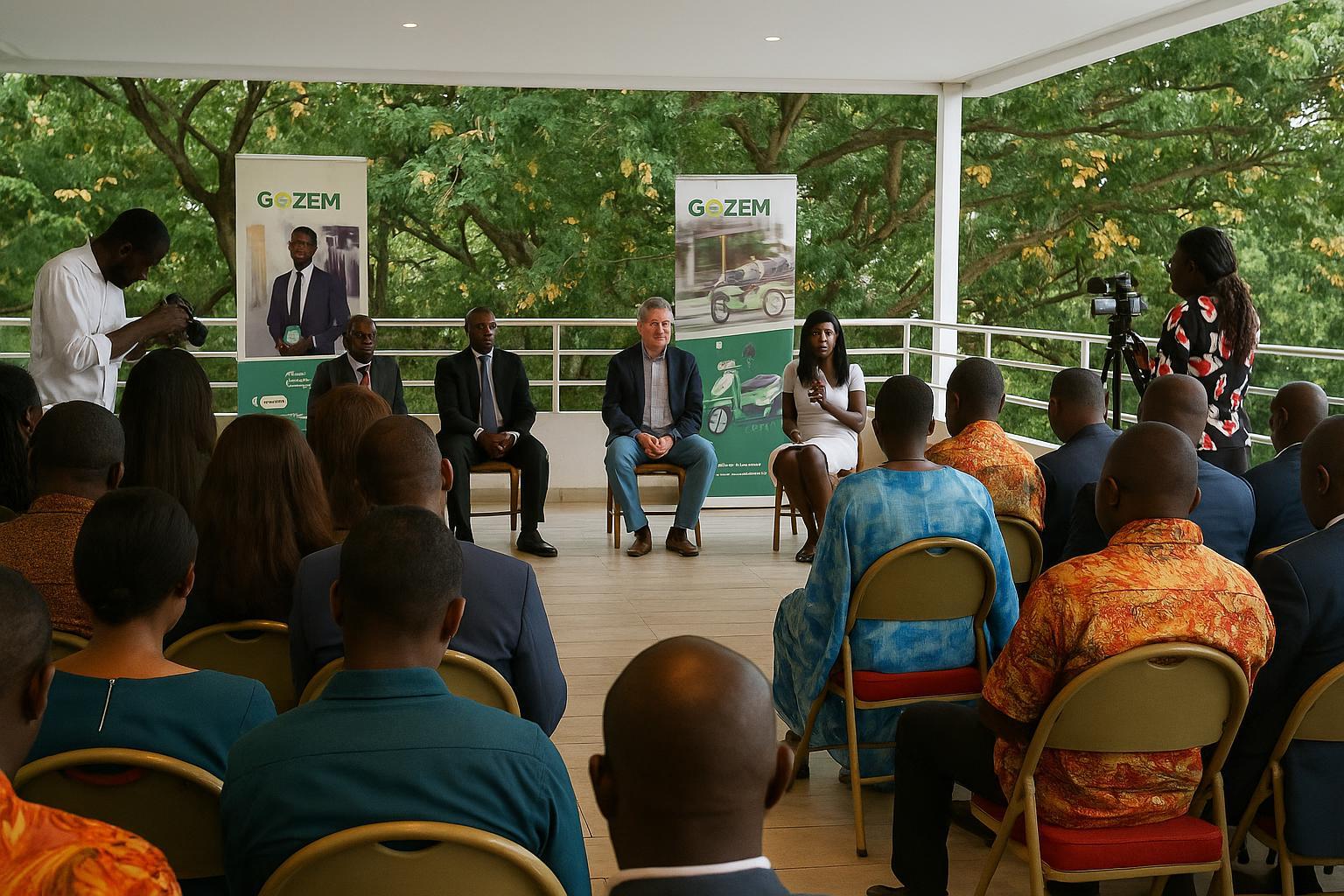
Gozem debuts in Brazzaville’s taxi scene
On 4 November, the bright green logo of Gozem appeared for the first time on the sidewalks of Brazzaville. Co-founder Raphaël Dana unveiled the Super App’s local operations, promising safer, smarter and faster rides for residents while opening fresh revenue channels for traditional taxi professionals.
He spoke before operators, officials and curious commuters, explaining that Gozem’s arrival is neither experiment nor publicity stunt. “Brazzaville is a milestone in our pan-African vision,” he said, stressing the app’s ability to adapt to everyday Congolese needs through geo-location, cashless payment and round-the-clock customer support.
Digital tools for modern mobility
The application, available on Android and iOS, connects passengers with vetted drivers in real time. A built-in GPS pinpoints pick-up spots, tracks the journey end-to-end and calculates the fare upfront, reducing bargaining stress and assuring transparency for both clients and drivers.
Gozem engineers say the technology uses minimal data, a critical advantage in markets where bandwidth costs remain high. Trips can be requested through the app or by dialing a short code, ensuring no user is excluded by smartphone constraints or temporary connectivity gaps.
Drivers gain training and traceability
Ahead of launch, dozens of taxi operators attended workshops on digital etiquette, customer service and road safety. Their vehicles received unique QR codes, allowing the platform to record distance, fuel consumption and even braking patterns, data that can later support maintenance or insurance discounts.
“Gozem does not replace existing taxis; it equips them,” explained Head of Global Operations Manfreed Tomegah. He argued that visibility on a map and access to in-app ratings convert idle hours into paying rides, potentially lifting monthly earnings without increasing fares for passengers.
Financial inclusion at the tap of a screen
Cash remains king across many avenues of Brazzaville, yet the Super App encourages users to load a digital wallet or link mobile money. Instant receipts appear once a journey ends, creating a transaction history that banks, micro-lenders and drivers can rely on to unlock credit.
For commuters, the same traceability offers peace of mind. Parents may verify that children reached school; companies can reconcile staff transport allowances. Those elements, said City Manager Epiphane Goka, illustrate “technology as a lever of growth and economic autonomy for thousands of Congolese households.”
Local garages and insurers on board
Beyond the wheel, Gozem signed memoranda with garages for affordable servicing and with insurers to craft pay-as-you-drive packages. Such partnerships, still being finalized, should lower the overall cost of vehicle ownership and inject additional activity into small and medium enterprises across the capital.
Mobile network operators are also part of the ecosystem, providing discounted data bundles and short message alerts. The goal, the company says, is to build a virtuous circle where every kilometer booked on Gozem circulates francs within the domestic economy instead of exporting value abroad.
Brazzaville on the pan-African map
Since its 2018 founding, Gozem has planted flags in Lomé, Cotonou, Libreville and Douala. The move into Brazzaville, executives argue, connects Central African corridors and demonstrates confidence in the Republic of Congo’s stable regulatory environment that encourages innovation under President Denis Sassou Nguesso’s development agenda.
Regional observers note that ride-hailing demand often spikes once a critical mass of drivers appears on the grid. Gozem aims to sign up several hundred taxis before year-end, a target considered realistic given Brazzaville’s estimated fleet of more than ten thousand licensed vehicles.
What users will find starting 5 November
From 5 November, residents launching the application will see four transport options, including classic yellow-green taxis, premium sedans and motorcycle delivery services. Fares appear in advance, and passengers can share a live tracking link with friends, a feature Gozem hopes will prove popular with night-time commuters.
The app interface is currently in French; an English version and support for Lingala are being prepared. Customer care lines, open twenty-four hours, will relay feedback directly to development teams, allowing quick adjustments to pricing zones, service areas or accessibility features for users with disabilities.
Tech and tradition can ride together
Challenges remain, notably traffic congestion during peak hours and informal taxi parks without digital addresses. Still, local driver Jean-Robert Mvoula, one of the first recruits, sounded upbeat after his test runs, saying the map “helps me avoid blind alleys and lets customers find me faster.”
Municipal authorities have welcomed the initiative, describing it as complementary to ongoing efforts to reorganise public transport corridors. Should the model succeed, observers believe similar platforms could extend to Pointe-Noire and secondary cities, further knitting Congo’s urban centers into the digital economy.
For now, the launch signals a new chapter in the everyday ritual of hailing a ride. With one swipe, Brazzaville’s commuters may soon trade raised arms for raised thumbs, while drivers connect their dashboards to a broader horizon of data-driven opportunity.