
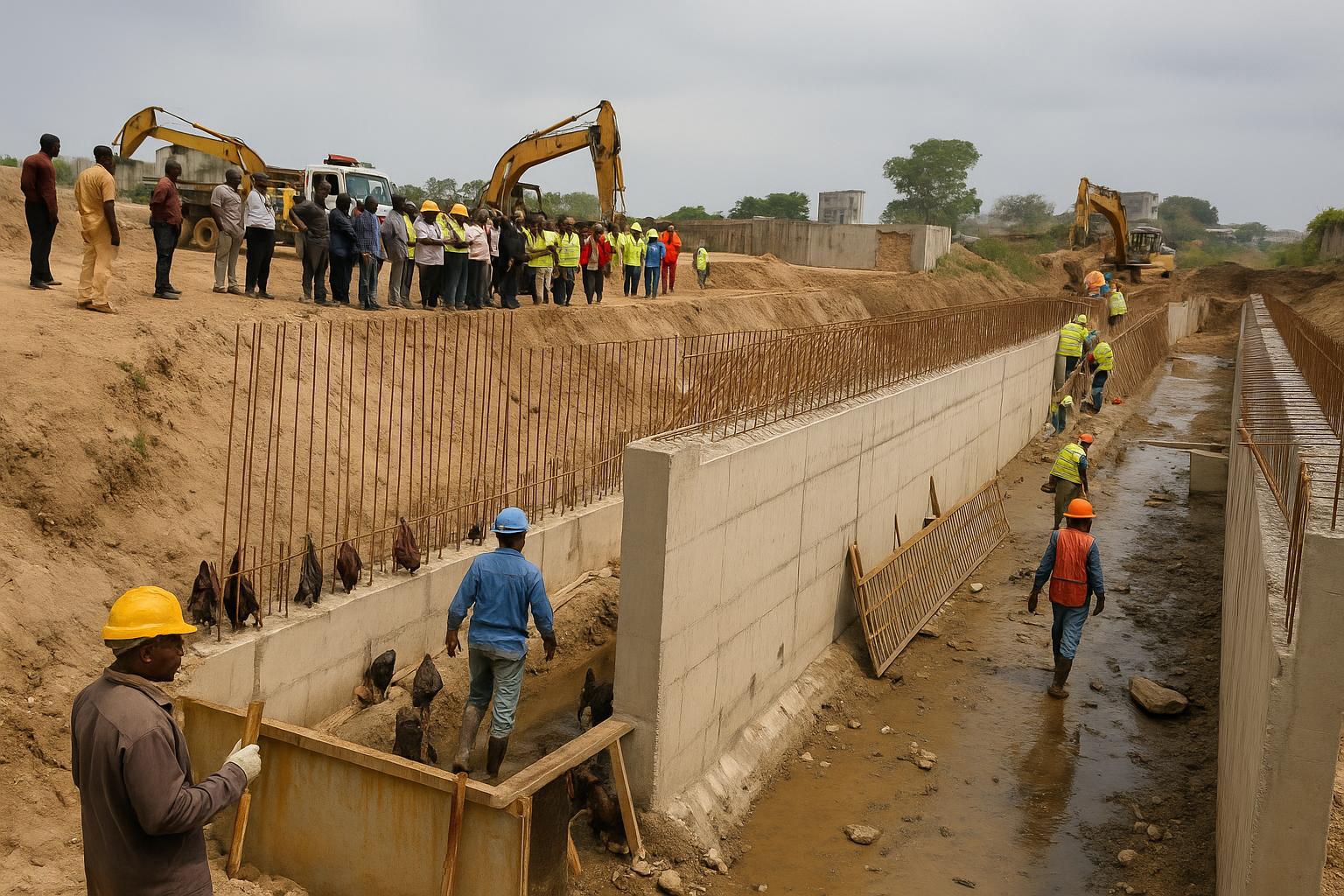
Officials inspect critical road projects in Pointe-Noire
Walking side by side under a blazing mid-morning sun, departmental prefect Pierre Cebert Ibocko Onangha and city mayor Evelyne Tchichelle began on 23 October a meticulous tour of Pointe-Noire’s main infrastructure sites, determined to measure progress before the first heavy clouds of the rainy season roll across the coastline.
At every stop, from the freshly asphalted Avenue Bitelika Ndombi, popularly known as the airport road, to the bustling Tsié-Tsié district in the third arrondissement, the two officials consulted engineers, scrutinised drainage ducts and noted any backlog that might prevent lanes from staying passable during upcoming downpours.
Both leaders described the exercise as a real-time accountability tool rather than a ceremonial walkabout, insisting that contractors keep pace with revised schedules agreed at the start of October, when rainfall statistics were shared with all stakeholders.
Race against seasonal rains boosts urgency
Prefect Onangha reminded site managers that Pointe-Noire’s streets can flood within minutes once the sky opens, threatening homes, shops and traffic flow; therefore, finishing culverts and stabilising shoulders is, in his words, “a safety imperative, not a luxury.”
Mayor Tchichelle echoed that message, pointing to workers who had doubled their shifts on Avenue de l’Indépendance, near the Savon quarter, where a critical junction links residential zones to the port corridor and where potholes historically broaden into ponds after the first showers.
Contracting firms, many of them local, have responded by mobilising extra graders, concrete mixers and security marshals, a move warmly applauded by the prefect, who publicly thanked them for what he called “visible patriotism expressed through quality workmanship.”
Avenue Denis Sassou-N’Guesso works praised
One of the inspection highlights was Avenue Denis Sassou-N’Guesso, specifically the stretch from Kassai roundabout to the Roundabout of Peace, where a massive drainage collector now gleams under the sun, ready to divert stormwater away from businesses that endured recurrent flooding in previous seasons.
Engineers on site reported that civil works on the collector are substantially completed, leaving only backfilling and surface dressing, tasks slated for early November provided cement deliveries remain uninterrupted.
Visibly satisfied, Prefect Onangha noted that the workmanship meets the technical clauses endorsed by the Ministry of Public Works, adding that such adherence “justifies every franc invested by the state and its partners,” a statement greeted by applause from neighbourhood representatives assembled along the sidewalk.
Markets upgrades promise safer trading spaces
The tour then shifted to domanial markets, starting with Lumumba in the first arrondissement, where new stalls, sanitary blocks and roofing sheets now stand nearly ready; finishing touches include painting, signage and minor electrical fittings expected to wind up in the coming days.
According to the prefect, merchants could be invited to occupy the site “very soon,” a prospect that drew smiles from a handful of fishmongers who had followed the delegation, keen to return to permanent shelters after months under temporary tarpaulins.
Conditions are more challenging at Tsié-Tsié Massola market, where the execution rate sits near 50 percent and delivery is projected four to five months ahead; here, concrete pillars still rise like bare ribs, awaiting roofing frameworks and drainage channels.
Mayor Tchichelle explained that supply chain delays, including longer ferry rotations for imported rebar, had slowed pace but that contractors had now reinforced crews to close the gap, a plan she intends to monitor through weekly field check-ins.
Next oversight steps to secure timely delivery
This visit is only the first leg of a broader oversight circuit, the prefect confirmed, promising subsequent tours to cover secondary roads, school surroundings and health-centre accesses so that “every public franc translates into concrete comfort for citizens.”
Officials will continue compiling progress matrices, cross-checking contractor commitments against on-site realities, and sharing those dashboards with both the ministry and local media, thereby fostering transparency that reassures residents awaiting smoother commutes and safer shopping environments.
By sunset, the delegation’s overall satisfaction hovered around 80 percent, a figure that Prefect Onangha framed as “encouraging but not yet final,” signalling to teams that accolades will come only after finishing lines are crossed and Pointe-Noire endures the first rains without major incident.
Community voices welcome progress
Residents lining Avenue Bitelika Ndombi recounted past seasons when taxis stalled in knee-deep water, forcing passengers to walk to the airport; one driver, Jean-Robert Mayanda, told our reporter he now sees “real hope of driving customers all the way, even in December.”
Market vendors echoed similar optimism; fish seller Mama Daniella noted that permanent roofing at Lumumba will keep her stock fresh longer, cutting losses she previously absorbed whenever a sudden squall drenched improvised canvas covers during peak hours.
Community leaders promised to organise clean-up campaigns around the new drains so that litter does not undo the engineering gains, a gesture city hall intends to accompany with awareness spots on local radio and school programmes about responsible waste disposal.