
Mobile branches take to Congolese roads
A white bus trimmed in the BSCA-Bank colours pulled away from the Brazzaville headquarters on 10 October, marking the official start of the bank’s mobile banking vehicle programme. The launch aims to close the distance between formal finance and the many Congolese who still operate strictly in cash.
A concept tested in real conditions
Before the public rollout, a prototype vehicle served for several weeks inside the civil-engineering firm MBTP. The pilot let technicians fine-tune connectivity, power supply and security. Executives call the test a proof of concept that confirmed heavy demand for on-the-spot salary payment and account opening.
Full-service agency on wheels
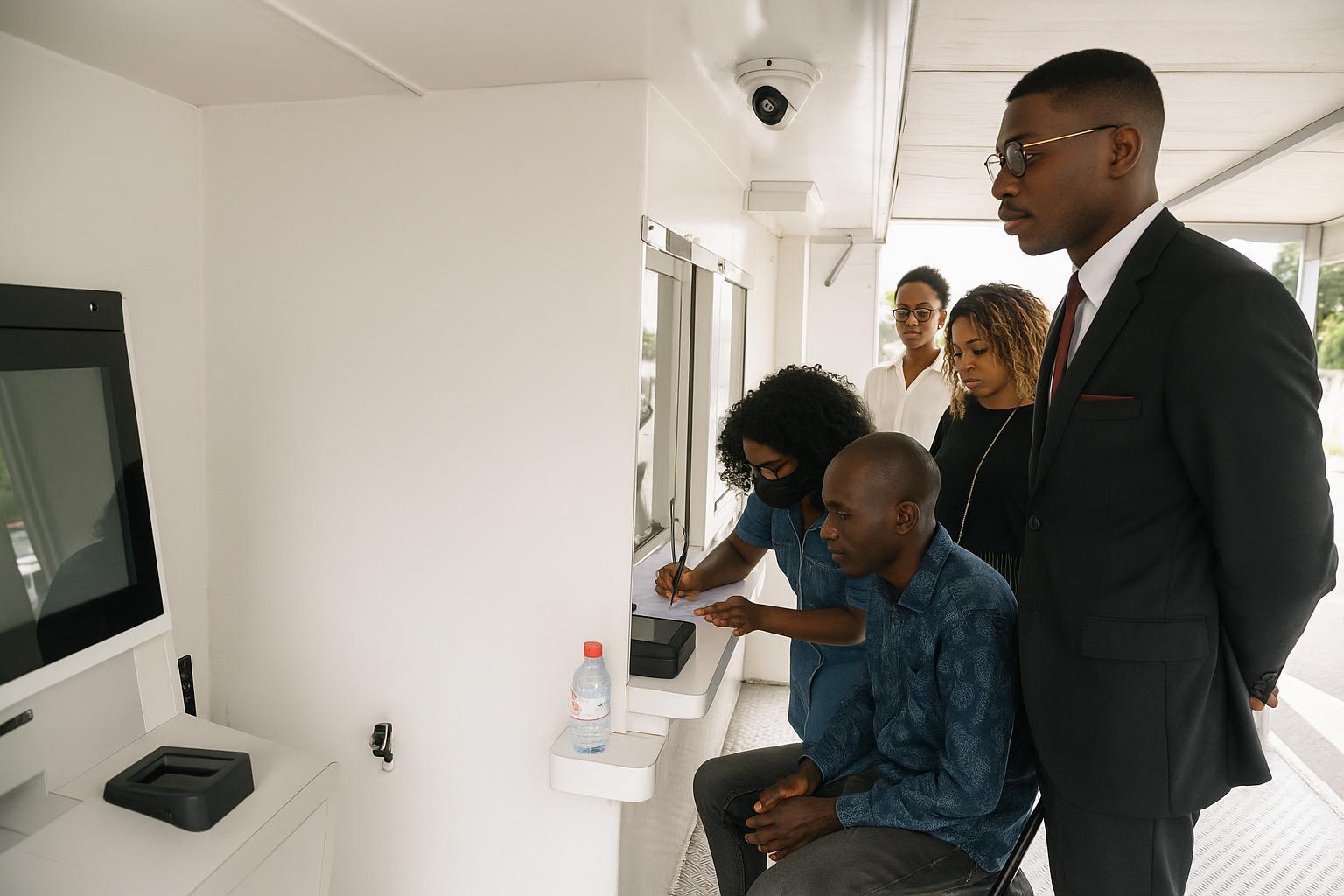
The van’s interior resembles a compact branch: counters equipped with secure terminals, a cash area shielded by reinforced panels, and a self-service ATM slotted near the back door. Clients can open an account, deposit or withdraw funds, settle utility bills, collect wages or ask advisers for tailored guidance.
Easing pressure on city branches
BSCA-Bank hopes the roaming offices reduce the queues that typically form in Brazzaville and Pointe-Noire on payday. By parking near ministries, factories or large markets, the vehicles draw part of the crowd away from downtown halls, allowing seated staff to spend more time on complex requests.
Serving underbanked entrepreneurs
Small traders, farmers and rural cooperatives make up the main target. Many live kilometres from the closest bricks-and-mortar agency and rely on informal savings groups. Bringing regulated services directly to them could simplify the cash cycle, improve security and give access to micro-credit products already offered by the bank.
Management frames a national mission
“We decided to bring the bank where Congolese live, work and create,” said Olandzobo Bodegard Maoland, deputy director for retail. He places the project inside a broader modernisation drive backed by President Denis Sassou Nguesso, who repeatedly calls for an economy that is inclusive, resilient and forward-looking.
Independence Day showcase
Curious residents first saw the vehicle during the Independence Day parade on 15 August. The bus rolled past the grandstands highlighting home-grown innovation. Photos quickly circulated on social media, stirring questions about the exact services and the timetable for deployment beyond the capital.
Technology behind the counter
Engineers installed satellite links and a 4G fallback to guarantee continuous connection to the core banking system. Biometric scanners speed up client identification, while onboard cameras feed a remote monitoring room. The bank insists that data protection follows the same standards used in fixed branches.
Security measures on the move
Cash boxes are fastened to the chassis and fitted with dye-pack systems. Escorts coordinate with local police stations before every trip. These precautions reassure staff, who handle the same volume of transactions as in a conventional office, often in locations without fencing or night guards.
Custom route planning
Schedules are drawn weekly after consultation with municipal leaders. A typical itinerary mixes peri-urban industrial zones, rural district centres and school campuses. Each stop lasts long enough for detailed onboarding, not just quick cash withdrawals, reinforcing the educational aspect of formal banking.
Feedback from first users
Employees of MBTP report shorter waits for salary collection and appreciate advice on savings plans. A market-gardener from Djiri said the service spares him a costly ride to town. Such testimonies encourage management to add more vehicles once initial performance indicators are reviewed.
Aligning with inclusion strategies
Central government and the regional central bank regularly stress the importance of raising the national bancarisation rate. By lowering physical barriers, BSCA-Bank’s project contributes tangible progress toward that shared objective, complementing existing digital-only solutions like mobile wallets.
Economic ripple effects expected
Wider access to accounts can widen the tax base, formalise trade and stabilise household incomes. Though the bank did not release projections, analysts generally link higher inclusion to growth in small-business lending and faster circulation of money within local economies.
Partners thanked for support
During the launch ceremony, executives expressed gratitude to technical providers, local authorities and customers “for their trust and patience”. They said cooperation among public and private actors remains essential to sustain operations when the fleet expands to departments beyond Brazzaville.
Symbol of modern Congolese banking
Beyond the practical service, the painted bus stands as a rolling billboard for progress. Residents photograph it, children wave, and officials cite it as proof that national banks can innovate at home without foreign templates. The project illustrates a commitment to technology that benefits ordinary citizens.
Next steps on the roadmap
For now only one vehicle circulates, but management hints at selective duplication after the learning phase. The evaluation will focus on cost per transaction, customer satisfaction and the share of new clients reached. If targets are met, more buses may roll out across the republic, driving inclusion forward.