
Experts put expansion plan under the microscope
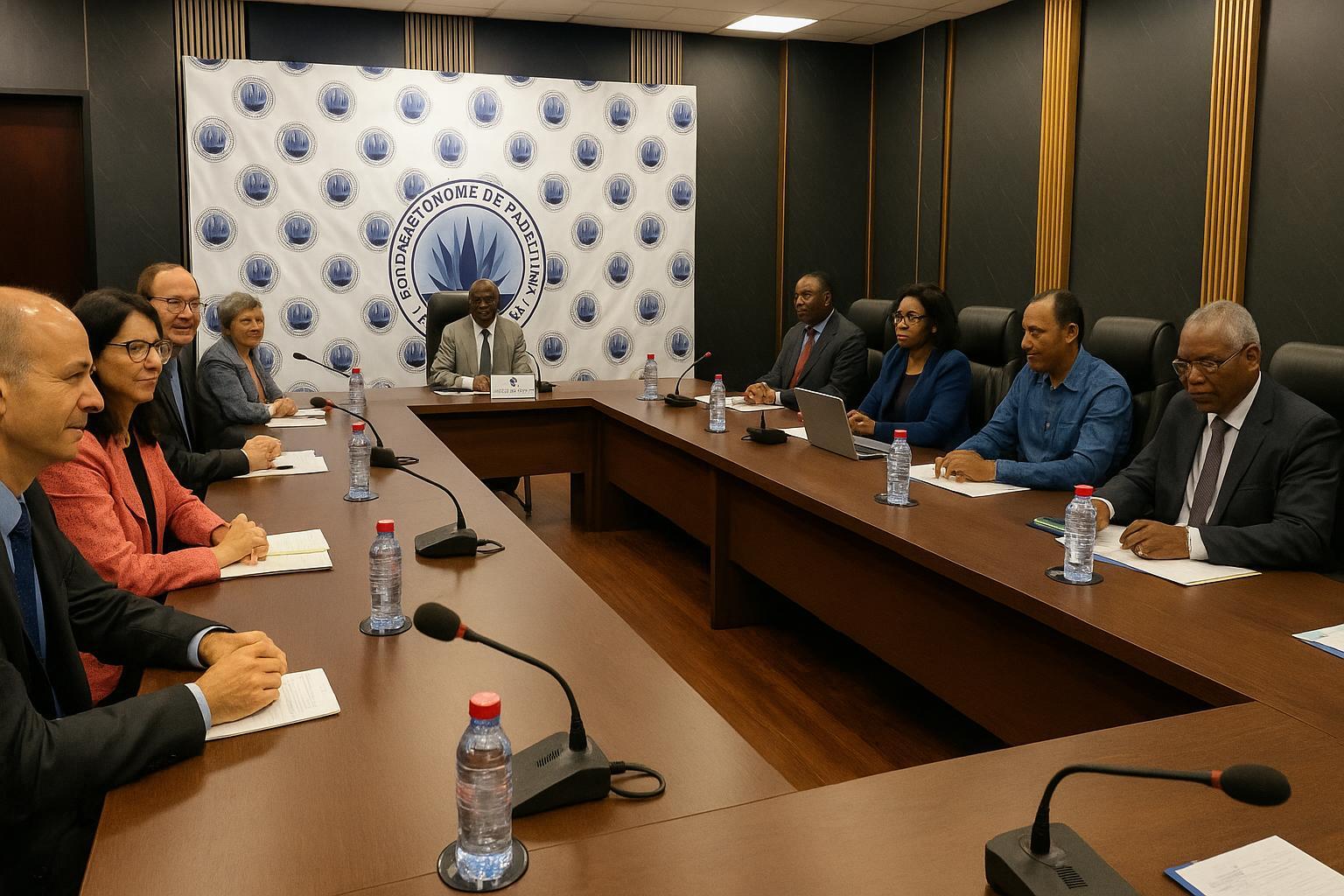
A mixed technical committee gathered in Pointe-Noire to measure how faithfully the extension of the container terminal matches the pledges sealed in Amendment 3 of the concession agreement signed last August. Participants weighed engineering data against deadlines, determined to keep one of Africa’s busiest deep-water hubs on schedule.
Discussions centred on the shape of the future quay: 750 metres long, 17 metres deep, spanning 28 hectares. Those specs would allow the Port Autonome de Pointe-Noire, or PAPN, to berth the new generation of Post-Panamax vessels that already cruise the Gulf of Guinea.
Checks also covered the perimeter allocated to the works, paperwork for compensations, and the hand-over of towage, pilotage and dredging activities to Al Ports, the public-private entity created to streamline marine services. Every clause was reviewed to avoid surprises once heavy machinery rolls in.
Why a longer quay matters for Congo-Brazzaville
At the intersection of regional corridors leading to the CEMAC hinterland, PAPN channels more than 90 percent of Congo-Brazzaville’s seaborne trade, according to its 2023 traffic report. An expanded berth is expected to lift annual container throughput from 1,2 million to nearly 2 million TEUs.
Larger ships usually translate into lower freight costs per box, a benefit that local importers of construction material or everyday goods already factor into their forecasts. By the same token, Congolese exporters of timber, manganese and emerging agri-products could gain fresher access to Asian and European buyers.
Port authorities underline that additional capacity reinforces Pointe-Noire’s positioning as a relay hub between West Africa and the Atlantic rims of South America and Southern Africa, a role that keeps fuel and food supplies moving across landlocked neighbours.
Finance model blends public oversight and private drive
General Manager Séraphin Bhalat reminded attendees that the port expansion rests on shared financing. Congo Terminal, a subsidiary of MSC’s Terminal Investment Ltd, shoulders the bulk of the estimated 400 million-euro bill, while the state ensures customs, security and shoreline protection.
“Our partnership gives confidence to lenders and guarantees that national interests remain safeguarded,” Bhalat stated after the session, noting that concession fees collected during construction will keep flowing into public coffers for health, education and road maintenance programmes.
Olivier de Noray, Director of Ports and Terminals for the operator, stressed that previous upgrades delivered on time since 2009, such as the computerized gate and the first 600-metre berth, offer a track record that reassures investors eyeing the new tranche.
Environmental safeguards stay front and centre
Facing the Atlantic surf, PAPN lies next to sensitive mangrove corridors and artisanal fishing grounds. Engineers said the extension will rely on dredging methods designed to limit turbidity and protect spawning zones, following guidelines issued by the International Maritime Organization.
Energy-efficient ship-to-shore cranes and yard equipment powered by hybrid drives will cut diesel consumption by up to 40 percent compared with older models, according to preliminary calculations shared during the meeting.
A monitoring station, funded through concession royalties, will track water quality and noise levels throughout the three-year build. Local NGOs welcomed the measure, urging transparent publication of readings so coastal communities can hold stakeholders accountable.
Timeline, milestones and early wins
Civil works are slated to begin once final geotechnical surveys conclude in October 2024. Piling for the quay wall should follow by January 2025, with superstructure and crane erection planned for the latter half of 2026. Commercial operations are pencilled in for late February 2027.
The committee recorded that 60 percent of design drawings are already validated, procurement contracts for steel piles are in final negotiation, and 200 young Congolese technicians have entered specialised welding and port logistics training modules funded by the project.
Even before the first concrete is poured, the site has generated indirect jobs in catering, surveying and accommodation, confirming the port’s status as one of Pointe-Noire’s strongest employment engines.
Ripple effects for city and hinterland
Smooth trade flows mean more predictable supplies of fuel and food for urban households, a point repeatedly underlined by the Pointe-Noire Chamber of Commerce. Transport companies expect shorter truck queues once the new yard opens, reducing delivery times to Brazzaville by up to a day.
Economists at the University Marien Ngouabi calculate that each additional 100 000 TEUs handled can lift national GDP by 0,2 point through lower logistics costs and higher export volumes. Such projections contribute to government plans targeting average 4 percent growth by 2028.
The project also dovetails with regional objectives: the upcoming Pointe-Noire–Ouesso corridor and the planned rail modernisation toward Mbinda could funnel bulk cargo to the port, turning the quay into a multi-modal pivot.
What still needs ironing out
Negotiations continue on temporary use of a neighbouring military zone to stage equipment, with compensation levels almost agreed, officials said. Final signatures on tug and pilot service contracts with Al Ports are expected in June, once tariff formulas receive regulatory clearance.
Stakeholders also keep a close eye on global steel prices and exchange-rate volatility, factors that could affect procurement costs. Congo Terminal’s finance department has secured currency hedges, while the state accounts for contingencies in fiscal planning.
Yet technicians left the room confident: the extension remains on track, and Pointe-Noire’s ambition to anchor sustainable growth through maritime gateways appears firmer than ever.