
Fresh mandate and strategic blueprint 2025-2028
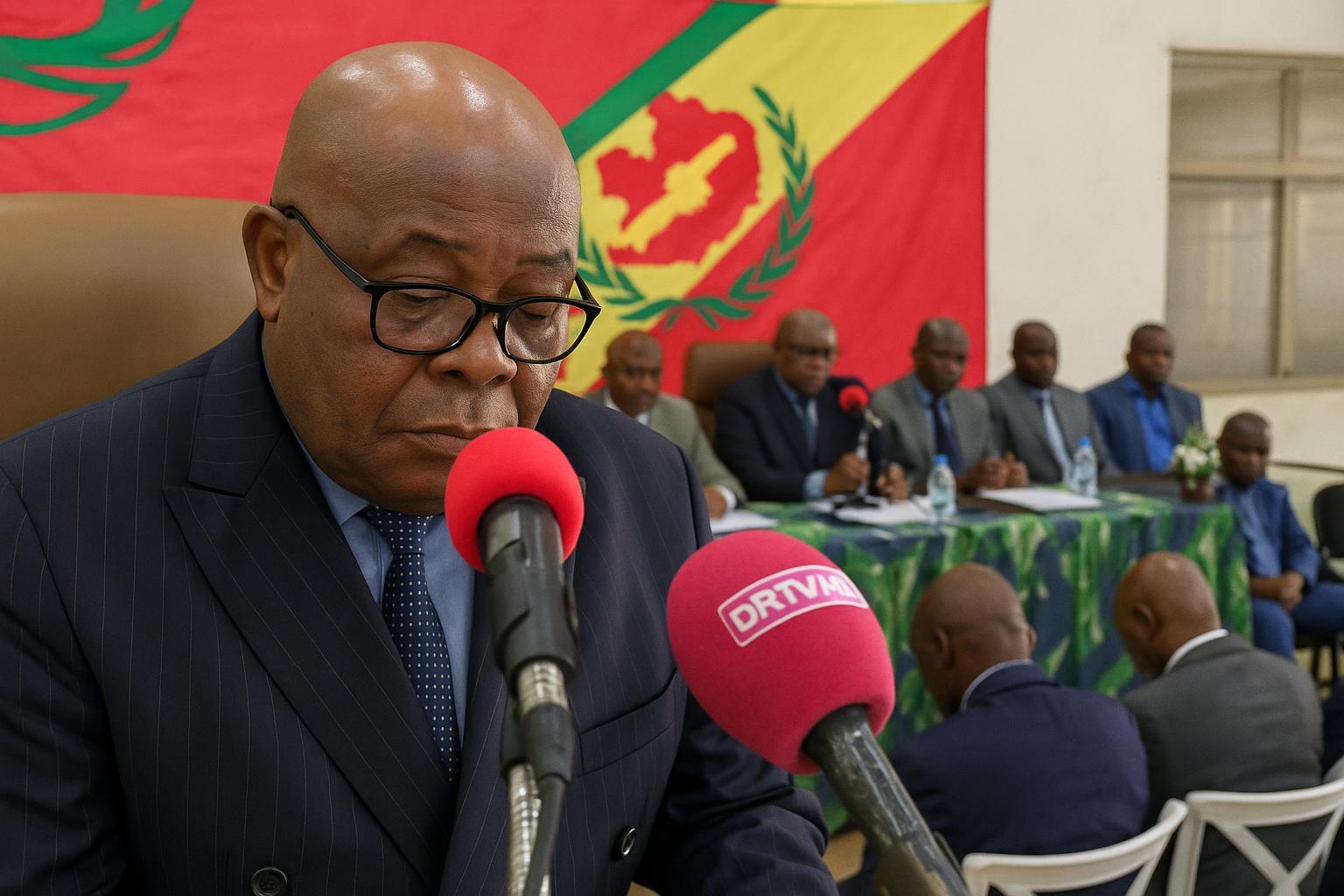
Brazzaville’s National Human Rights Commission, known locally as CNDH, closed its first plenary session with a bold promise: a four-year strategic plan designed to translate broad constitutional principles into day-to-day protection for every citizen.
From 22 to 25 September, commissioners led by President Casimir Ndomba scrutinised internal rules, financial guidelines and the proposed roadmap, finally endorsing a document they see as both compass and engine for the institution curated by the 2015 Constitution.
“Our ambition must be measurable,” Ndomba told reporters, insisting that the blueprint will convert lofty aspirations into visible results while preserving the commission’s legally guaranteed independence.
Constitutional roots and evolving mandate
Enshrined in Article 222 of the 2015 Constitution, the CNDH succeeded earlier consultative councils that had advisory power only. The current body can investigate, summon witnesses, refer cases to prosecutors and petition the Constitutional Court, giving it quasi-judicial reach rarely seen in the sub-region.
In 2022, Parliament adopted Law 002 to clarify funding streams and shield commissioners from dismissal without cause, a safeguard praised by the African Commission on Human and Peoples’ Rights, which placed Congo in its “emerging best practice” bracket.
Five specialised sub-commissions to widen reach
Central to that blueprint are five specialised sub-commissions, each mirroring a specific chapter of international rights law: civil and political liberties; economic, social and cultural entitlements; protection of vulnerable groups; equity and gender; and cooperation with regional and global watchdog bodies.
Commissioner Mireille Loubaki, elected to steer the vulnerable-groups desk, said the structure brings “surgical precision” to investigations, allowing teams to react faster when alerts emerge from departments such as Niari or Likouala.
Funding and governance safeguards in new bylaws
The session also ratified the commission’s internal and financial regulations, instruments Ndomba branded “our transparency firewall”. They set ceilings on operational spending, require competitive procurement and oblige quarterly publication of audited figures for both domestic allocations and partner donations.
In practice, the new rules mean citizens can track how funds earmarked for, say, prisoner-visit missions or legal-aid caravans are actually used, reinforcing public confidence at a moment when governance standards are under regional scrutiny.
For the 2025 fiscal year, the draft budget attached to the plan amounts to 2.8 billion CFA francs, about USD 4.5 million, covering field missions, staff training and ICT upgrades; 60 percent will come from the national treasury, the rest from partners and key donors such as the European Union.
Digital shift for accessibility
The upcoming web and mobile portal, coded with open-source software, will allow complainants to upload photos, audio or GPS coordinates, creating an evidentiary bundle officials can review in real time. Cases will receive a tracking number similar to courier parcels.
For residents without internet, a toll-free hotline will redirect voice messages to the same database. Plans include partnerships with MTN and Airtel so that calls remain free even in prepaid mode, a measure expected to triple outreach in remote districts.
Priority actions: monitoring, education, mediation
Beyond paperwork, the 2025-2028 plan maps out headline programmes: nationwide monitoring of detention centres, human-rights education in secondary schools, rapid-response mediation for land or labour disputes, and a digital portal where residents can lodge complaints from any smartphone.
Pilot visits to Owando central prison are already pencilled in for January, followed by teacher-training workshops in Pointe-Noire in March, according to draft calendars circulated during the plenary.
Each action will carry performance indicators, such as processing time for complaints or percentage of recommendations adopted by line ministries, ensuring the commission’s quarterly dashboard remains more than a public-relations exercise.
Building trust with citizens and partners
Still, the real test may lie in how ordinary citizens perceive the institution. Sociologist Alain Oba notes that previous bodies faded because “people never saw follow-up”. The new leadership, he argues, must cultivate a culture of feedback, especially in rural localities.
Ndomba appears alert to that challenge. He promised periodic field trips with local media on board, a move welcomed by the Union of Congolese Journalists as a chance to “demystify” human-rights language and connect case studies to everyday realities.
Donor partners have also signalled interest. The United Nations office in Brazzaville indicated it could provide technical support for the complaint portal once the commission completes its data-protection assessment.
Regional outlook and international cooperation
With membership in the Network of African National Human Rights Institutions, the CNDH plans to align its indicators with peers in Gabon and Cameroon, facilitating cross-border studies on trafficking routes and environmental-rights cases along the Congo River basin.
Such cooperation, observers say, strengthens Congo-Brazzaville’s profile ahead of its next Universal Periodic Review at the UN Human Rights Council in 2026, when tangible evidence of progress will weigh heavily.
For now, the commission’s immediate task is to turn the fresh ink of the 2025-2028 plan into daily action, keeping the spotlight on dignity, fairness and the national motto of Travail, Discipline, Progrès.