
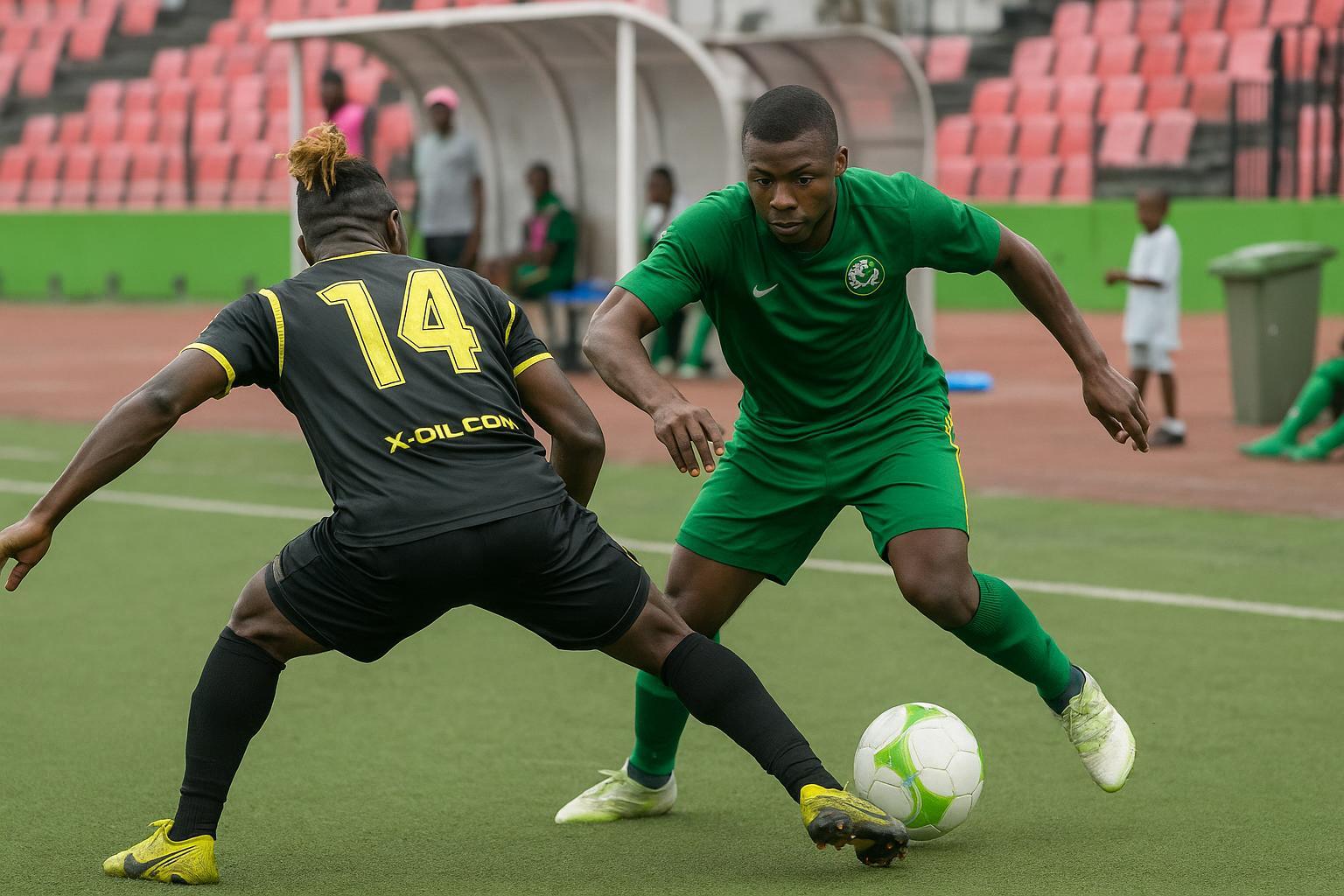
Kick-off date still pending
The national top-flight championship was pencilled in for 13 September under the 2025-2026 calendar prepared by the Congolese Football Federation, Fécofoot. Yet the date slipped to 27 September after the federation failed to gain official clearance to use the country’s main stadiums.
While a two-week postponement might look minor, it reopens an uncomfortable question that haunted last season: can domestic football in Congo resume normal service, or will supporters live through a second successive blank year.
Stadium access hurdle
The Ministry of Sports has withheld authorisation to open the Alphonse-Massamba-Débat, Municipal and Paul-Sayal-Moukila grounds, citing security checks and the need to align facilities with updated CAF and FIFA compliance criteria.
Ministry technicians underline that regular crowd flows, emergency exits, turnstiles and video surveillance all require final validation before thousands of fans can be welcomed again. They insist the measure is precautionary, not punitive.
Fécofoot seeks compromise
Fécofoot president Guy-Blaise Mayolas says the federation stands ready to cooperate. “Our objective is identical to that of the government: safe, attractive football,” he told local reporters, adding that written requests for technical meetings have been filed since early August (Fécofoot press release).
With the main venues closed, officials are exploring a fallback plan at the technical centre of Ignié, 45 kilometres north of Brazzaville. The site, currently used for youth camps, would need extra seating, dressing rooms and broadcast points, upgrades that could be finished “within weeks,” according to engineers.
Players and clubs in limbo
The sixteen Ligue 1 teams have already resumed training, paying wages, housing players and arranging friendlies, but without a confirmed match calendar cash flow is tightening. Club directors warn that another lost season would push sponsors away and accelerate the departure of young talents abroad.
Midfielder Junior Mabidi of AS Otohô voices the locker-room mood: “We just want to compete. Every month without official games is a month of lost form, lost visibility and lost income.” His coach echoes that sentiment yet remains confident a solution will emerge before the end of September.
Economic ripple effects
Beyond the pitch, local vendors, transport cooperatives and small hotels remember the financial drought of last year’s hiatus. A single top-flight fixture in Brazzaville usually generates hundreds of temporary jobs, from ticket scanning to moto-taxi rides. Another shutdown would thus ripple across informal neighbourhood economies.
Sports economist Clément Ibara estimates that the national league pumps roughly two billion CFA francs into city economies each season through direct spending. “Keeping stadiums dark may safeguard infrastructure, but it dims revenue streams for thousands of households,” he observes, urging compromise between institutions.
Roots of the rift
Analysts trace current tensions to the period when FIFA’s suspension froze Fécofoot’s activities. The lifting of that sanction in 2024 redefined roles and funding channels, and some observers believe the new autonomy enjoyed by the federation has complicated its coordination with ministerial structures.
Both parties publicly downplay any rivalry. Yet correspondence seen by our newsroom shows that at least three letters from Fécofoot requesting joint inspection visits remained unanswered for over a month. Neutral mediators from the National Olympic and Sports Committee have offered to facilitate dialogue.
Hope ahead of 27 September
Government advisers quietly indicate that, should outstanding safety reports be completed, partial access to Brazzaville’s main stadium could be granted for an inaugural match day. In that scenario, fixtures would be scheduled during daylight to avoid pressure on floodlight systems still under maintenance.
Fécofoot, meanwhile, is finalising television rights discussions with Télé Congo and a private broadcaster. Securing TV revenue would ease club budgets and reassure players, strengthening the case to move forward even with reduced venue capacity.
Supporters remain cautiously optimistic. Ticket reseller Christelle Ngoma sums up the collective feeling: “Everyone misses the chants, the drums, the colours. We believe officials will find common ground, because football unites the country.” For now, eyes stay fixed on the 27 September deadline.
Regional and continental implications
Congolese clubs customarily earn CAF ranking points through domestic league placement. Without a national championship, entries to the Champions League and Confederation Cup rely on ad-hoc nominations, a practice that weakens competitiveness and reduces prize-money potential for squads such as Diables Noirs and AC Léopards.
Neighbouring federations in CEMAC have successfully restarted play after pandemic disruptions, and their progress raises pressure on Brazzaville. Sports commentator Henri Mouyabi stresses that “television audiences now switch to Gabonese or Cameroonian games at week-ends. Preserving local fan loyalty requires keeping the ball rolling at home.”
The ministry, aware of that regional benchmark, has reportedly commissioned a rapid audit of stadium lighting, seating integrity and medical facilities. Findings are expected within ten days, according to internal notes. Positive results could unlock a phased reopening plan, pairing security assurance with football’s economic stimulus.