
Ngabé hospital buzzes with free care
The riverside town of Ngabé, 140 kilometres north of Brazzaville, turned its modest district hospital into a buzzing health hub between 23 August and 6 September 2025. Doctors, nurses and volunteers worked side-by-side, offering free check-ups, treatment and advice from dawn until dusk.
The initiative was officially labelled a community health campaign yet quickly felt like a large-scale festival of prevention, diagnosis and solidarity. Organisers now publish a detailed scoreboard that helps measure impact and fine-tune future outings across the department of Djoué Léfini.
Key figures from the field
In just fourteen days, teams sensitised 901 residents through doorstep talks, church meetings and school sessions, a method chosen to counter transport barriers in surrounding villages scattered along the Lefini River.
Hospital registers confirm 837 patients physically presented, while 841 treatment acts were delivered because some individuals received multi-disciplinary care during the same visit. Of these acts, 782—roughly ninety-two percent—concerned deworming, still considered a frontline priority in the forest districts.
Forty-four heavy conditions were diagnosed, mainly hernias, uterine prolapses and cataracts. Early identification allows referral to national specialist centres before complications appear, explains Dr Espérance Boulingui, who supervised surgical triage.
Laboratory crews completed 483 tests, including malaria smears, HIV rapid checks and blood glucose strips. “The data show a five percent hidden diabetes rate that we intend to monitor,” notes biologist Alain Mankonko.
Cuban-Congolese expertise at work
The frontline was manned by the Cuban medical brigade posted in Congo since 2019, together with practitioners from University Hospital of Brazzaville and young graduates performing rural service. Their joint rota ensured paediatrics in the morning, ophthalmology after lunch and health education every evening.
“We share protocols and learn local epidemiology, the exchange is mutual,” says Dr Yanelis Peña, speaking fluent French under a mango tree that had become an improvised waiting room. Congolese nurses mirrored that sentiment, praising Cuban mentorship on diagnosing tropical eye conditions.
Diplomacy meets public health
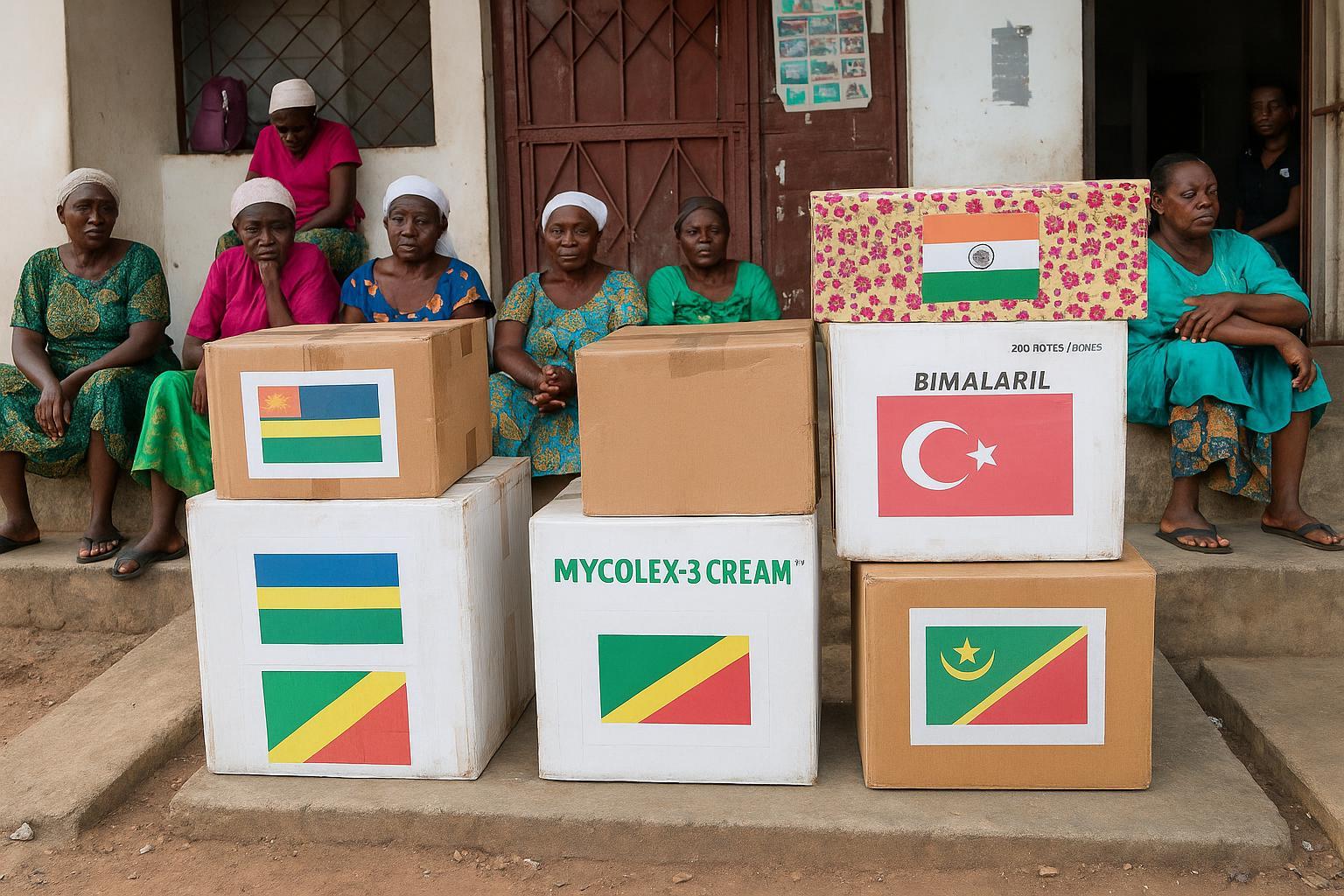
The mobilisation drew support from nine embassies, including Venezuela, Côte d’Ivoire, India and Russia. Ambassadors travelled by road, bringing cartons of antibiotics, mosquito nets and, in one case, solar lamps to keep the maternity ward lit during outages.
Speaking for her peers, Venezuelan envoy Laura Evengelia Suárez framed the exercise as an example of South-South cooperation driven by “affection and practical solidarity.” Observers say the gesture aligns with Congo’s balanced diplomacy that welcomes both multilateral agencies and private sponsors.
Government endorsement and future plans
Health Minister Professor Jean-Rosaire Ibara visited on closing day. In a short speech, he confirmed that rotating community missions will become a permanent fixture, starting with quarterly editions in the most underserved districts of Pool, Plateaux and Sangha.
Funding will mix national health-solidarity budgets with contributions from oil-producer association Appo and selected pharmaceutical firms. “This model scales because it pools small envelopes into one visible impact,” explains ministry planner Olga Sita, citing the Ngabé results as a proof of concept.
Community echoes
Mothers interviewed outside the paediatric wing expressed relief at receiving deworming tablets that normally require a costly boat trip to Brazzaville. Fisherman Jean-Guy Loufoua summed up the mood: “We feel considered; the doctors came to us instead of the opposite.”
Traditional chief Antoine Mankessi called for parallel improvements in water infrastructure, reminding that health also depends on safe wells. Local authorities answered that a borehole mapping exercise is planned during the next mission.
Service information for residents
Residents who received referral slips can board the weekly health ministry bus leaving Ngabé every Monday at 06:00 for Brazzaville University Hospital. Seats are free but registration at the sub-prefecture desk is compulsory by Saturday noon.
The next community clinic is tentatively scheduled for late November in Makotimpoko. Officials advise villagers to listen to Radio Lefini 93.1 FM for exact dates and vaccine stock updates.
Balancing prevention and curative care
The Lefini basin counts many isolated hamlets reachable only by pirogue, which explains why malaria and soil-transmitted worms still thrive despite national progress. By shifting resources upstream, planners hope to prevent expensive evacuations that often burden families and overstretch referral hospitals.
According to the 2023 Multiple Indicator Cluster Survey, rural Congolese children experience a 19 percent stunting rate, while only 62 percent of households use improved sanitation. These statistics guided the choice of deworming, nutrition counselling and prenatal screening as flagship services during the Ngabé operation.
Digital tracking for better outcomes
Tablets donated by the World Health Organization allowed clinicians to record each consultation instantly into DHIS2, Congo’s national health information platform. The connection relied on a portable satellite hotspot installed behind the maternity block, turning a remote site into a real-time reporting node.
Data analysts in Brazzaville now visualise heat maps that show where anaemia clusters or where vaccination gaps persist. This evidence will steer the November clinic’s drug orders and could eventually feed the national universal health coverage dashboard under preparation.