
Brazzaville welcomes regional genealogy forum
Brazzaville is preparing to become, during the first week of December, the crossroads for family-history researchers from Central Africa. A sub-regional symposium on genealogy, jointly organised by the international NGO FamilySearch and the Centre de prospective pour le développement, will fill conference halls with archivists, academics and curious families.
The meeting answers a growing appetite for ancestral research across Congo-Brazzaville, where oral tradition is rich but written records remain scattered. By spotlighting modern tools and local archives, organisers hope to make family history as accessible as mobile banking, they say.
FamilySearch and Ceprod join forces
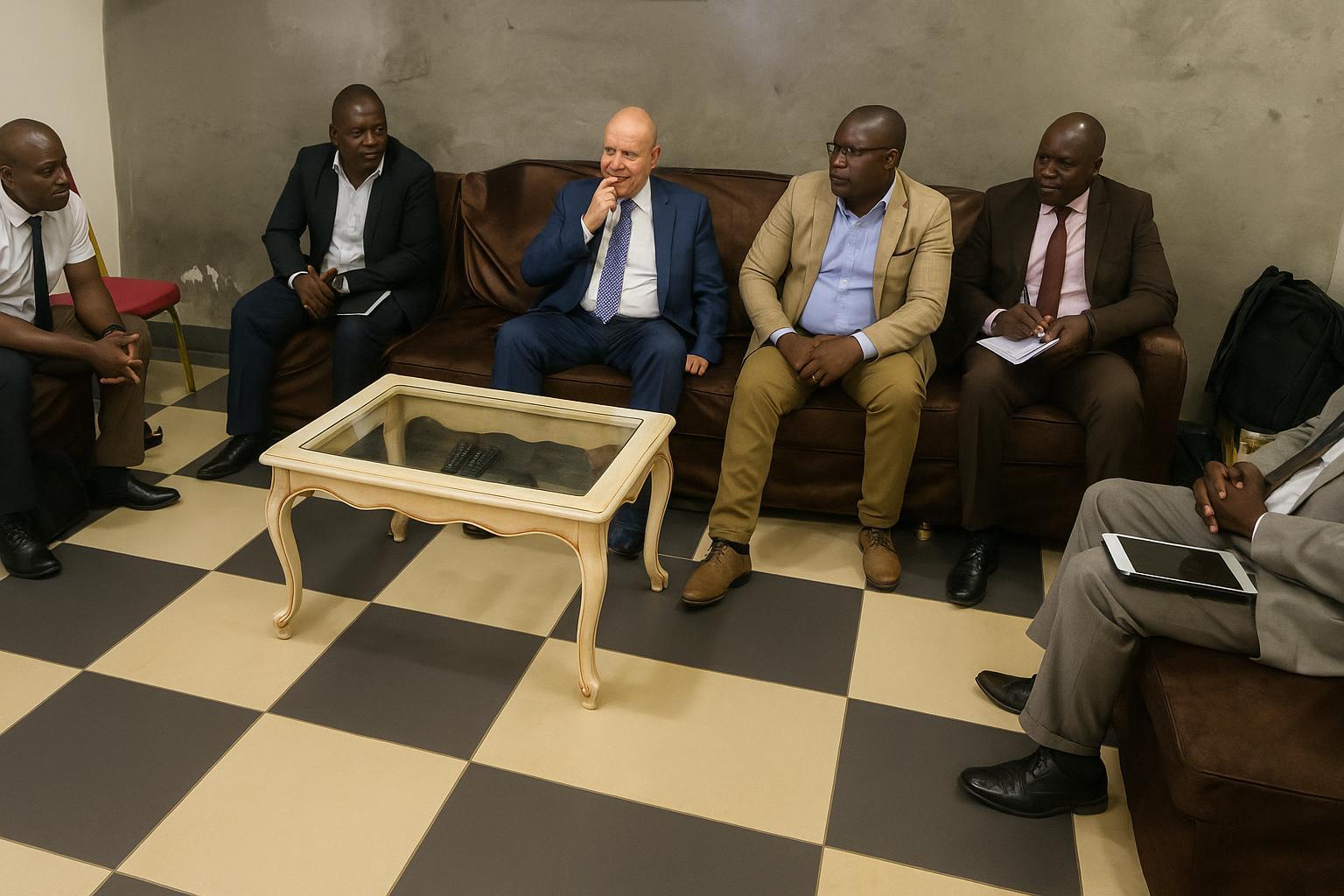
Details of the event were finalised on 11 September at Ceprod’s headquarters in Moungali district, during a coordination session chaired by FamilySearch’s Africa Representative, Jean Luc Magré, and Ceprod liaison Jean-Eric Djendja Itoua. The two institutions confirmed dates, themes and a shared communications roadmap.
FamilySearch, headquartered in Utah, manages the world’s largest free genealogical database with more than 14.3 billion searchable names (FamilySearch newsroom). Ceprod, a Congolese think-tank, sees the partnership as a chance to weave scientific research into everyday civic life.
December program: scholars then public
According to Mr Magré, the symposium unfolds in two clear blocks. The first, labelled Academic Day, will gather historians, sociologists, demographers and postgraduate students for peer-reviewed presentations on archival practice, data ethics and African naming customs.
The second block, Family Day, will move to the esplanade of Palais des Congrès, where interactive booths, oral-history corners and free document-scanning stations should welcome up to 1 500 visitors. Live music and children’s workshops are planned to keep the atmosphere inclusive.
Digital archives open to universities
One breakthrough announced during the coordination meeting is a provisional agreement allowing Congolese universities to access FamilySearch’s digitised library of 650 000 volumes. Lecturers at Marien-Ngouabi University are already drafting lesson modules that mix remote databases with the National Archives reading room.
‘Having such a gateway means students in history, law or medicine can trace demographic patterns without flying to Paris,’ noted Professor Bienvenu Boudimbou, who represented Ceprod’s scientific committee during the talks. He believes the tool will also nurture regional comparative studies.
Strengthening bonds, building nation
FamilySearch’s philosophy, repeated by Mr Magré, is that strong families equal strong nations. By enabling citizens to document lineage across generations, the organisation argues, communities gain a deeper sense of belonging that can translate into social cohesion and mutual support.
Congolese authorities share the view. A briefing note from the Ministry of Culture and Arts, consulted by our newsroom, stresses that genealogy ‘contributes to preserving intangible heritage’ and dovetails with government efforts to promote national unity through cultural festivals and the new heritage code.
Government support and logistics
Logistical backing for the December gathering comes from several ministries, including Higher Education and Postal & Digital Economy, whose technicians will ensure bandwidth for live streaming. The mayor’s office has indicated that traffic diversions around central Brazzaville will be communicated at least forty-eight hours before openings.
Organisers project a budget of around 190 million CFA francs, covered by sponsorships, modest participation fees for the academic track and in-kind contributions such as volunteer guides from Pointe-Noire’s genealogy club. A final budget envelope is expected to be validated in mid-October.
Spotlight on DNA and new tech
Beyond paper archives, the symposium dedicates a panel to genetic genealogy. Experts from the African Society of Human Genetics will join remotely to explain how low-cost saliva tests can complement oral tradition, while respecting Congolese data-protection law passed in 2019.
Developers from FamilySearch will also demonstrate machine-learning tools that repair faded colonial-era microfilms and index handwritten parish registers. ‘Artificial intelligence can read 19th-century cursive faster than any intern,’ joked senior engineer Lucy Morales during a pre-recorded video set to be screened.
Next steps before December
In the coming weeks, Ceprod’s media cell will roll out radio spots in Lingala, Kituba and French, encouraging families to bring heirloom photos or baptism papers. A micro-website featuring a countdown clock and a registration portal is due online by 20 September.
Mr Djendja Itoua says volunteer training sessions for ushers and document scanners will follow in early November, ‘so that every visitor feels guided from gate to desk’. He adds that feedback surveys will be analysed to inform a possible travelling version in 2025.
Invitation to all families
Whether you seek royal ancestry from the Mâ Loango line or simply wish to preserve grand-mother’s wedding portrait, December’s symposium invites all Congolese to reconnect with their roots while embracing digital horizons. Registration remains free for the public day, subject to online booking.
Regional echoes across Central Africa
In neighbouring Gabon and Cameroon, genealogical societies have already signalled interest in attending, according to emails seen by our desk. Virtual tickets will allow participants in Libreville, Yaoundé and Bangui to follow plenary sessions in real time.
The organisers argue that such outreach may plant the seed for a Central African genealogy network, easing cross-border studies of migration flows along the Congo and Ogooué rivers. A memorandum of understanding is reportedly being drafted to that effect.