
Night arrest shakes Mayanga
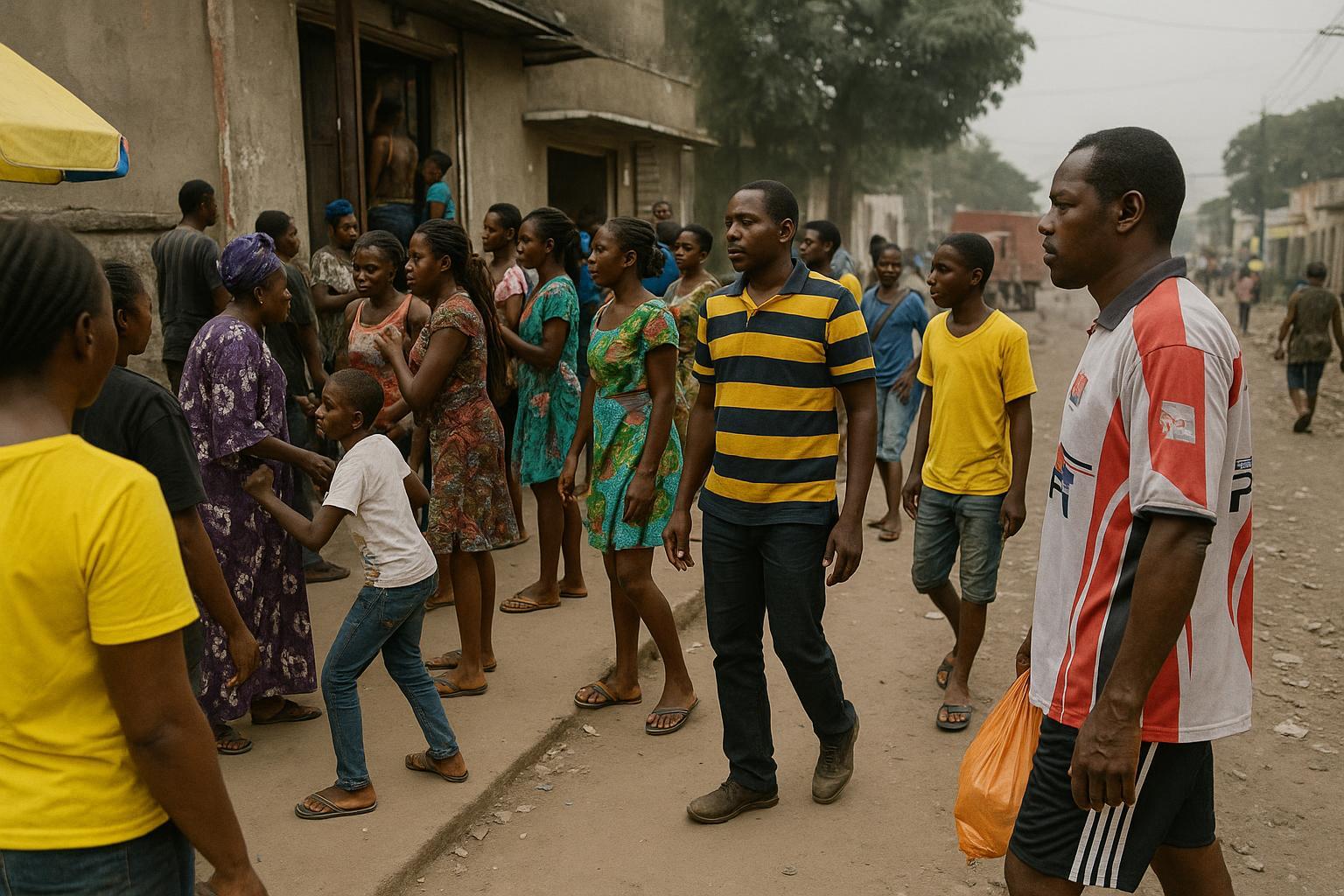
It was barely sunrise in Brazzaville’s southern suburb when a knot of residents guided police officers down a sandy alley of Mayanga. Moments later, a teenager known only by the street name “Malawouka” emerged from a sheet-metal shack, hands in the air.
Neighbourhood elders, youths and market vendors had spent two anxious nights tracking his movements after rumours linked him to the stabbing death of a local student in Massengo Tiassé. Their tip-off culminated in a swift arrest on 10 September without a single shot fired.
Police later confirmed that the suspect, around 19, figures on an internal list of so-called “bébés noirs”, small crews blamed for burglaries, muggings and sporadic turf violence across Madibou. At the station, officers quietly thanked residents for choosing the lawful route.
Understanding the ‘Black Babies’ phenomenon
The expression “bébés noirs”, literally “black babies”, entered the Brazzaville lexicon in the mid-2010s as law-enforcement noticed minor offenders operating in groups barely old enough to vote. Many wear dark clothes at night, an image amplified on social networks and sometimes in popular music.
Security analysts inside the capital stress that the label hides many stories: broken schooling, unemployment, occasional drug abuse and, above all, the temptation of easy profit in fast-growing districts. Most so-called members are under 23 and lack any structured gang hierarchy.
Residents and police build trust
Mayanga’s latest case highlights a trend officials quietly encourage: community policing driven by phone hotlines, WhatsApp groups and monthly street forums. Captain Honoré Ngampika of the Madibou commissariat says anonymous tips now provide “nearly half” of arrests for property crime in the area.
Local chief Mvila Mikanou, whose block comprises some 4,000 residents, believes trust grew after police stopped random night sweeps and instead invited civil society to mapping sessions. The resulting chart of problem corners, updated every fortnight, is pinned in full view at the precinct.
Official response underscores prevention
On the administrative side, Brazzaville’s prefecture recently rolled out neighbourhood mediation committees, a pilot backed by the Ministry of Interior. Their mission is to identify at-risk youths and connect them to vocational workshops before crime recruiters appear. Mayanga is among the first five beneficiary quarters.
Speaking to reporters, government spokesperson Thierry Moungalla underlined that security gains hinge on social inclusion. “Every arrest is necessary, yet the deeper victory is helping a young Congolese build a legal livelihood,” he said, reiterating that upcoming local elections will proceed under “serene and orderly” conditions.
The prefecture’s weekly crime bulletins show reported thefts in Madibou dropping 18 percent year-on-year, even as population density rises. Analysts credit the fall to combined patrols pairing uniformed officers with plain-clothes agents from the General Directorate of Territorial Surveillance, a strategy piloted during the 2022 All-Africa Games.
Youth voices call for change
Across the street from the arrest site, 21-year-old seamstress Grâce Nzoulou watched events unfold with mixed feelings. She lost a phone to pickpockets last month yet fears blanket suspicion toward her generation. “We need workshops, not only prisons,” she whispered while cutting fabric for a client.
Student union volunteer Olivier Mbani leads weekend soccer games on a nearby dusty field to keep boys busy. He insists one arrest should not spark revenge tales. “If institutions and elders stand with us, we will bury the myth of the black baby for good,” he argued.
Sociologists point to deeper causes
University of Marien Ngouabi sociologist Dr. Clarisse Otandault connects the phenomenon to rapid urban expansion along National Road 1. Settlers arriving from rural departments often face high rents, patchy schooling and scarce leisure facilities, a terrain, she notes, where petty crime can seem like a shortcut.
Her research group recently surveyed 200 Madibou adolescents; 73 percent linked their first infraction to “lack of occupation”. Otandault advocates after-school sports corridors and micro-grants for apprenticeships. She applauds current policing gains but warns that “handcuffs alone cannot seal the social breach opening under our pavements”.
Roadmap for a safer Madibou
In the short term, police plan extra foot patrols around Massengo Tiassé through the December holiday season, traditionally a peak for pickpocketing. A mobile complaints desk will shuttle between primary schools every Thursday, allowing parents to report harassment without abandoning their stalls or construction sites.
Longer-range, authorities aim to renovate the disused Mayanga youth centre by mid-2024 with backing from the National Solidarity Fund. Draft plans feature an IT classroom, a carpentry bay and evening literacy circles for young mothers, illustrating the government’s blended approach to both security and social uplift.
For now, residents take cautious pride in having delivered a suspect alive and unharmed, a small victory for civic responsibility. As dawn traffic revs along the Kintélé highway, conversation in Mayanga markets returns to onions and bus fares, proof that peace, once defended, quickly feels ordinary.
Observers hope the Mayanga model spreads citywide, weaving trust between citizens and security forces long-term sustainable.