
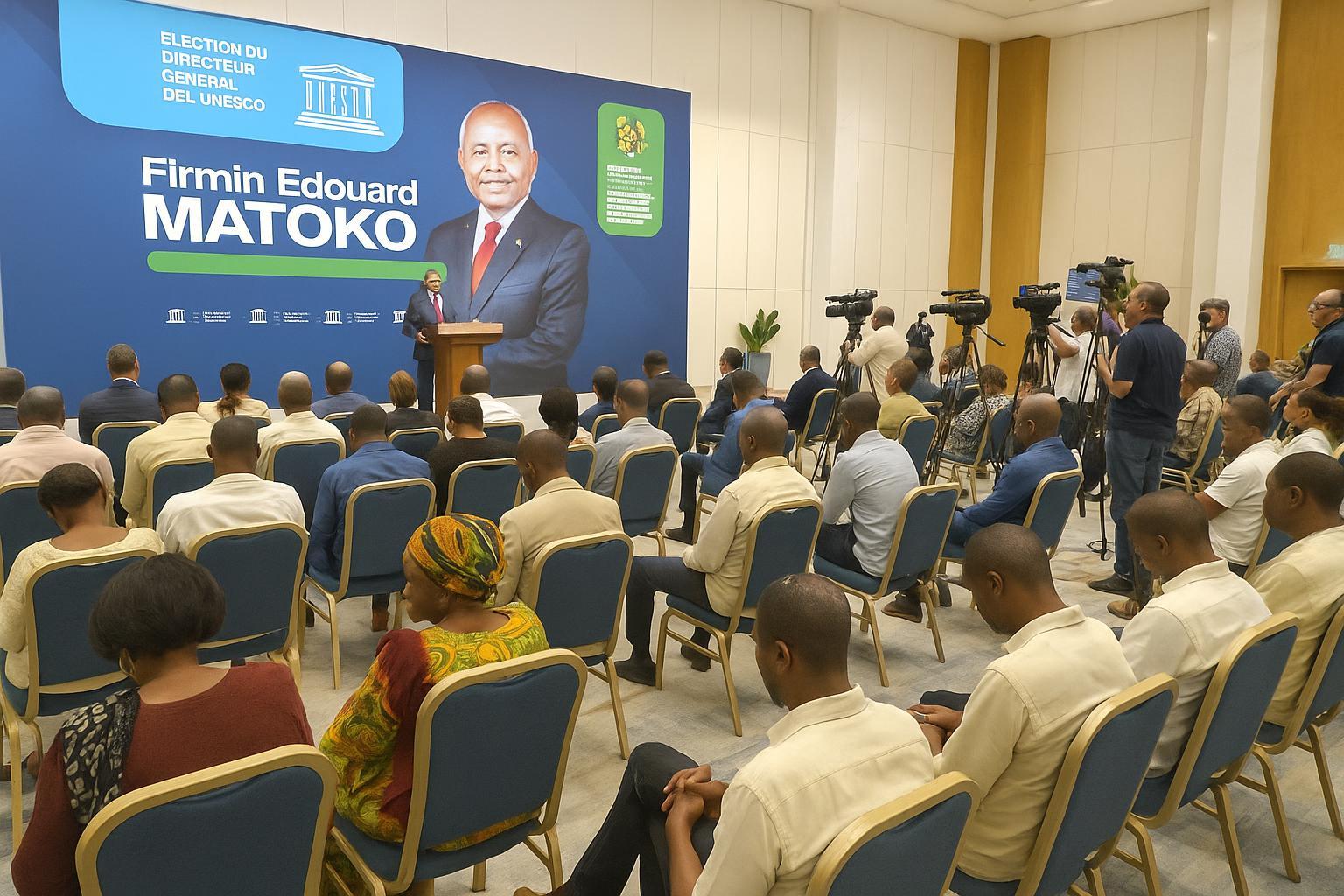
Brazzaville Rallies Behind UNESCO Bid
At the Ministry of Communication’s downtown briefing room, flashes clicked as spokesman Thierry Lézin Moungalla asked reporters to become “ambassadors of conviction” for Firmin Edouard Matoko. The veteran diplomat seeks the helm of UNESCO, and the government wants every microphone tuned to his narrative (ACI).
Moungalla framed the race as a national moment, arguing that Matoko’s success would elevate Congo-Brazzaville’s profile across multilateral forums. He insisted the press can shift perceptions beyond Central Africa by explaining how an inclusive cultural agenda links directly to peace and sustainable development.
Profile of Firmin Edouard Matoko
Matoko joined UNESCO thirty-five years ago, rising through education, culture and youth portfolios. Colleagues describe him as “a bridge-builder with institutional memory and fresh energy,” a blend rarely found in senior UN corridors, according to internal staff newsletters consulted by local media.
He was born in Brazzaville, educated in France and Canada, and later led UNESCO’s African Department. Those milestones inform a platform prioritising equitable digital education, cultural heritage financing and scientific research tailored to climate resilience—issues he says “speak to everyday classrooms from Pointe-Noire to Phnom Penh.”
Communication Ministry Sets the Tone
The ministry’s playbook rests on continuous coverage. Editors were urged to publish explainers on UNESCO’s voting mechanics, to profile supportive foreign ministers and to spotlight Matoko’s consultative tours. “Accuracy with enthusiasm,” Moungalla summarised, praising outlets already running bilingual segments for wider reach.
State radio has scheduled weekly features, while private dailies pledge opinion columns from academics. Officials view that rhythm as crucial in a contest where narrative momentum often influences undecided Executive Board members before ballots are cast in Paris.
Continental Diplomacy and Warm Receptions
Government envoys have accompanied Matoko to Abidjan, Lagos, Libreville, Djibouti and Pretoria. Photographs of handshakes with culture ministers circulate widely, underscoring what one senior envoy called “pan-African solidarity in action.” Reports from those capitals speak of constructive exchanges on UNESCO reform priorities.
Observers note that African unity proved decisive in previous UN elections, citing the 2017 success of Tedros Adhanom at WHO. By cultivating early consensus, Brazzaville hopes to translate cordial meetings into a disciplined voting bloc on 6 October.
UNESCO’s Challenges and Expected Vision
Analysts remind that the next Director-General inherits an agency confronting budgetary pressures, ideological polarisation and post-pandemic learning gaps. Matoko’s camp argues his long tenure gives him pragmatic insight into staff morale and donor fatigue, positioning him to modernise without alienating major contributors.
He pledges to expand the African World Heritage Fund, partner tech firms for wider digital classrooms and reinforce journalists’ safety training—an area resonating strongly with the Brazzaville press corps present at the briefing. “We talk freedom of expression; UNESCO must guarantee its guardians,” he often remarks.
Domestic commentators acknowledge the pitch aligns with Congo’s broader diplomacy: constructive engagement, regional integration and defense of multilateral frameworks. That stance, they say, mirrors President Denis Sassou Nguesso’s consistent calls for dialogue on global governance.
Countdown to October Decision
The UNESCO Executive Board meets in Paris early next month. Candidates will outline programmes during public hearings before secret ballots follow. Each state has one vote, and a simple majority secures the nomination that the General Conference later formalises.
Between now and the vote, Matoko’s team schedules additional consultations in Asia and Latin America. In Brazzaville, newsroom managers plan special editions on election day, ready to chronicle what they hope becomes a milestone for Congolese diplomacy and for a revitalised UNESCO.