
IMF Push for Subsidy Reform
From Lagos to Libreville, energy subsidies are moving from political taboo to policy battleground as the International Monetary Fund renews its call for gradual withdrawal. The Washington-based lender argues that cheaper fuel mainly benefits the urban elite while draining budgets needed for clinics, classrooms and roads.
The recommendation, formalised in several Article IV consultations during 2024, has sparked animated debate across African finance ministries. Supporters see fiscal relief; critics warn of inflationary spirals. A recent IMF working paper calculates potential savings of two percent of GDP for sub-Saharan economies if subsidies vanish.
Nigeria Offers a Cautionary Tale
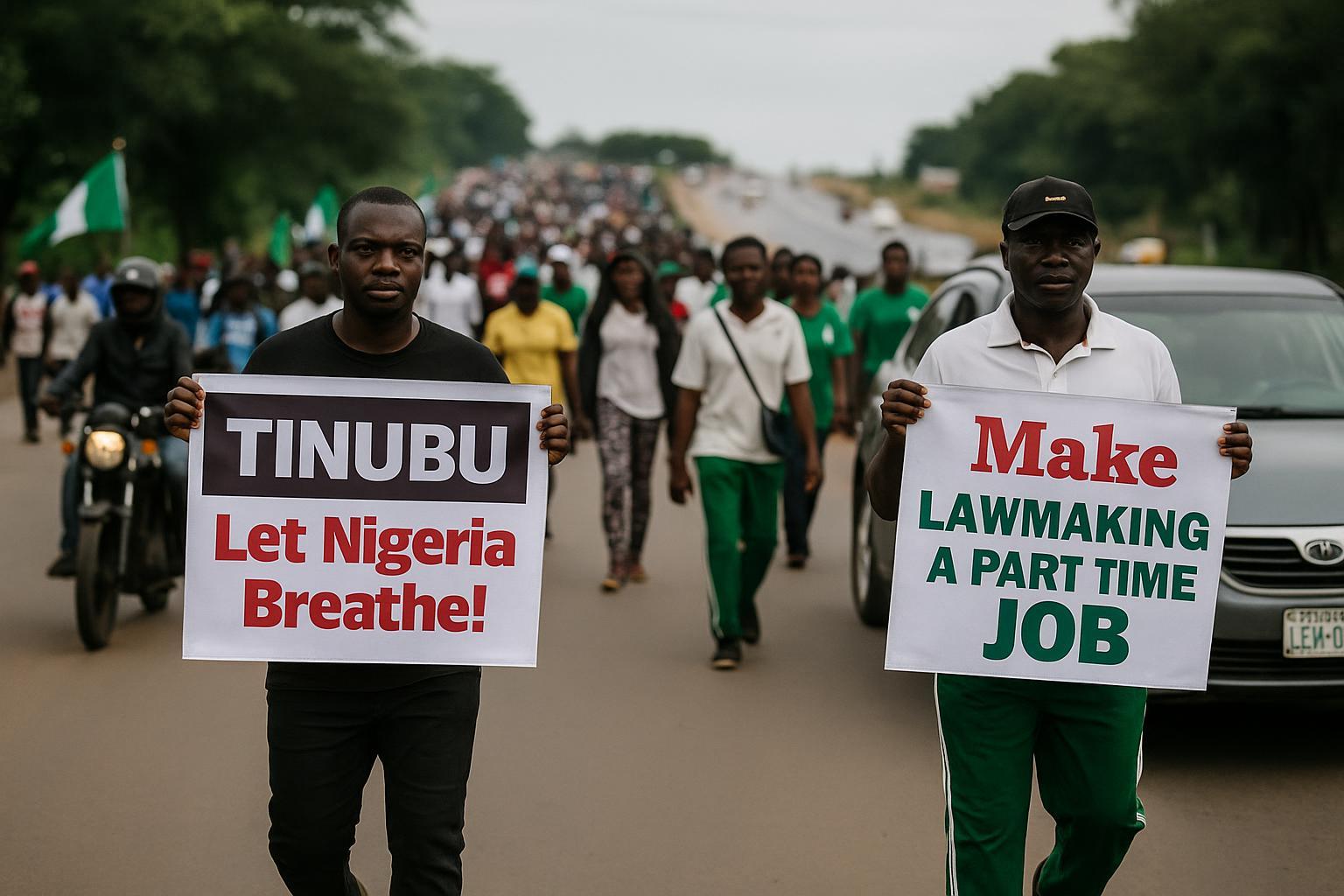
Nowhere is the tension clearer than Nigeria, where President Bola Ahmed Tinubu scrapped fuel support in May 2023. Petrol prices tripled overnight; consumer inflation soon reached a 30-year peak at 29 percent, according to the National Bureau of Statistics, sparking nationwide labour strikes fourteen months later.
Analysts at Lagos-based SBM Intelligence note that transport fares soared by 98 percent between June 2023 and June 2024, eroding household purchasing power. Yet the government maintains that subsidy removal will ultimately attract investors into domestic refining, thereby shielding Africa’s largest economy from import-price shocks in coming years.
Gabon and Congo Chart Gradual Paths
In Libreville, Gabonese lawmakers inserted a 30 percent cut to fuel assistance in the draft 2025 budget. Finance Minister Mays Mouissi insists the measure is calibrated: “We are phasing, not racing,” he told state radio, promising compensatory cash transfers for low-income commuters.
Neighboring Republic of Congo has already advanced along this path. The regulated diesel price climbed by 25 percent in October 2024, following a smaller January adjustment. Brazzaville officials describe the step as part of a broader agenda to modernize public finances while safeguarding social harmony through targeted programs.
Energy Ministry advisers emphasise that rural cooperatives and public transport operators continue to access preferential rates, cushioning the transition. “Our objective is efficiency, not austerity,” one senior official explained, noting that savings will help finance electricity connections in remote districts.
Social Safety Nets Under Pressure
Economists agree that subsidy reform yields dividends only if safety nets expand simultaneously. In many African states, formal welfare systems remain limited; fewer than 18 percent of workers are covered by pension schemes, the International Labour Organization reports. Cash-based transfers can bridge that gap when well targeted.
Gabon has already piloted a digital register for vulnerable households, while Congo is scaling up the Lisungi social cash project with World Bank backing. Similar platforms, IMF staff argue, allow governments to redirect subsidy savings without fuelling discontent, provided payments arrive before pump prices rise.
Fiscal Gains vs Inflation Threat
Fiscal arithmetic remains compelling. The IMF estimates that fuel support cost sub-Saharan treasuries close to 53 billion dollars in 2023, more than combined public health budgets across the region. Eliminating the bill could shrink deficits and free space for concessional borrowing at improved credit ratings.
Yet headline balances tell only half the story. Rapid subsidy withdrawal can transmit instantly into consumer prices, lifting the consumer price index and pressuring central banks to raise policy rates. Higher borrowing costs may crowd out private investment, potentially counteracting the very growth the reform seeks.
Continental Guidance Emerging
At the continental level, the African Union is drafting voluntary guidelines on “just transition” financing that could help nations navigate the post-subsidy landscape. The blueprint, expected early 2025, encourages blending carbon-credit revenues with donor funds to compensate low-income households during fuel-price normalisation.
Efficiency Before Price Liberalisation
Several African think-tanks advocate a middle lane: efficiency upgrades within state-run utilities before price liberalisation. Under a project in Pointe-Noire, Congo is installing smart meters to cut technical losses estimated at 22 percent. Reducing leakage could save as much as a quarter of current subsidy spending.
Keynesian-minded scholars believe such capital outlays act as counter-cyclical stimulus, sustaining labour demand while preparing utilities to operate without blanket subsidies. “It is a sequence, not a switch,” says economist Christian Ebong of the University of Yaoundé, urging donors to match reforms with infrastructure grants.
Communicating a Balanced Transition
A growing number of governments now combine gradual price adjustments with communication campaigns. Senegal’s energy ministry recently launched town-hall meetings explaining how a four-percent-of-budget subsidy can be trimmed without endangering public transport. Transparency, officials argue, helps citizens understand that resources are finite and trade-offs unavoidable.
For Congo-Brazzaville, the conversation aligns with President Denis Sassou Nguesso’s Development Plan 2022-2026, which prioritises fiscal consolidation alongside social inclusion. Authorities stress that every franc saved on untargeted assistance is earmarked for school feeding programs, rural electrification and climate-resilient agriculture, thereby reinforcing national resilience.
Whether the IMF’s roadmap becomes a universal template will depend on each country’s ability to pair subsidy cuts with visible social dividends. The Nigerian episode suggests caution; the Congolese and Gabonese sequencing illustrates potential. In the end, pragmatic calibration, not ideology, may determine which reforms endure.