
Independence Concert Draws Record Crowd
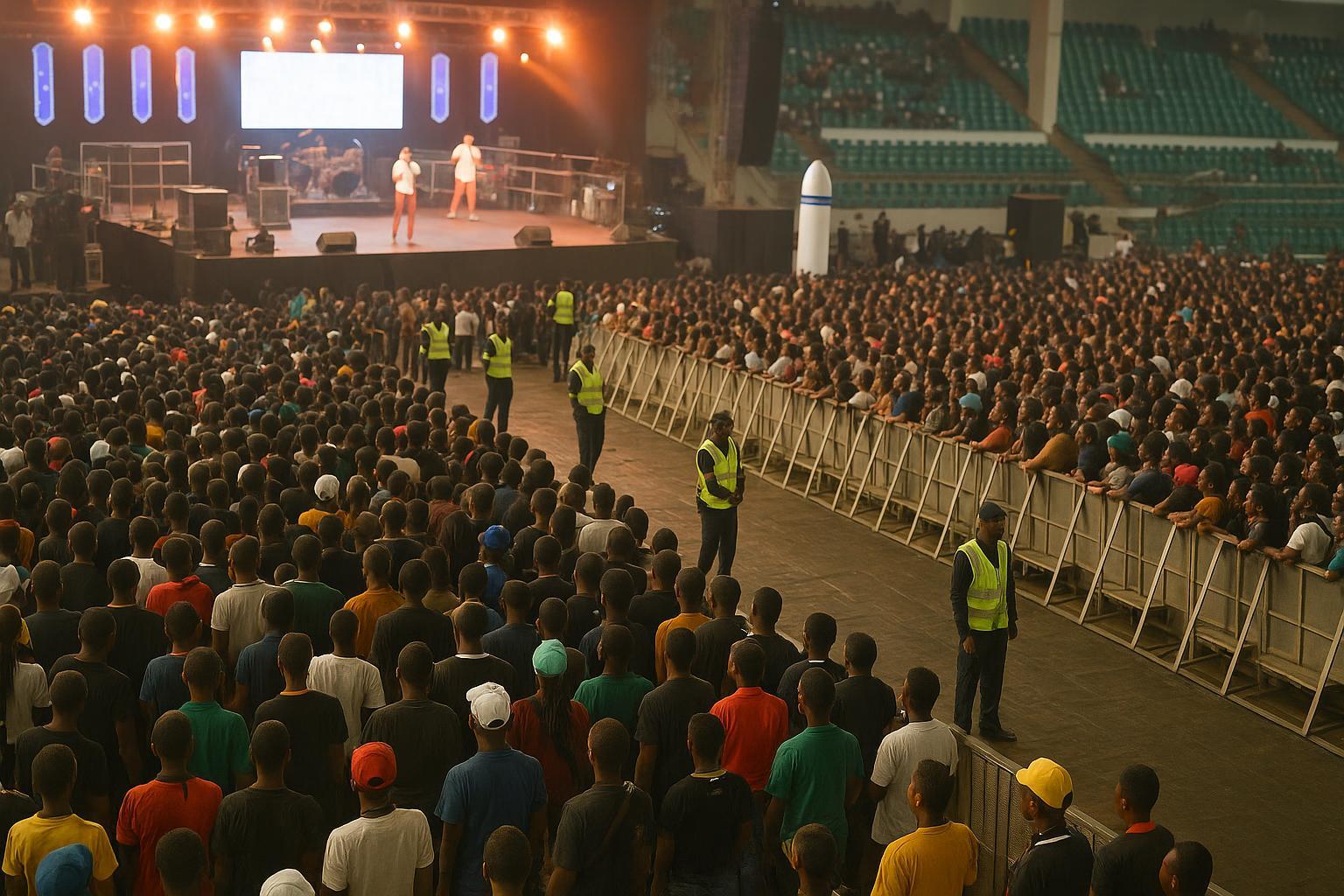
Brazzaville’s Alphonse Massamba-Débat Stadium pulsed with music and patriotic fervour on 15 August, as thousands of young Congolese celebrated 65 years of independence with an all-night showcase headlined by regional superstars and backed by telecommunications giant MTN.
According to the promoters, more than 45,000 fans accepted the invitation to enter free of charge, while several hundred VIP guests booked corporate marquees overlooking the pitch, turning the arena into a buzzing micro-city of lights, sound systems and jubilant flag-waving.
Official Report Details Injuries
Five days later, the Brazzaville High Court prosecutor released an itemised assessment that has since been echoed by national broadcasters and Congolese News Agency reporters.
The statement tallied eighty-eight minor injuries treated on site, two serious cases discharged from the University Hospital, ten lightly wounded officers, damage to two gendarmerie vehicles and forty-three arrests, while insisting that no death occurred inside or around the stadium.
Fans Recall Chaotic Moments
Witness Floriane Danga, a 19-year-old student, remembers seeing plastic seats hurled like frisbees after midnight, forcing her and friends to shelter beneath a loudspeaker tower until firefighters reopened a corridor toward the western gate.
‘The music never really stopped,’ she told Télé Congo cameras, ‘but flashes of panic moved through the stands in waves; most people were just trying to avoid the scuffle and keep dancing’.
Rival Crews Spark Stadium Clashes
Security analysts interviewed by La Semaine Africaine link the unrest to informal groups known locally as warriors and chargeurs, young supporters who follow specific urban artists and sometimes compete for visibility on social media challenges.
Online clips reviewed after the event show two clusters exchanging insults, then rushing each other with makeshift shields fashioned from branded chairs, while a handful of opportunists outside allegedly attempted to force auxiliary entrances already monitored by private stewards.
Security Planning Under Scrutiny
The organising committee had contracted 300 private guards and requested reinforcement from the public forces, yet eyewitnesses estimate barely one officer for every 150 spectators once the gates closed.
Colonel Jean-Marc Bamana of the Departmental Public Security Directorate conceded on Radio Congo that ‘density was higher than early projections’, adding that authorities have already launched a joint assessment with promoters to refine crowd-flow models ahead of future gatherings.
Organisers and MTN Offer Statements
Event manager Serge Mabika emphasised that the Independence Concert remained ‘an overwhelming success in artistic terms’, noting that 14 top acts delivered full sets and that the vast majority of spectators departed peacefully once coaches and taxis resumed at dawn.
MTN Congo, in a press note shared with Les Dépêches de Brazzaville, expressed relief that no life was lost and pledged to support ongoing medical costs for injured fans, reiterating its commitment to safe, inclusive cultural programmes nationwide.
Justice Ministry Outlines Legal Follow-Up
Prosecutor Oko Ngakala confirmed that investigators are reviewing video evidence frame by frame to distinguish organised aggression from spontaneous self-defence, assuring families that suspects’ rights will be respected as the file moves to the examining magistrate.
Legal scholars at Marien-Ngouabi University foresee potential charges ranging from public-order disturbance to voluntary destruction of property, infractions that carry penalties of up to five years imprisonment under the Congolese Penal Code.
Youth Entertainment and Social Dynamics
Sociologist Angélique Mabiala sees the incident less as criminal pathology than as a mirror of youthful restlessness in a digital era where visibility often equals value.
‘Congolese cities have a vibrant creative energy,’ she told the weekly Pointe-Noire Infos, ‘and channeling that energy through well-structured festivals, mentorship and safety education can transform potential friction into constructive collaboration’.
Local Economy Feels Immediate Impact
Food vendors around the stadium reported brisk trade, with some roadside grills doubling usual turnover as concertgoers queued for brochettes and soft drinks once music paused; however, car-window repairs and seat replacements now present an unforeseen cost for owners of damaged property.
Economist Gilbert Itoua calculates that the single evening injected roughly 320 million CFA francs into Brazzaville’s night-time economy, a figure he contrasts with an estimated 18 million CFA in repair bills, suggesting a net positive stimulus despite the disturbances.
Planning Future Mega-Events
Culture Minister Dieudonné Moyongo, speaking at the National Assembly budget session, praised security forces for ‘rapid containment’ and announced guidelines for staggered admission windows, biometric ticketing and reinforced medical posts at forthcoming public celebrations.
Several operators have already signalled interest in following those recommendations for December’s Festival Panafricain de Musique, confident that lessons learned from Independence Night will strengthen Congo-Brazzaville’s reputation as a hospitable hub for continental entertainment.
Regional Context and Comparative Lessons
Observers from the Central African Cultural Observatory note that large-scale concerts in Kinshasa, Abidjan and Lagos have faced similar flashpoints, often linked to informal fan clans and the growing influence of TikTok-driven dance challenges across borders.
They argue that Congo-Brazzaville’s quick publication of transparent injury data sets a constructive benchmark for crisis communication in the subregion, underpinning confidence among investors eyeing the expanding Francophone live-entertainment circuit.