
Marathon diplomacy meets Istanbul’s bustle
The August heat in Ankara did little to slow down Prime Minister Anatole Collinet Makosso. After stops in Libreville, Dar es Salaam, Luanda, Cape Town, Maputo, Gaborone, Port-Louis, Ouagadougou, Monrovia and Abuja, the head of government landed in Turkey for the final leg of what aides called “the fifty-hour sprint”. The core mission remained simple: turn regional goodwill into solid votes for Firmin Edouard Matoko, Brazzaville’s candidate to become the next Director-General of UNESCO. Yet, true to Congo’s current foreign-policy line, the visit stitched cultural lobbying to tangible economic promises, blending soft power with steel and diesel.
Ankara signals respect for Matoko’s résumé
In the Turkish capital, Makosso met Vice-President Cevdet Yılmaz, carrying a personal letter from President Denis Sassou Nguesso to President Recep Tayyip Erdoğan. According to a senior Turkish official familiar with the exchange, the document “underlined Mr Matoko’s three decades inside UNESCO and his focus on Priority Africa” (Anadolu Agency). Ankara’s initial reading, insiders say, highlights Matoko’s management record during the COVID-19 response and his reputation for steering delicate multicultural files. While Turkey has not publicly endorsed any contender—Paris is expected to host the election in 2025—diplomats describe the tone as “respectful and open” (Reuters).
Makosso’s team stresses that Congo is pressing a vision of UNESCO as a bridge, not a battleground. “The world grapples with rifts in multilateralism; Firmin comes with a toolkit for dialogue,” argued Mireille Tchicaya, part of the campaign cell. Observers in Ankara add that Matoko’s Francophone background, fluency in Turkish allies’ priorities on heritage restoration, and his Pan-African network tick multiple boxes for a country eager to widen its influence in Sub-Saharan Africa.
Rails and ore give the handshake extra weight
Diplomacy travels faster when cargo follows. The Makosso-Yılmaz meeting revisited the Mayoko iron-ore project in northern Congo. Turkish engineering firm Tosyali Holding, already active in Algerian steel, has shown interest in partnering with the Congolese state-owned mining company to build a processing plant expected to create 1,200 direct jobs, according to officials in Brazzaville’s Ministry of Mines. The plan dovetails with the rehabilitation of the 465-kilometre Mbinda-Mayoko-Mont-Belo rail segment, extending to the deep-water port of Pointe-Noire. Government technicians say early works could begin “within months” once financing is finalised through a mix of Turkish export credit and Congolese sovereign contribution.
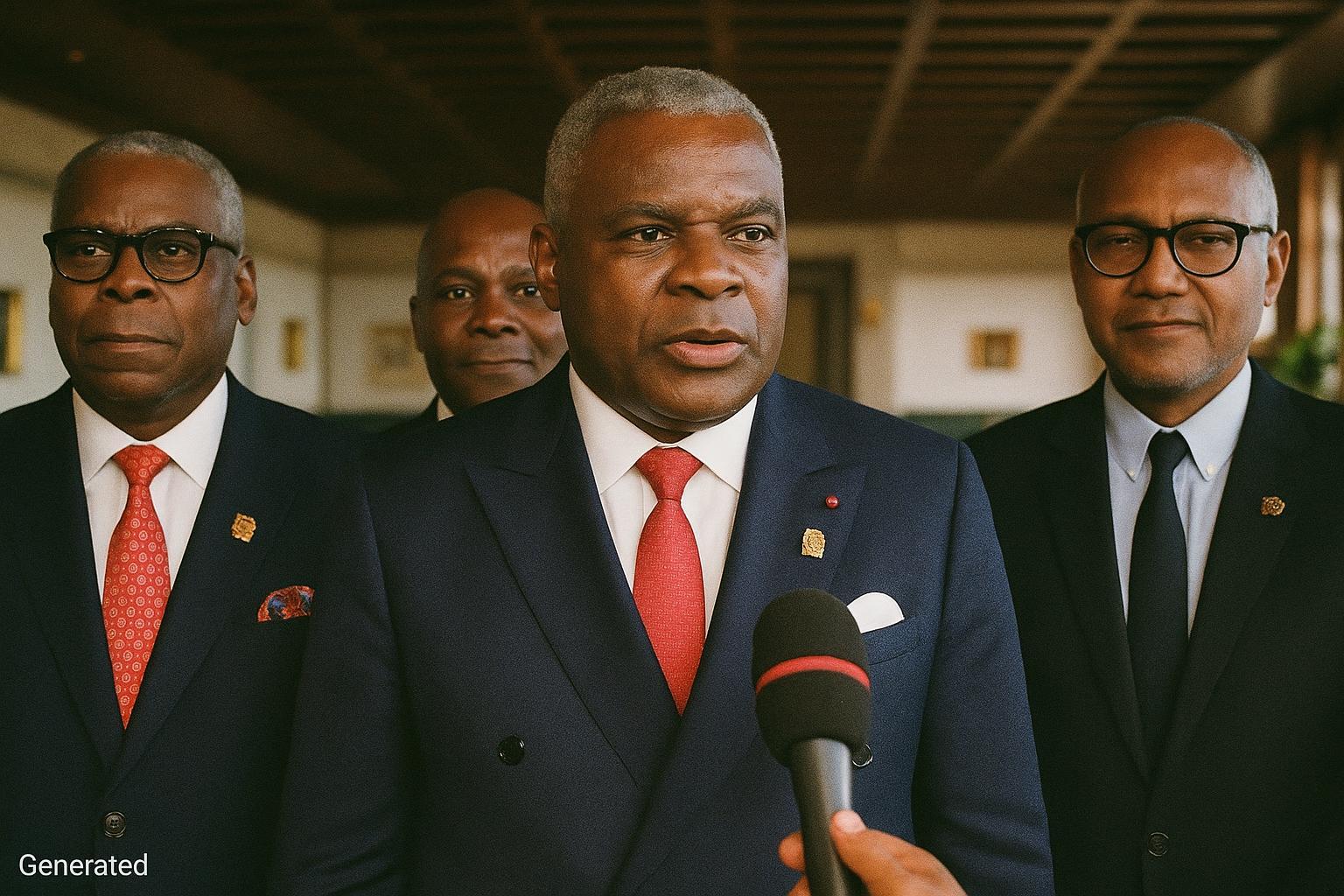
Energy also sat high on the agenda. Sources close to the talks mention a framework agreement on off-grid solar farms for rural health centres and an exploration memorandum in the Cuvette Basin. While figures remain confidential, Makosso described the package as “fruitful and balanced” during a brief press huddle in Istanbul’s historic Pera district.
Health, classrooms and the UNESCO card
Beyond big-ticket infrastructure, Makosso appealed for technical assistance in vocational training and digitised textbooks, areas where Turkey’s Maarif Foundation has built a global footprint. Congo’s education minister, Jean-Luc Mouthou, joined the delegation and teased a twin-city teacher-exchange programme linking Brazzaville to Konya. Analysts see the move as a subtle nod to Matoko’s portfolio at UNESCO, signalling that Brazzaville can translate cultural talking points into practical schooling gains.
Health cooperation featured a proposal for a Congolese-Turkish pharmaceutical hub in Pointe-Noire. The idea, still at concept stage, aims to cut import bills and expand vaccine bottling capacity for Central Africa, an objective aligned with the African Union’s push for vaccine sovereignty (Africa CDC).
Balancing acts in a crowded geopolitical bazaar
Congo’s overtures to Turkey arrive amid shifting sands. Ankara courts African partners to diversify trade and diplomatic votes, while Brazzaville keeps a traditionally strong rapport with Paris, Beijing and Washington. “We are not choosing sides,” Makosso told reporters. “We choose opportunities.” His comment echoes President Sassou Nguesso’s 2022 message to the United Nations that Congo would be “a voice for consensus”.
For Congo, the UNESCO race is both a prestige quest and a proving ground for its broader diplomacy. Winning would place a Congolese national atop a major UN agency for the first time since Henri Lopes briefly headed UNESCO’s executive board in the 1980s. Even if the bid faces heavyweight contenders, the campaign itself opens doors: rail ties, mine shafts, solar panels and classroom links stitched together through relentless air miles.
As the delegation boarded the flight back to Brazzaville, Makosso tweeted a succinct verdict: “Mission accomplished, groundwork laid.” The race for votes continues, but Congo’s bet is clear: showing it can deliver concrete projects alongside cultural vision may tilt the scales in Matoko’s favour, and in the process, keep the nation’s development agenda firmly on track.