
New storage hubs brighten power sector outlook
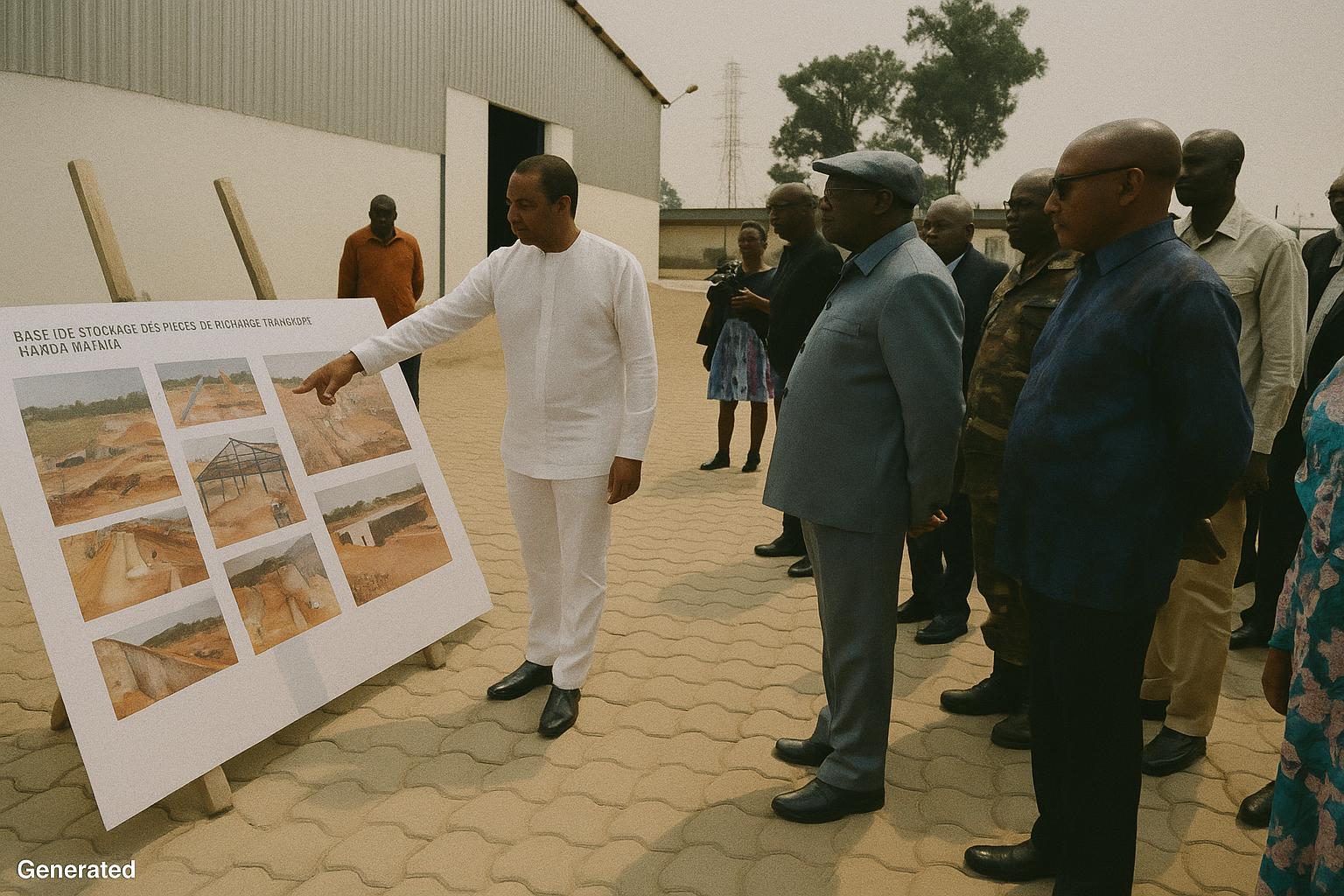
Standing before two brand-new steel hangars in Mongo Kamba II, Energy and Hydraulics Minister Emile Ouosso allowed himself a rare smile. He told reporters the buildings, raised with a 1.28-billion-CFA loan from the French Development Agency, were finished “just in time for the big deliveries of transformers and high-voltage gear already on order”. The boxes are coming from suppliers paid by oil major Eni and the World Bank-funded Pasel project, a package the minister summed up as “the muscle our grid has been waiting for”.
Why spare parts keep the lights on
Electricians in Pointe-Noire like to say that a transformer fails only on payday. Outages on the vital 517-km Pointe-Noire–Brazzaville line cost factories hours of production and households tubs of melted fish. Ouosso admits the network he inherited was “very saggy” after years of emergency fixes. International consultants hired by the ministry calculated that 40 percent of faults lingered longer than 48 hours because companies had to fly in components from abroad. “You can’t do maintenance without parts,” he repeated during the tour, echoing a mantra heard in power plants from Djeno to Owando.
Digital stock control adds transparency
E²C chief executive Jean Bruno Danga Adou unveiled a tablet-based inventory system that tags every fuse, gasket and transformer with QR codes. “At the gate we scan the crate; on departure we scan again,” he explained. The software, adapted from a Nigerian utility, feeds a dashboard in Brazzaville that management and donors can consult in real time. For the mayor of Pointe-Noire, Evelyne Tchitchelle, the upgrade means fewer phone calls from frustrated residents. “A secure, logged warehouse is good for the city and its people,” she said beside CCTV screens already monitoring the compound 24 hours a day.
Partners put money and expertise on the table
Behind the bricks and cameras lie months of joint financing. AFD provided long-term credit on concessional terms, part of a wider €135-million energy portfolio. The World Bank committed an additional $100 million for grid reinforcement under its Power Access and Sector Efficiency Project. Eni, keen to stabilise electricity for its offshore platforms, paid contractors to refurbish 240 km of line and ordered ten 30-MVA transformers. “This is a textbook public-partner blend,” said Albert Bakala, technical adviser on transmission, citing similar models in Côte d’Ivoire and Ghana. Regional think-tank Power Futures Lab estimates that coordinated investments could shave two percentage points off national GDP losses due to outages.
Security and community vigilance
Copper thieves once stripped a substation north of Dolisie in less than an hour. To avoid a repeat, the new depots sit behind double fencing, motion detectors and a police post. Bakala warned that the public also bears responsibility: “We must not slide back into the build-destroy-rebuild loop.” Neighbourhood committees have been briefed to report suspicious movement. Local vendor Marie-Jeanne Louemba, who sells ice water outside the gate, already notices the difference. “The street stays lit now; customers linger and we all earn,” she said.
Road ahead for a robust national grid
Ouosso’s roadmap targets a fault-rate cut of 30 percent by 2025. Next steps include commissioning of the Imboulou–Libreville interconnector and training sixty young technicians in predictive maintenance. Analysts at African Energy Review call the plan “ambitious but bankable” given rising hydropower output at Liouesso and Sounda Gorge. For everyday families the benchmark is simpler: fewer candlelit evenings. “Our mission is that a fridge in Sibiti runs as smoothly as one in Paris,” the minister declared, signing off with a promise to return for the first transformer delivery “before the year is out”.