
Independence Eve Release Stirs Literary Circles
Brazzaville’s riverfront already hums with rehearsals for the 65th Independence Day parade, but another kind of drumroll is sounding in Paris. On 14 August, the Franco-Congolese academic Milie Théodora Miéré will present her new book, “Culture or cultures d’entreprise”, at the French publisher L’Harmattan. The timing is no coincidence. By launching the title on the eve of the national holiday, the author ties her long-running research on organisational values to the broader question of how Congolese society has matured since 1960. The publisher confirms a first print run of 2 000 copies aimed at business schools and company libraries in both France and Central Africa (L’Harmattan catalogue).
From Paris-Saclay Labs to Brazzaville Boardrooms
Dr Miéré, who teaches at the University of Versailles – Paris-Saclay and leads projects at the Larequoi management laboratory, has spent two decades dissecting how messaging inside firms shapes performance (University of Versailles researcher profile). Her earlier titles on digital networks and telephony earned favourable reviews in regional outlets such as Les Dépêches de Brazzaville. In the new volume she rewinds to the 1980s, a decade when multinational subsidiaries sprouted in Congolese cities and the first debates on ‘corporate culture’ appeared in local HR manuals.
She revisits that era through employee interviews, internal newsletters and media archives. The central argument is straightforward: companies that explained their purpose clearly weathered shocks better, whether the oil-price swing of 1986 or the tech pivot of the early 2000s. Miéré suggests that the process works only if management allows a “two-way street” of storytelling, letting shop-floor staff shape the narrative rather than merely absorb it.
Why Corporate Culture Matters in 2024 Congo
Consultants in Brazzaville note that nearly 60 percent of the workforce is under 35. With fresh graduates juggling French, Lingala, English and code-switching between WhatsApp and formal email, aligning values across generations has become a strategic issue, not an HR afterthought. In an interview with Radio Congo last March, telecom executive Sylvie Mabiala called culture “the invisible asset no line item can value but every investor sniffs out.”
The government’s new Plan national de développement places emphasis on public-private partnerships and on boosting productivity in state-owned enterprises. Observers argue that Miéré’s work dovetails with this agenda by offering a toolbox for internal cohesion. “We need to move from slogans to lived rituals,” notes economist Jérôme Mvouba, pointing to weekly safety briefings at the Pointe-Noire refinery as an example of practice spreading from the factory floor into workers’ communities.
By framing culture as a living negotiation rather than a managerial dictate, the book avoids the pitfall of preaching. Instead it suggests measures ranging from story-sharing workshops to symbolic gestures such as open-door sessions with senior executives. None of these prescriptions clash with public policy; in fact they echo the administration’s call for a more participative governance style in state agencies.
Echoes of a Personal Story
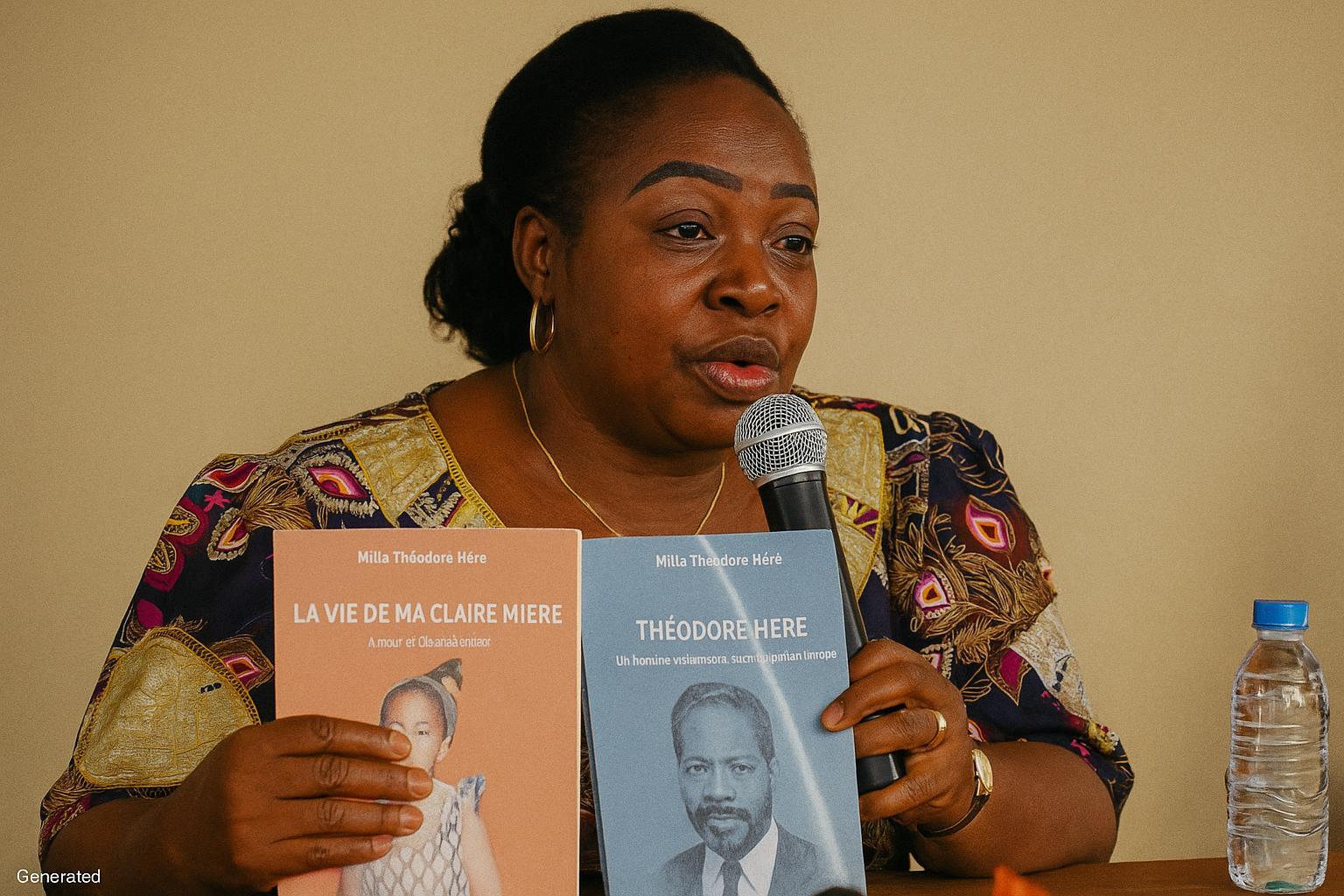
Beyond the boardroom, readers may be drawn by the author’s personal journey. Orphaned in youth, she dedicated four separate volumes in 2022 to her late parents, linking filial memory to professional purpose. That private strand continues here. Each chapter opens with a short vignette: a childhood recollection of market life in Ouenzé, a first encounter with Paris metro commuters, or the communal chants of a graduation ceremony at Marien Ngouabi University. These snapshots act as bridges, demonstrating how individual identity feeds into corporate identity.
Literary critic Daniel Mahoungou, who previewed the manuscript, says the technique “grounds theory in soil you can touch.” It also makes the text attractive to non-specialists keen on stories rather than spreadsheets.
Publishing Outlook and National Mood
Books on management rarely make front-page news in Congo, where politics and football dominate headlines. Yet L’Harmattan’s marketing unit hints at brisk early orders from chambers of commerce in Abidjan, Libreville and even Lisbon, signalling appetite for African-made thought leadership. A virtual launch via Zoom will allow Congolese readers at home and in the diaspora to quiz the author directly, reinforcing the cross-border dimension highlighted by President Denis Sassou Nguesso in recent speeches on the role of the diaspora in knowledge transfer.
The broader cultural programme around Independence Day also shines a light on Congolese creativity. Alongside military parades and musical galas, the Ministry of Culture is co-sponsoring pop-up book fairs in Brazzaville and Pointe-Noire. Organisers see Miéré’s release as a flagship event within that line-up, illustrating how scholarship can feed both economic and social renewal.
As the countdown to 15 August accelerates, the book’s message feels timely: that careful listening inside companies mirrors the national dialogue required for inclusive growth. If the pages find their way from Paris printing presses to Congolese break rooms, the conversation on shared values may outlast the fireworks.