
French Mastery Contest Lights Up Marien-Ngouabi
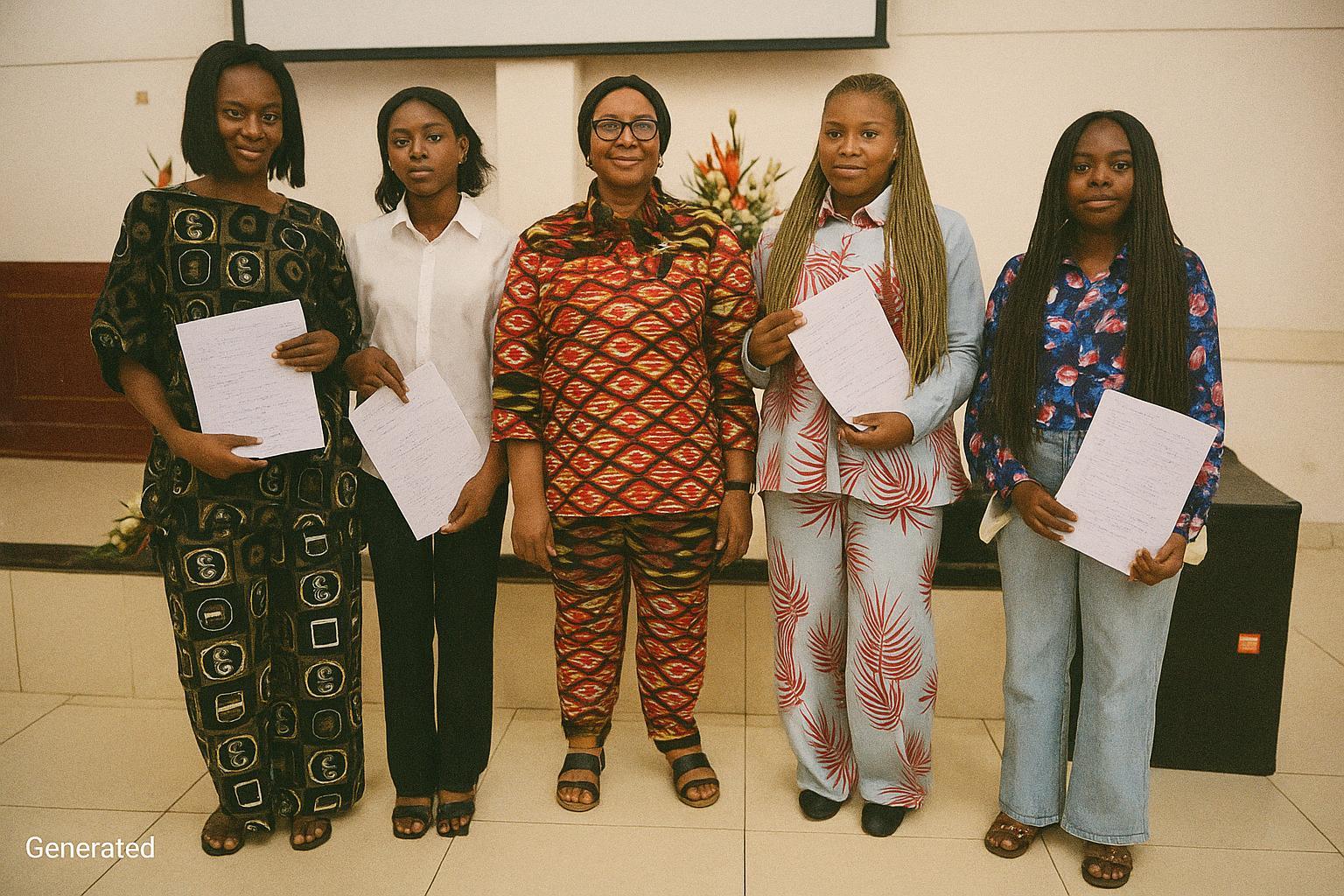
The conference hall inside Marien-Ngouabi University filled with the unmistakable murmur of exam anxiety on the afternoon of 31 July. Desks were lined not with calculators or lab gear but with plain sheets of paper where every accent, every comma, could make or break a dream. By sundown, the second edition of the Miss Mayele literary contest had its stars: Christ Nourra Ntsoumou-Ntounou, Bénie Riche Aimervia Elenga, Théodorat Hilary Makambala-Ndeke and Nicie Michelle Amora Mviri. The quartet walked away with bundles of books and modest envelopes, yet their real trophy was applause loud enough to drown out the usual campus traffic.
Miss Mayele was launched in 2022 as a grassroots answer to a concern shared by parents, recruiters and linguists alike—the creeping casualness that chips away at written French, even in universities. The organisers chose the Lingala word “mayele,” meaning “knowledge” or “cleverness,” as a reminder that smart phrasing is still a ticket into boardrooms and lecture theatres. “The mood was electric,” recalls volunteer invigilator Arsène Ndinga, “because everyone knew they were fighting for more than a sash; they were fighting for linguistic self-respect.”
French Skills Pay the Bills in Today’s Job Market
Corporations hiring in Pointe-Noire’s energy corridor have gone on record saying a flawless cover letter can separate an engineer from a pile of résumés, even when technical scores look identical (Chambre de Commerce et d’Industrie, 2023). That message echoed through the rectorat as career counsellors reminded participants that language remains the first handshake with an employer. According to the 2022 UNESCO report on Francophonie in Africa, strong command of French boosts young professionals’ earnings by up to 20 percent in Lusophone-adjacent countries where bilingual contracts are routine.
Against that backdrop, Miss Mayele feels less like an extracurricular hobby and more like a rehearsal for the labour market. “Jobs come and go, but words stay on your record,” said Michel Nkouka, human-resources manager for a Brazzaville logistics firm, when asked why his company offered internship interviews to the finalists.
Portraits of Four Rising Wordsmiths
Each of the laureates carries a different story stitched together by adjectives and ambition. Christ Nourra Ntsoumou-Ntounou, a second-year law student, credits nightly readings of Congolese legal codes for her near-perfect dictation sheet. Bénie Riche Aimervia Elenga, studying information technology, says proofreading code comments trained her eye for stray accents. Théodorat Hilary Makambala-Ndeke grew up swapping detective novels with her father, a habit that taught her the rhythm of descriptive clauses. Nicie Michelle Amora Mviri, the youngest, balances medical textbooks with poetry anthologies to “keep the left brain from bossing the right one around,” as she joked after the ceremony.
Makambala-Ndeke, who placed first overall, told reporters the contest is “proof that an hour a day is enough to polish your French and, by extension, your future.” Her words drew nods from classmates who had witnessed her lunchtime drill of conjugation flashcards.
Educators and Officials Rally Behind the Initiative
Sylvia Djouob, the fiery literature professor who founded Miss Mayele, did not mince words on stage. “Grammar and orthography are the two legs of French. Break one, and the language limps,” she declared, receiving an approving ripple from both faculty and government guests. Djouob publicly thanked President Denis Sassou Nguesso and the Ministry of Higher Education for logistical support, noting that such backing “turns an idea scribbled in a notebook into a national conversation.”
University rector Pr Luc Ganao underscored that sentiment, citing the government’s Ten-Year Education Plan that places particular emphasis on girls’ access to quality learning materials. “When we applaud these four students, we also applaud the policy environment that made their win possible,” he said.
Putting Girls at the Centre of the Knowledge Economy
Miss Mayele fits squarely into a continental push to make classrooms more inclusive. The African Union’s 2063 Agenda lists literacy and gender parity as key levers for economic transformation. In Congo-Brazzaville, the net enrolment rate for girls in secondary school has risen from 46 percent in 2015 to 58 percent last year, according to figures from the National Institute of Statistics. Observers attribute part of that climb to highly visible programmes like Miss Mayele that attach prestige to scholastic achievement.
Sociologist Clémence Kikadidi notes that role-model visibility matters: “A televised football final shows what boys can become. A spelling final does the same for girls who dream of boardrooms, newsrooms and laboratories.” That symbolic currency was on display as elementary students invited to the ceremony peppered the winners with requests for autographs on copybooks rather than phones.
Next Steps for a Contest on the Rise
Organisers say the 2026 edition will introduce a digital qualifying round, allowing pupils from Ouesso to Dolisie to submit essays via an online portal, an upgrade made possible through a public-private partnership with a local telecom operator. Talks are also underway to include a segment on professional email etiquette, reflecting workplace realities.
Back in the now-quiet conference hall, stacks of unused exam sheets hinted at the hundreds who had registered but could not travel. For Djouob, that is motivation, not disappointment. “What I do for these students is what others once did for me. The fight for knowledge moves forward, never in circles,” she told the caretakers locking up for the night. If her resolve is any measure, Miss Mayele’s grammar glamour is set to shine well beyond campus walls.