
Brazzaville’s Soft-Power Marathon
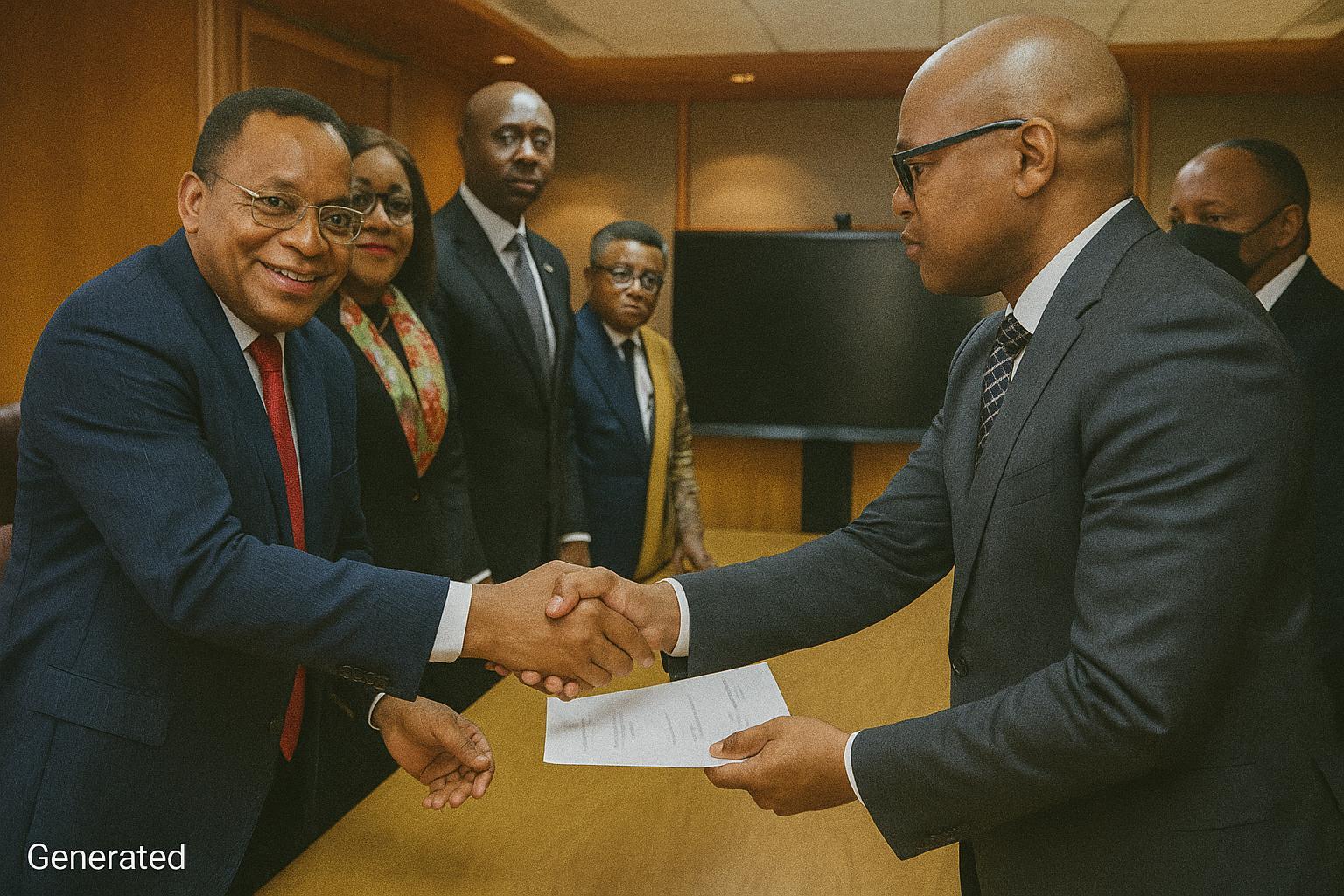
Three days on the road, seven flights and a suitcase of briefing notes: that is the pace Minister Jean-Claude Gakosso has set for himself and his aides as they criss-cross southern Africa in late July. The mission is clear. Brazzaville wants the continent, and later the world, to rally behind Firmin Édouard Matoko, the Congolese candidate aiming for the director-general seat of the United Nations Educational, Scientific and Cultural Organization. For President Denis Sassou Nguesso, winning this post would project Congolese influence far beyond oil exports and river trade, anchoring the nation inside a flagship of multilateral cooperation. “Our passports may be green, but our ambition is blue like the UN flag,” the minister joked to reporters on the tarmac in Maputo (Les Dépêches de Brazzaville, 24 July 2023).
Botswana Stopover Wins Warm Words
After Mozambique, the delegation touched down in Gaborone, a city better known for diamonds than UNESCO politics. Behind closed doors at the Office of the President, Gakosso outlined Matoko’s résumé and his pledge to place technical education and digital heritage high on the agency’s agenda. Officials in Botswana’s foreign ministry, according to a senior source present, “listened more than they spoke, a good sign in our protocol,” but reminded the visitors that final instructions would come from cabinet in the weeks ahead (Botswana Government Press, 24 July 2023). Outside, local media framed the meeting as an example of Africa seeking consensus rather than competing blocs. In the minister’s own words, “What helps one member state climb helps the region rise,” a phrase echoed across radio talk shows the same evening.
Maputo Memories and Liberation Legacy
Symbolism travelled with the team. Before boarding their charter for Botswana, the diplomats laid a wreath at the Samora Machel mausoleum in Maputo. Gakosso called the late Mozambican leader “a compass for African dignity”. The image of Congolese officials bowing near the granite monument moved many southern Africans who still measure friendship by sacrifices made during the liberation years. Analysts at the Eduardo Mondlane University noted that the gesture dovetailed with UNESCO’s ongoing General History of Africa project, which Matoko supervised in Paris during his tenure as Assistant Director-General for Priority Africa. “He knows the files, he knows the sensitivities, so why not give him the keys?” asked Professor Celeste Nhachungue on national television.
Matoko’s Agenda: UNESCO Speaks With Africa
Matoko’s policy booklet, discreetly shared in Gaborone, sets out four planks: reinforce basic science labs in the Global South; digitise endangered languages; train youth in climate-smart agriculture; and expand UNESCO’s African Heritage Fund. “UNESCO must talk with Africa, not merely about Africa,” the candidate writes in the foreword. Supporters argue that his two decades at the agency prove he can deliver. Critics counter, mostly off-record, that rotation logic may push the job toward Eastern Europe. Yet the Congolese camp believes early continental unity could sway undecided members of the executive board, whose 58 votes will decide the winner in 2025 (UNESCO Records, May 2023).
Mauritius and Beyond: Campaign Roadmap
Next on the itinerary is Port Louis, where maritime security and creole culture dominate policy talk. The government of Mauritius hosts a UNESCO field office, making the island a strategic amplifier for Matoko’s pledges on ocean science. After that, Prime Minister Anatole Collinet Makosso will steer a separate swing through Gabon, Côte d’Ivoire, Nigeria, Burkina Faso, Liberia and Djibouti. Each capital holds a vote or influence over one. Brazzaville’s strategy is to pair the pitch for Matoko with bilateral dossiers ranging from hydroelectric links to the trans-Sahel fiber-optic backbone. A senior aide sums it up: “We show what cooperation looks like today, then ask for help shaping cooperation tomorrow.”
Diplomacy, Employment and National Branding
Beyond the ballot arithmetic lies domestic resonance. Inside Congo, the campaign is framed as a chance to prove that intellectual capital can be exported just like crude. Newspapers run headlines such as “From Pool to Paris” and student unions discuss how a Congolese at the helm of UNESCO might unlock scholarships. Economists at the University of Brazzaville estimate that every senior post secured in multilateral agencies cascades into dozens of consultant contracts and training slots. While those projections may be optimistic, the prospect has already lifted morale in administrative circles eager for global exposure. International partners watch with measured approval, noting that Brazzaville’s push stays within diplomatic norms and channels. One European envoy in Luanda observed, “They are campaigning hard, but they are not breaking china, and that counts in multilateral politics.”
A Calculated Bet on Regional Solidarity
As July turns into August, the soft-power caravan rolls on. The Congolese playbook relies on shared liberation history, technical cooperation and the personal networks Matoko has built over two decades. Whether that cocktail is potent enough to clinch the top UNESCO post will only be known next year, yet Brazzaville’s current tour has already nudged southern African capitals to place the candidacy on their talking points. In diplomacy, being on the agenda is half the victory. For now, Gakosso and his team keep moving, armed with folders, roses for memorial sites and a conviction summed up by the minister as he boarded the plane in Maputo: “The road is long, but the runway is clear.”