
Club 2002 Voices Early Endorsement
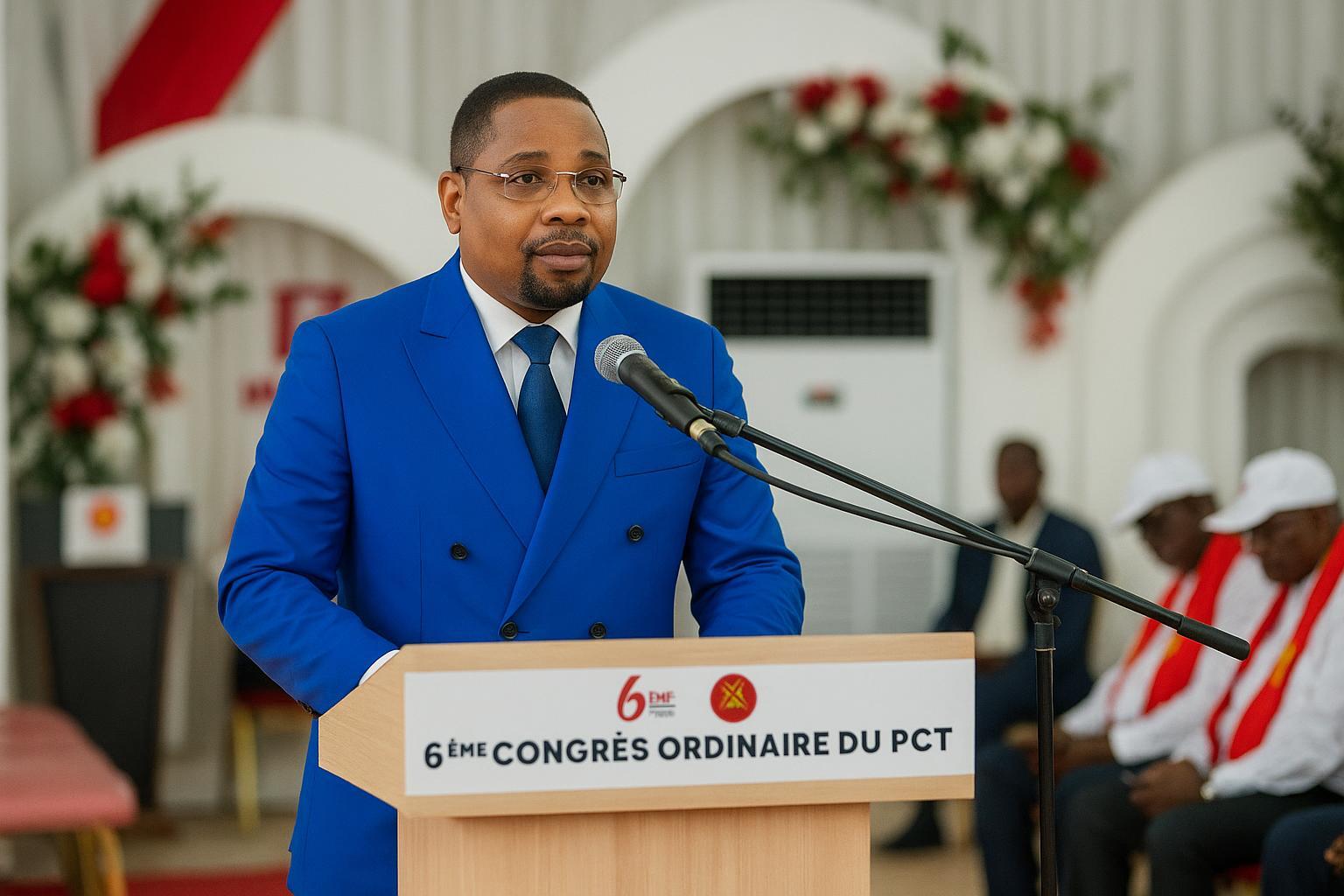
Brazzaville — An early tremor in Congo-Brazzaville’s 2026 presidential race rippled through the capital this week as Club 2002-Party for Unity and the Republic publicly declared President Denis Sassou N’Guesso its “natural candidate” during the second day of the governing PCT’s sixth ordinary congress.
Standing before hundreds of delegates, Club 2002 Secretary-General Juste Désiré Mondelé praised the head of state as “a unifying figure, rich in experience and a vector of peace and stability for our country and the sub-region,” urging all allies to rally behind Sassou N’Guesso.
The endorsement, delivered on 28 December, came as no surprise to observers, yet the timing offered fresh momentum to the ruling coalition only twelve weeks before voters are scheduled to cast their ballots in the March contest.
Inside the 6th PCT Congress
Congress delegates spent the entire morning hearing solidarity messages from domestic partners and visiting foreign parties, a ritual that underlines the PCT’s regional networks and its place at the centre of national politics.
When his turn arrived, Mondelé stepped to the podium in a crimson tie matching the congress’s banners and delivered the soundbite delegates had been waiting for, formally aligning Club 2002 with the expected PCT nominee.
He framed the choice as both logical and historical, noting the incumbent’s long record as “grand artisan of development and industrialisation” and describing him as “the true ferment of national unity.” The hall answered with prolonged applause.
Messages of Unity and Stability
Beyond symbolism, the speech aimed to solidify a wider electoral front. Mondelé insisted the majority must stretch “beyond allies, to the Congolese people,” positioning Sassou N’Guesso as a guarantor of continuity at a “pivotal moment of our democratic history.”
PCT Secretary-General Anatole Collinet Makosso, chairing the session, echoed that appeal for cohesion, calling on militants to intensify grassroots mobilisation so that the alliance can deliver what he termed an “overwhelming victory” next March.
Observers inside the convention centre noted that each reference to peace and stability drew particular applause, reflecting a public mood still focused on security and steady economic progress.
Outside the venue, giant screens relayed proceedings to passers-by on Blvd Alfred Raoul, an image the organising committee hopes will signal openness while reinforcing confidence in established institutions.
Countdown to the March 2026 Ballot
With roughly three months separating the congress from election day, parties are already calibrating campaign logistics, from delegate deployment to poster production, mindful of the compressed calendar imposed by the March schedule.
Club 2002’s early endorsement gives the majority bloc a head start on messaging, allowing organisers to present a united front in neighbourhood rallies, traditional markets and digital channels before formal candidacy declarations close.
Election law limits the official campaign period, yet experience shows that groundwork laid months ahead can prove decisive, especially in rural districts where transport challenges make last-minute outreach harder.
In that light, Mondelé’s invitation to “mobilise the people” resonates as both a slogan and a schedule, tasking local committees to translate congress rhetoric into household-level conversations on policy continuity.
Calls for a Stronger Social Contract
Before leaving the podium, the Club 2002 leader added a cautionary note, urging allies to place fresh emphasis on a reinforced social contract paired with “more demanding governance” so that economic growth translates into tangible benefits for ordinary citizens.
He framed the suggestion as friendly advice between partners, not criticism, a nuance that preserved the celebratory tone while still pointing to areas where the electorate expects progress.
Delegates interviewed in the corridors later said the push for social impact would strengthen, rather than dilute, their campaign narrative, because bread-and-butter issues remain at the centre of voter concerns after the shocks of recent years.
As conference committees settled into deliberations on policy resolutions, banners bearing the slogan “Unity, Peace, Development” ringed the hall, encapsulating the themes that the ruling coalition, now buoyed by Club 2002’s pledge, plans to take onto the campaign trail.
Next Steps for Candidates and Voters
Procedurally, the PCT congress is expected to formalise its presidential nomination in the coming days, after commissions deliver reports on strategy, finances and programme priorities. Once the party vote is recorded, the file will be transmitted to the national electoral authority for validation.
Campaign regulations require each contender to publish a manifesto; insiders say drafting teams have already updated the incumbent’s social and industrial agenda to reflect lessons learned during successive economic shocks and the push for diversification.
Meanwhile, voter registration centres remain open across Brazzaville and Pointe-Noire, where young first-time voters queue for biometric cards that will enable them to participate in March. Electoral officials have urged citizens to check their details early to avoid last-minute congestion.
Public attention will now turn to upcoming regional tours, where the coalition intends to showcase infrastructure achievements and solicit feedback on service delivery. Organisers believe such two-way exchanges can reinforce the legitimacy of the eventual candidate and keep the campaign rooted in everyday realities.