
Renewed World Bank support for Congo digital push
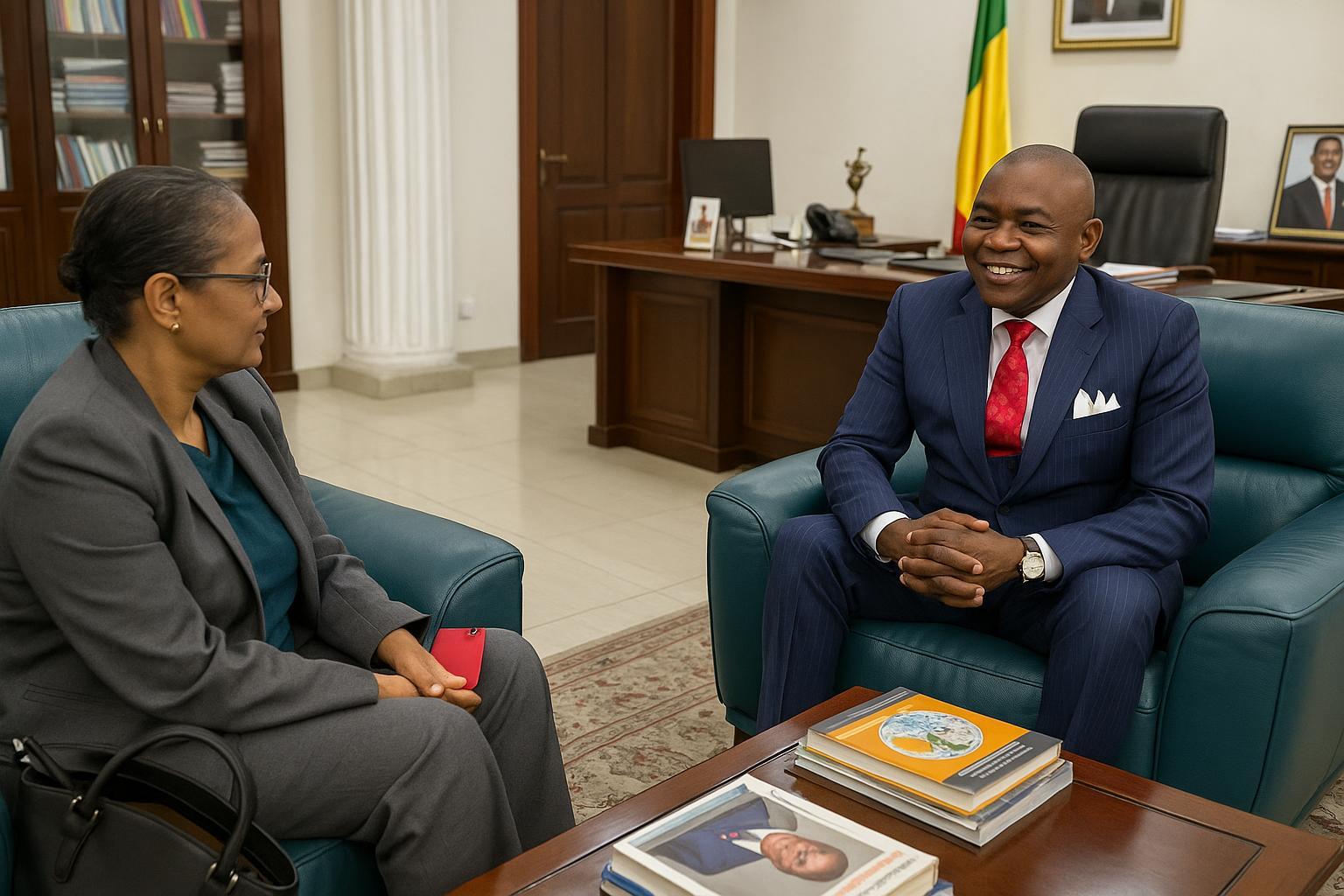
A high-level courtesy meeting in Brazzaville has placed Congo’s Digital Transformation Acceleration Project, known by its French acronym PATN, firmly back in the spotlight. The World Bank’s new country manager, Alexandra Célestin, assured authorities that the USD 100 million facility remains fully mobilised.
Minister of Posts, Telecommunications and the Digital Economy Léon Juste Ibombo said the exchange served as a welcome sign that the international lender will keep walking “step for step” with Congo as it modernises critical connectivity infrastructure across the country.
Both parties described the discussion as constructive and forward-looking, reinforcing a partnership that has already produced a detailed work plan, agreed spending envelopes and a troubleshooting mechanism for emerging challenges.
High-level meeting in Brazzaville
The audience, held on 10 November, was the first official contact between Ms Célestin and the ministry since she presented her credentials. Observers noted the cordial tone and the emphasis on solutions rather than obstacles.
According to Mr Ibombo, the two sides reviewed each component of PATN, flagged minor delays linked to procurement and field logistics, and pencilled in quick corrective actions. The minister said regular technical sessions will track progress in real time.
He added that the administration welcomes rigorous monitoring because it ensures that every dollar spent translates into new towers, fibre links or digital platforms that citizens can actually use.
PATN funding and priorities
The PATN envelope totals USD 100 million, fully financed by the World Bank. Funds are dedicated chiefly to extending high-speed connectivity to localities that still lack reliable service, through the deployment of additional terrestrial antennas and related backhaul.
Project documents list broadband access as the core deliverable, yet implementation also encompasses institutional capacity-building and the promotion of an enabling legal framework for the digital economy. These facets are meant to make the infrastructure both sustainable and inclusive.
By boosting bandwidth and coverage, the project aims to lower costs for households and small firms, so that digital tools become as commonplace as traditional utilities.
Digital Strategy 2030 roadmap
PATN feeds directly into the broader Digital Strategy 2030, drafted with technical backing from the Bank. The strategy envisions a Congo that is fully connected, digitally skilled and seamlessly integrated into the global information society.
Mr Ibombo described the roadmap as the compass for every public or donor-funded ICT programme over the next decade. It aligns with the national development plan and the continental digital transformation agenda endorsed by CEMAC.
Crucially, the strategy sets measurable targets for broadband penetration, e-government uptake and digital literacy, creating a scoreboard that will guide annual budget allocations and policy tweaks.
Identifying bottlenecks early
During the meeting, both teams compared field reports to pinpoint pain points such as difficult terrain in remote districts, lengthy customs procedures for equipment and the need for specialised maintenance crews.
Ms Célestin agreed that anticipating these hurdles is the best way to keep the rollout on schedule and within budget. She indicated that the Bank can mobilise advisory services or fast-track disbursements when justified.
The minister highlighted the value of agile problem-solving, noting that even short delays can widen the urban-rural digital divide the project seeks to close.
Next steps and timelines
A joint technical mission will visit several project sites before year-end to validate network designs and consult local authorities. Equipment tenders for additional towers are expected to close in the first quarter of next year.
Subsequent milestones include launching a national connectivity map, adopting streamlined permitting procedures and opening training sessions for engineers and technicians who will operate the new infrastructure.
All these actions feed into a timetable that aims for substantial coverage gains by 2025, well ahead of the 2030 horizon.
Broader economic impact
Increased connectivity is projected to unlock new opportunities for start-ups, expand market reach for small businesses and enable digital public services that save time for commuters and rural residents alike.
Economists argue that reliable broadband can raise productivity across sectors such as agriculture, trade and tourism. Although specific figures were not released at the Brazzaville meeting, officials agree that digital dividends could amplify economic diversification.
The government’s message remains clear: technology is not an end in itself but a tool to accelerate inclusive growth and social cohesion.
Government–donor synergy
The collaboration between Congo and the World Bank illustrates a model where sovereign vision meets multilateral expertise. The Bank brings global experience and concessional finance, while the state provides policy direction, local knowledge and political backing.
Ms Célestin praised the “shared ownership” framing the partnership, saying it minimises overlap and empowers national agencies to lead implementation. Mr Ibombo echoed the sentiment, calling the relationship a testament to trust built over successive projects.
As PATN gathers pace, both sides are signalling that continuous dialogue and transparent reporting will remain the watchwords, ensuring that the digital future being sketched on paper becomes tangible reality for Congolese users.