
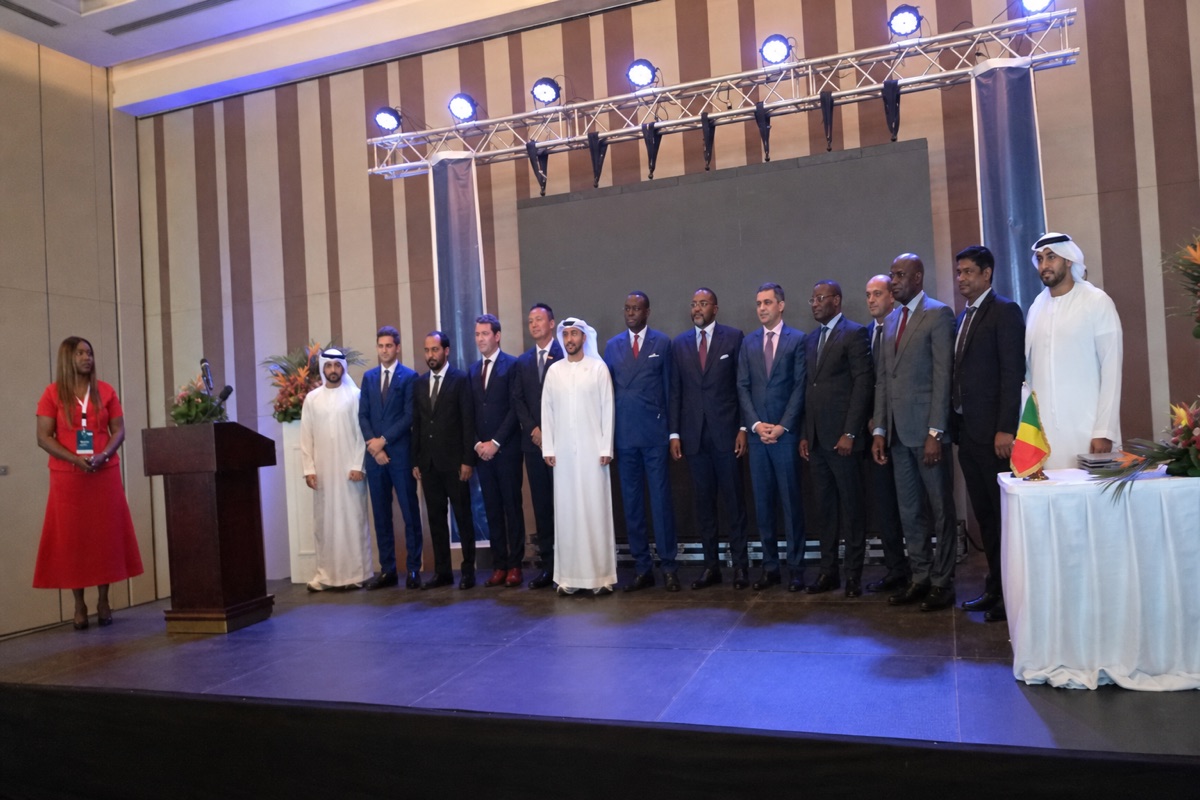
Congo-Brazzaville has placed a fresh bet on the sea. On 7 May, in Brazzaville, government officials and AD Ports Group of the United Arab Emirates signed three contracts to design, build and equip the new Noatum Ports container terminal at Pointe-Noire.
The package is worth more than 236 million US dollars. For a country trying to wean its economy off oil, the figure carries weight far beyond the ceremony where the parties posed for photographs.
A $236 Million Push To Modernise Pointe-Noire
The deal is not a single cheque but a layered arrangement. Two works contracts, together near 150 million dollars, went to the joint venture pairing MAR Contracting Sarlu with MBTP SA. A separate 50-million-dollar contract covers port equipment.
That equipment order landed with Shanghai Zhenhua Heavy Industries, a Chinese firm whose cranes already move containers across much of the world. The blend of Emirati capital, Congolese builders and Asian machinery says a lot about how regional ports now get financed.
What The New Terminal Will Actually Look Like
On paper, the numbers describe an ambitious quay. The berth will stretch 420 metres and reach 16 metres deep, enough to take Patagonia-class vessels that smaller West and Central African ports cannot currently handle.
Behind the water line sits the logistics yard, roughly 100,000 square metres of space for stacking, sorting and clearing cargo. Construction is expected to run about two years, with commercial operations pencilled in for the fourth quarter of 2028.
Up To 9,000 Jobs On The Table
Few promises travel faster in Pointe-Noire than the word “jobs,” and this project leans on it heavily. Officials estimate the terminal could generate as many as 9,000 direct and indirect positions over its life.
The breakdown is more sober than the headline. Around 800 people are expected to work during the construction phase, while roughly 400 permanent posts would keep the terminal running once vessels start calling. The wider figure depends on the trade and services that grow around the quay.
Greener Cranes, Lower Diesel Bills
There is an environmental angle that the partners are keen to flag. The hybrid rubber-tyred gantry cranes chosen for the yard are designed to cut diesel use by about 60 percent compared with conventional models.
In practical terms, that points to roughly one million litres of fuel saved each year and an estimated 5,000 tonnes less carbon dioxide. For a port operating around the clock, those savings also trim running costs over time.
Why Pointe-Noire Wants To Be A Regional Hub
Strip away the technical detail and the strategy is plain. The terminal fits squarely inside Congo’s economic diversification plan, which treats Pointe-Noire as a gateway rather than just an oil-export point on the Atlantic coast.
The ambition is to turn the city into a serious maritime hub for Central and West Africa, feeding goods deeper into the continent. That logic connects neatly to the African Continental Free Trade Area, where reliable ports decide which countries capture the traffic.
Whether the timeline holds is the real test. A 2028 opening leaves little room for slippage, and big port projects rarely run perfectly to schedule. For now, the signatures in Brazzaville give Pointe-Noire something concrete to build toward (ADIAC / Les Depeches de Brazzaville).