
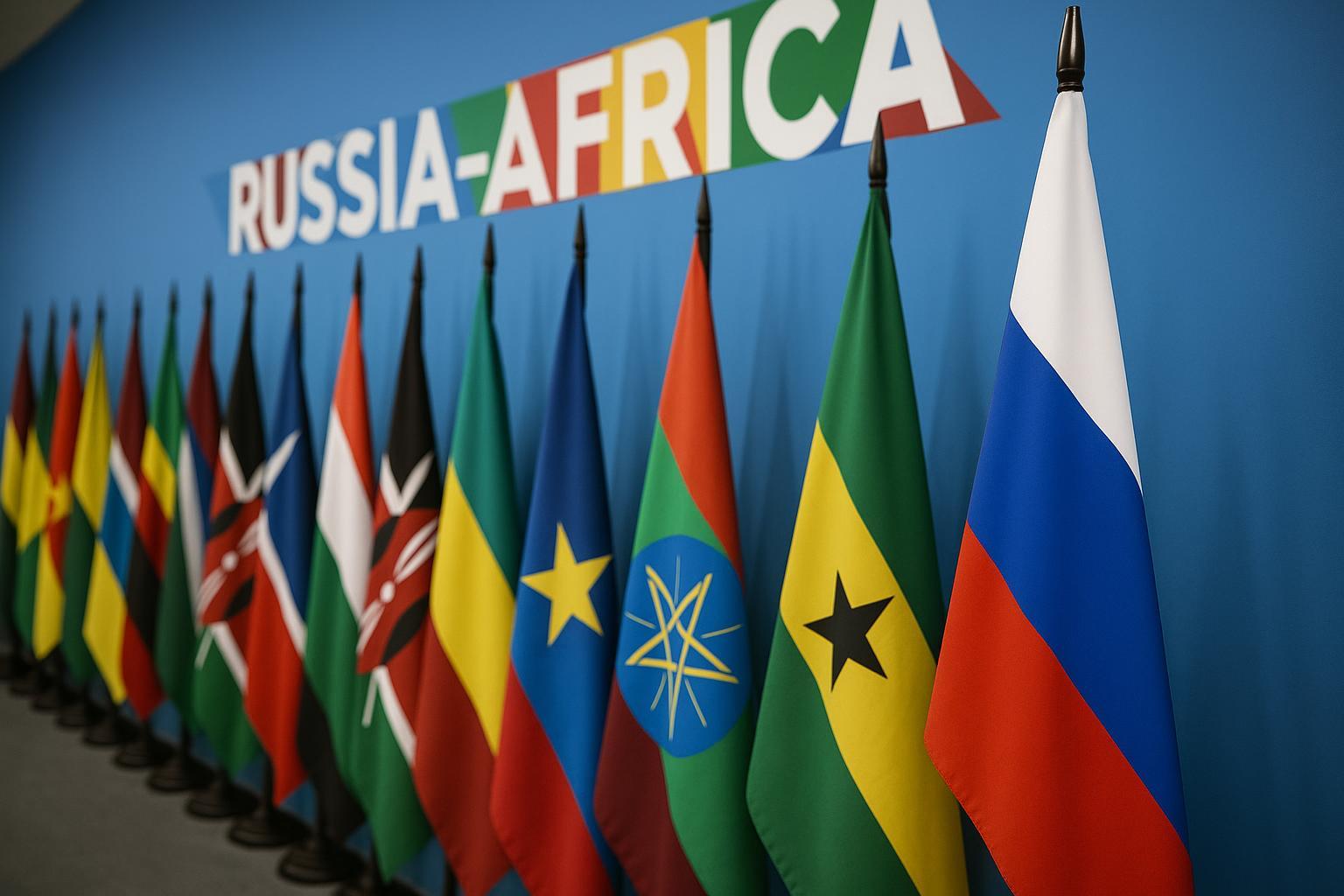
Moscow Strategic Partnership Forum opens
Economic actors from across Russia opened a five-day Strategic Partnership Forum in Moscow on 16 October, aiming to convert recent diplomatic warmth with Africa into concrete investment deals and joint projects.
Scheduled to run until 20 October, the event intends to position Moscow as a long-term collaborator for African economies in energy, agriculture, infrastructure and security, four fields repeatedly cited by speakers during the inaugural plenary.
Forum organisers say their goal is straightforward: move from memorandum to machinery, from goodwill statements to ground-breaking ceremonies, and do so at a rhythm that satisfies both Russian financiers and African project owners.
18 B Dollar Russia-Africa Trade Surge
According to the Russian Institute of Foreign Trade, bilateral exchanges with Africa reached 18 billion dollars in 2024, a 22 percent jump over two years, prompting the Kremlin to set the bold target of doubling volumes by 2030.
If that trajectory holds, Africa could soon join Eurasia and Asia-Pacific among Russia’s most dynamic commercial theatres, analysts say, giving African negotiators additional leverage to secure technology transfer and job-creating investments.
Dr Inoussa Traoré, an Africa-Eurasia relations specialist, summed up the ethos crisply: “This forum aims to build a durable economic alliance based on complementarities, not asymmetries,” he told delegates, drawing sustained applause.
Exhibition Hall Highlights Tech and Finance
Participants from state agencies, mining consortia, fintech start-ups and agri-food cooperatives circulated through a cavernous exhibition hall where modular stands showcased everything from irrigation pumps to drone-based pipeline monitors, underscoring the forum’s cross-cutting design.
Behind the bright screens and scale models, however, discussions frequently returned to financing, a question many African entrepreneurs say determines whether glossy prototypes ever see daylight on their soil.
Organisers highlighted the role direct Russian investment can play in bridging that gap, citing instruments such as joint venture equity, long-tenor credit lines and sovereign-backed guarantees.
Security Cooperation Supports Commerce
From an African standpoint, the security component of the agenda proved equally salient, especially for Sahel and Great Lakes delegates who view stabilised supply chains as a precondition for sustained growth.
Russian organisers reiterated that security cooperation was invited purely in support of economic corridors, avoiding discussion of troop deployments and instead focusing on border surveillance technology and cyber-resilience frameworks that protect digital trade platforms.
Foreign Minister Sergei Lavrov’s earlier comment that “Africa is a strategic priority for Russia in building a multipolar world order” floated across several panels, often cited as proof that the forum enjoys high-level political backing likely to accelerate approvals.
Research and Skills Take Center Stage
Veteran observers note that Russia’s commercial push in Africa follows a pattern set by other emerging powers, yet differs in its emphasis on joint research and scientific cooperation, a point repeatedly made in sessions on space technology and metallurgical innovation.
Speakers stressed that collaborative laboratories, staffed by mixed teams of Russian and African engineers, could shorten product-development cycles and ensure that solutions are tailored to local climatic and regulatory realities rather than simply exported off the shelf.
Another recurrent thread revolved around skills transfer, with African universities seeking memoranda that guarantee student internships inside Russian plants, while Russian polytechnic institutes expressed interest in field placements on the continent’s fast-growing renewable-energy farms.
Culture, Finance and Green Standards
Beyond corporate suites, the forum hosts a public cultural programme featuring film screenings and culinary showcases aimed at deepening people-to-people ties, an element organisers argue is essential for sustaining trust over multi-year infrastructure timelines.
While some voices questioned whether global sanctions could complicate payment settlements, panelists pointed to alternative clearing systems under discussion, insisting that financial architecture would not derail the collaboration sought.
Asked about environmental safeguards, moderators reminded the audience that African signatories increasingly condition resource contracts on strict impact assessments, a trend they believe aligns with Russian firms’ stated willingness to deploy cleaner extraction and processing methods.
Localisation and Deal Pipeline Build Up
Throughout the day, African delegates used the B2B slots to explore whether Russian engineering groups could localise part of their production, arguing that on-shore assembly would amplify the developmental impact of the ventures discussed.
No contract figures were released during the opening tranche, yet corridors hummed with conversation about pilot projects to be announced before year-end, according to attendants who asked to remain unnamed because talks are deemed sensitive.
Organisers promised a digital tracker listing memoranda and follow-up milestones, saying the tool will help partners monitor progress between this edition and the next.
A Long Day Foreshadows Busy Year
As sessions spun into the evening, delegates queued at translation booths, clutching draft term sheets and business cards, a vivid snapshot of the intensity with which both sides now court practical outcomes from a relationship long framed primarily in diplomatic language.
The forum is scheduled to conclude on 20 October with a joint communiqué summarising investment pledges and outlining a roadmap meant to steer Russian-African trade toward the Kremlin’s stated goal of 36 billion dollars by 2030.