
Startup registrations surge
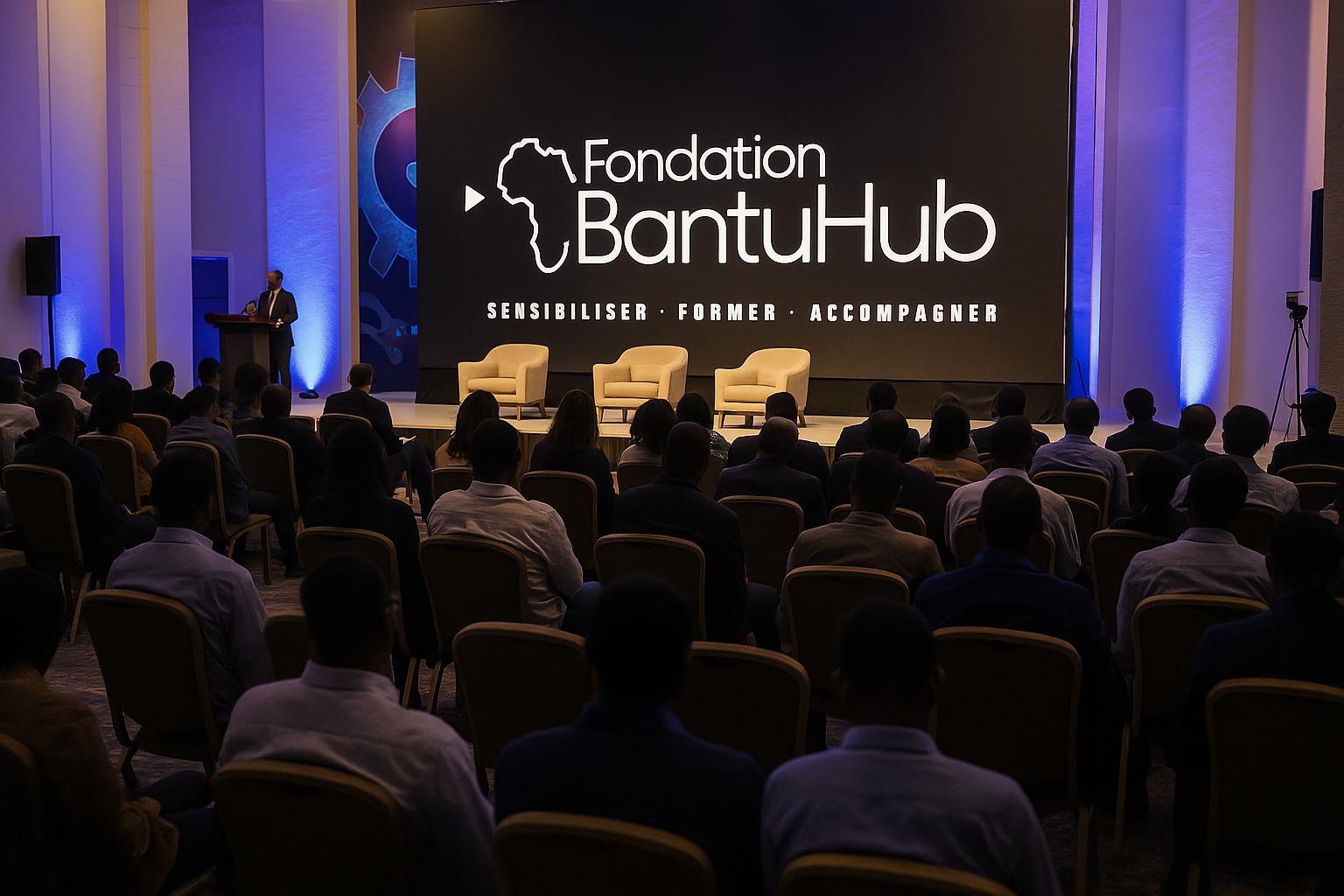
The second Innovation, Technology and Entrepreneurship Fair, held on 11 November in Brazzaville, delivered a clear message: Congolese youth can no longer wait for salaried jobs that seldom appear. Building a business, organisers said, has become the surest path toward a resilient national economy.
Across the packed conference hall, data from the Congolese Business Creation Agency, ACPCE, drew repeated applause. Director General Emeriand Kibangou unveiled a 29.7 percent jump in company registrations during 2023, with 4 188 newcomers against 3 230 in 2022, signalling a broad appetite for self-employment.
The momentum accelerated into 2024. Between January and October, ACPCE recorded 4 987 additional firms, another 19.1 percent up-swing. On average, 1 272 fresh registrations were logged in the second quarter alone, confirming that business births now outpace population growth in several urban districts.
Services dominate the surge. Tertiary activities accounted for 85.8 percent of all startups last year, with trade alone capturing half of that share. The pattern barely changed in 2024, where retail, logistics and creative services again formed the beating heart of the statistics.
Lower fees, faster formalisation
Three out of every four new ventures were created as sole proprietorships, illustrating how streamlined procedures now empower individual dreamers. Kibangou noted an average promoter age of 39, proof, he said, that experience and youthful energy can combine to shape a modern Congolese marketplace.
Much of that streamlining flows from the Ministry of Small and Medium-Sized Enterprises. Minister Jacqueline Lydia Mikolo reminded participants that the official cost of forming a company has fallen from 150 000 CFA francs to only 25 000, removing what she called ‘a heavy stone from youthful shoulders’.
The decision sits at the core of President Denis Sassou Nguesso’s national strategy to diversify revenue away from raw commodities. By lowering entry barriers, officials expect thousands of informal activities to migrate into the formal economy, broadening the tax base while protecting operators through legal status.
Still, registering a business is only the first kilometre of a marathon. Sustaining it matters more. Encouragingly, ACPCE traced an 85 percent survival rate among a sample of 6 000 enterprises founded in 2025, a performance many regional economists describe as ‘remarkable by continental standards’.
Skills gap and FONEA’s response
Outside the fair’s main auditorium, the National Employability Fund, FONEA, ran a pop-up workshop on business skills. Director of Apprenticeship Ghislain Louboya laid bare the jobs dilemma: of 6 000 graduates trained by the fund, fewer than 30 percent secured permanent positions.
He argued that entrepreneurship, paired with targeted vocational courses, gives young Congolese a better chance to convert learning into income. FONEA, he said, now maps employer needs before financing programmes in plumbing, coding, agrifood and transport logistics, thereby bridging classroom theory and market reality.
Financing remains the critical hurdle
While training opportunities expand, financing remains the toughest frontier. Minister Mikolo urged banks to design youth-friendly loan products and ease collateral rules. ‘Our statistics show engagement rising from ten to forty percent in barely a decade; we cannot allow capital scarcity to choke this movement,’ she insisted.
Commercial lenders present at SITEC say discussions are ongoing with the Central Bank to pilot guarantee mechanisms cushioning default risk. A senior banker, requesting anonymity, believes a blended finance window could unlock five billion CFA francs for startups as early as next year.
Beyond money, mentors are in demand. Several technology hubs from Brazzaville and Pointe-Noire offered free advisory hours during the fair, helping founders refine revenue models, set bookkeeping routines and test digital marketing tools. The sessions remained full until lights dimmed, a sign of unquenched curiosity.
Economist Marcel Oko, observing the turnout, sees cultural change under way. ‘In the past, parents urged children toward public service. Today many families celebrate the idea of launching a brand,’ he noted, adding that social networks showcase local success stories almost daily.
Ecosystem outlook and youth voices
Government agencies plan to ride that enthusiasm. The forthcoming National Entrepreneurship Week will pair pitch competitions with simplified tax registration booths, allowing winners to walk away with both seed capital and legal status in a single afternoon, according to organisers.
Looking ahead, ACPCE intends to digitalise every part of the process, from name reservation to tax identification, by 2026. Kibangou believes this will halve processing times and move Congo into the top quartile of African economies for startup efficiency rankings.
For thousands of young citizens, the promise is personal. ‘I registered my food-delivery service in under two days and paid less than a smartphone case,’ smiled 24-year-old entrepreneur Ruth Makosso, waving her ACPCE certificate. ‘Now I just need my first micro-loan and riders.’
If lenders, trainers and regulators pull in the same direction, analysts say Congo-Brazzaville could in a few years replace unemployment headlines with stories of household-name brands born in peri-urban garages. For the moment, the startup boom is real, and youth appear firmly behind the wheel.