
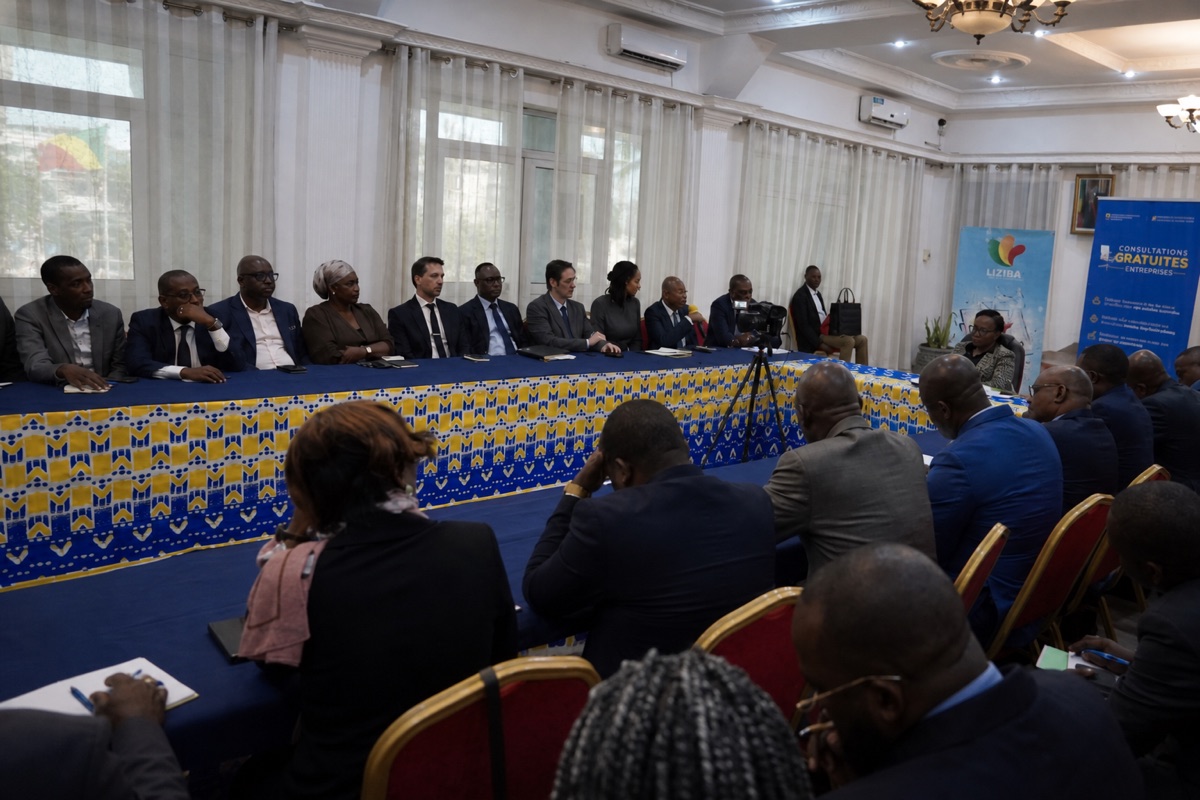
A long-running argument over the price of one of Congo-Brazzaville’s most basic staples appears to be moving toward a resolution. In Pointe-Noire, the government and the country’s flour producers sat down together and, for the first time in months, spoke the same language.
A Pointe-Noire Meeting That Reset the Conversation
The meeting took place on 15 June in Pointe-Noire, the economic capital. It brought together Trade Minister Jacqueline Lydia Mikolo and the Federation of Millers of Congo. The goal was simple to state, harder to deliver: stabilise flour prices without strangling the people who make it.
Both sides walked in with grievances. Both walked out with something closer to a shared plan. According to the minister, the discussions focused on two pressing questions, a possible floor price for flour and the state subsidies that millers say they are still owed.
Why the Government Cannot Fix the Price Alone
Mikolo was careful not to overpromise. “The Ministry of Trade alone cannot set the floor price,” she said, making clear that any binding decision would require broader government involvement. In other words, the figure stamped on a sack of flour is not hers to decide by decree.
That caution matters. A floor price sets the minimum a product can legally sell for. Set it too low, and producers bleed money. Set it too high, and households feel it at the bakery counter. The minister’s message was that Pointe-Noire produced an agreement in spirit, not a final number.
The Cassava Clause Few Saw Coming
The most striking reform on the table was not about price at all. The government wants bread flour to contain ten percent cassava flour, a blending requirement that would reshape how Congolese bread is made. Cassava is grown widely across the country, and the idea ties bakeries to local agriculture.
The logic is part economics, part food sovereignty. Wheat is imported, expensive, and exposed to global price swings. Cassava is homegrown. Folding a measured share into the national loaf could trim the import bill while giving rural growers a steadier market for their crop.
Millers Cautiously Welcome the State’s Hand
The millers did not come to fight. Their delegation was led by Dieudonné Ndinga Moukala of the Congolese Employers’ Union, and it responded warmly to the government’s pledge to support the sector. After a stretch of frustration over unpaid subsidies, that gesture clearly landed.
Mikolo, for her part, acknowledged what the producers are up against. She praised their persistence despite real difficulties tied to imports, to processing the grain, and to getting the finished product onto shelves. It was a rare exchange in which each side credited the other’s constraints.
A Sector Producing Far More Than It Sells at Home
The numbers tell their own story. Annual flour production in Congo reaches roughly 600,000 tonnes. The domestic market, by contrast, consumes only about 150,000 tonnes. That gap, four times the local appetite, explains why pricing and export questions weigh so heavily on the industry.
It also reframes the floor-price debate. This is not an industry scrambling to feed the nation; it is one producing a large surplus and searching for stable terms to sell it. Regulation, in that context, is less about scarcity than about predictability for everyone in the chain.
Quality at Home, Confidence Across the Region
One detail from the meeting cut against the usual narrative about imported goods being superior. The minister noted that flour milled in Congo-Brazzaville surpasses the quality of products sold elsewhere in the sub-region. For an industry often measured against foreign brands, that is a point of pride worth banking.
If accurate, it strengthens the case for the cassava-blend policy and for keeping more value inside the country. A quality product that already outperforms its neighbours has room to grow, provided the pricing framework gives millers reason to keep investing rather than retreat.
What Happens Next
For now, the Pointe-Noire talks deliver direction rather than a signed tariff. The floor price still needs wider government endorsement. The cassava requirement still needs to move from intention to enforceable rule. And the disputed subsidies still need to be paid before trust fully settles.
Still, the tone has shifted. After months of friction, the Trade Ministry and the millers are negotiating as partners with overlapping interests rather than opponents. For Congolese households watching the price of their daily bread, that quieter, more cooperative mood may matter as much as any single number.