
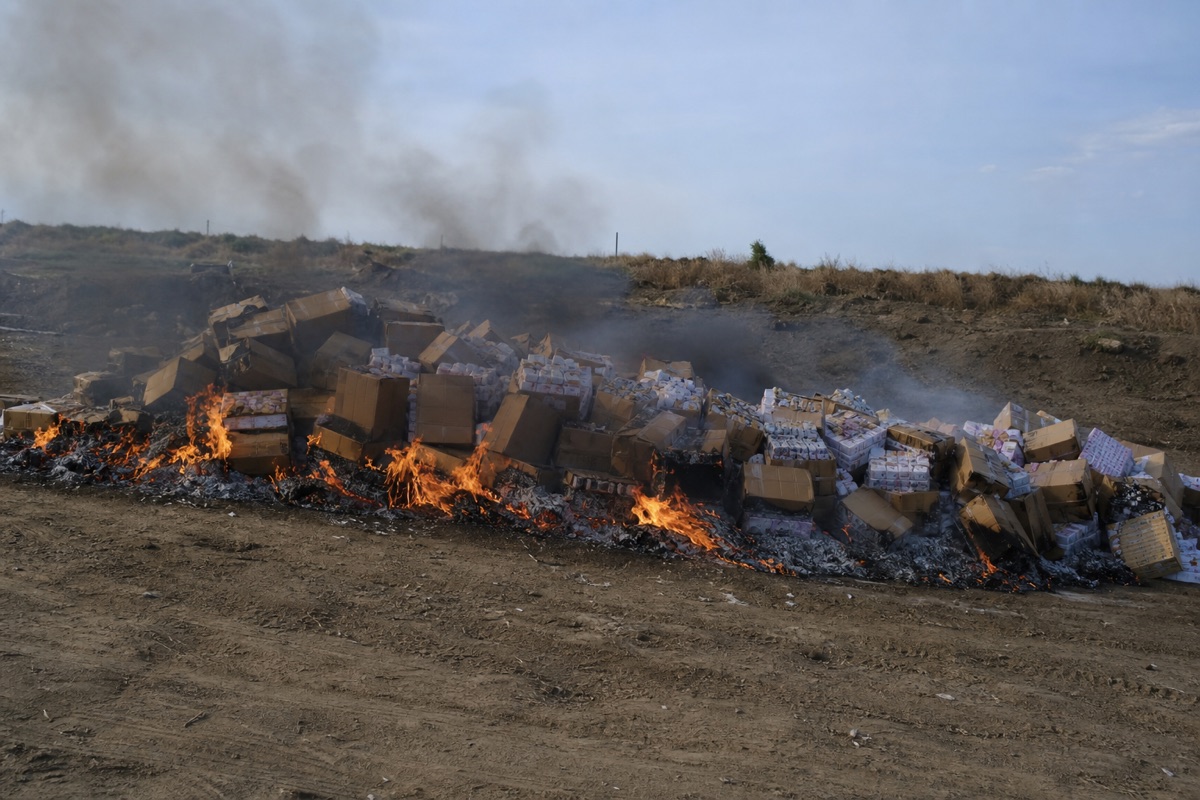
Police in Congo-Brazzaville have intercepted and destroyed a large consignment of smuggled medicines, a move authorities frame as both a public-health safeguard and a warning to traffickers operating on the city’s edges.
Police Seize a Six-Figure Contraband Shipment
Officers recovered 52 boxes of pharmaceutical products manufactured by Shalina Laboratories, fraudulently brought into the country. The haul, taken during an operation in the outlying districts of Brazzaville, carries an estimated value of more than 100 million FCFA.
The seized goods were not ordinary supplies. They included multiple packs of tramadol, a painkiller meant for tightly controlled medical use but increasingly diverted toward recreational, psychotropic consumption across the region.
Why Tramadol Worries Health Officials
Tramadol’s appeal on illicit markets lies in its dual nature. Prescribed responsibly, it manages serious pain. Misused, it behaves much like a substitute drug, fuelling dependency among users who often have no idea what dose they are actually taking.
Authorities describe the substance as a recurring driver of public-health and security problems. Its abuse, they note, can trigger severe addiction, behavioural disorders and, in some cases, episodes of aggression that ripple beyond the individual.
That pattern is not unique to Congo-Brazzaville. Across Central Africa, regulators have flagged tramadol as one of the most commonly diverted controlled medicines, a quiet epidemic that rarely makes headlines yet steadily strains hospitals and households.
Incineration to Block a Return to the Streets
Rather than store or resell the cargo, police chose to burn it. The entire consignment was incinerated, a deliberate step to ensure none of the products could slip back into the supply chains that fed them in the first place.
The logic is straightforward. Confiscated drugs left in warehouses can leak, be stolen, or quietly re-enter the very networks investigators are trying to dismantle. Destruction removes that risk at a stroke, even if it carries an obvious financial cost.
Officials presented the operation as a defence of community health and a signal that smuggling pharmaceuticals will not pay. Protecting families, they argued, justifies erasing more than 100 million FCFA worth of merchandise in a single afternoon.
A Familiar Pattern of Diverted Medicines
The case fits a broader concern that authorities keep returning to. Many tightly monitored medicines are routinely pulled away from their therapeutic purpose and pushed into informal markets where oversight collapses.
These products are frequently counterfeit, or packaged at doses that buyers cannot verify. A pill that looks legitimate may contain too much active ingredient, too little, or something else entirely, turning a supposed remedy into a genuine hazard.
For ordinary consumers, the danger is rarely visible at the point of sale. Street-level packaging can mimic pharmacy stock convincingly, leaving buyers to discover the difference only through side effects, dependency, or worse.
What the Seizure Signals for Brazzaville
The peripheral districts where the operation unfolded are typical entry points for goods slipping past formal controls. Targeting them suggests investigators are watching the seams of the capital, where the regulated and the illicit blur.
For residents, the message is twofold. Enforcement is active, but the underlying demand that makes tramadol smuggling profitable has not disappeared. One destroyed shipment, however large, addresses symptoms more than the root.
Health advocates have long argued that interdiction needs a companion strategy: education about the real risks of self-medication, and accessible, affordable legitimate care that reduces the temptation to buy from informal sellers in the first place.
The Stakes Beyond a Single Bonfire
Behind the figures sits a human question. Each diverted box of tramadol represents potential users drawn into dependency, families absorbing the fallout, and clinics managing consequences that arrive long after the smuggling itself.
Seen that way, the incineration is less a finish line than a checkpoint. It demonstrates capacity and intent, yet the durability of the result depends on whether similar pressure continues against the suppliers behind the trade.
For now, Brazzaville has 52 fewer boxes of dangerous, unverified medicine in circulation. Whether that translates into lasting relief will hinge on the next operations, and on closing the demand that keeps drawing such cargo toward the city.
What is clear is the framing chosen by the authorities themselves. This was not presented as a routine customs matter, but as a deliberate stand on public health, security, and the integrity of the medicines Congolese families rely on.