
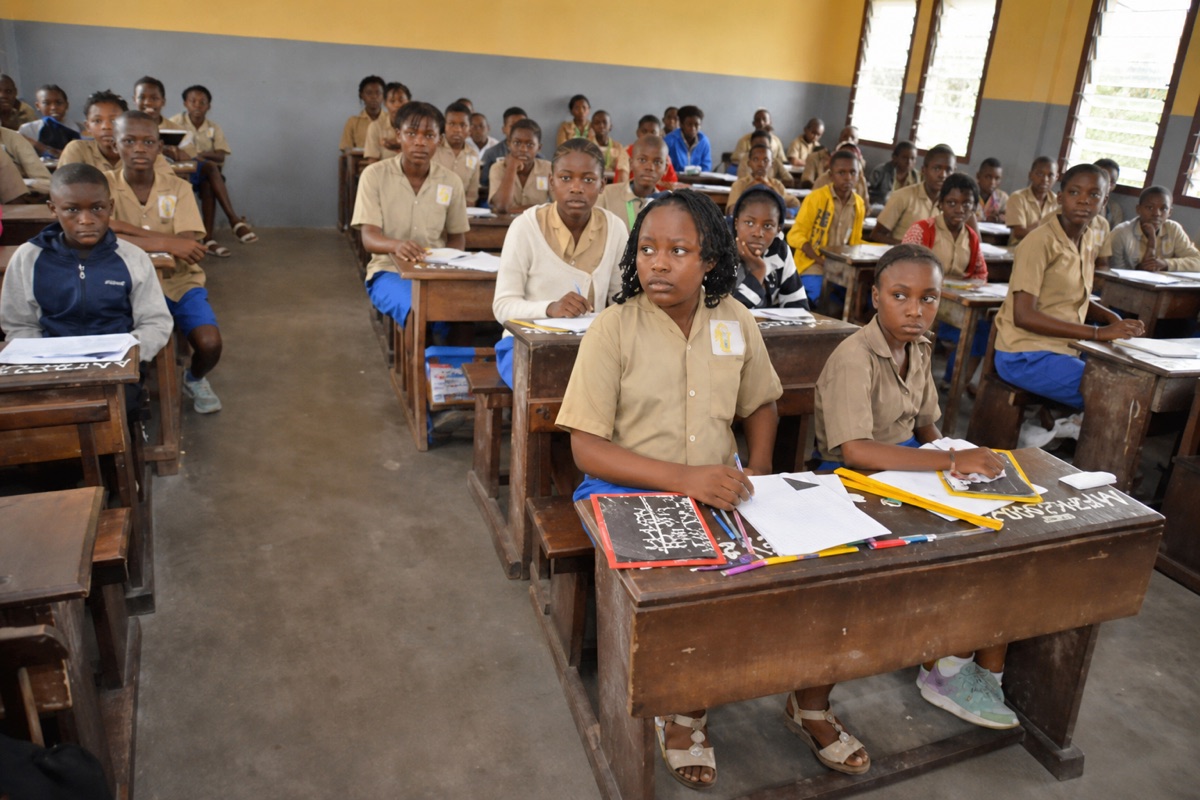
Congo-Brazzaville turned a page in its school calendar this week. The 2026 session of the Certificat d’etudes primaires elementaires (CEPE) delivered its verdict on 9 July, and it will be the very last of its kind.
A National Jury Closes the 2025-2026 School Year
Members of the national jury met by video conference on 9 July to deliberate the CEPE results. The session ran under the authority of Jean Luc Mouthou, Minister of Preschool, Primary, Secondary Education and Literacy.
The deliberation formally closed the assessment process for primary pupils across the country for the 2025-2026 school year. It was a routine administrative milestone, yet one that carried unusual weight this time around.
For thousands of families, the CEPE marks a child’s first major national exam. It certifies the end of the primary cycle and, for many parents, stands as an early measure of a young pupil’s academic path.
High Absentee Numbers Cloud the Results
Beyond the pass rates, one detail drew immediate attention: the number of candidates who simply did not show up. Absences ran noticeably high, a pattern seen most clearly in the country’s largest urban centres.
The authorities did not publish detailed explanations for the missing candidates. Without official reasons on the table, the phenomenon remains open to interpretation rather than firm conclusion.
Even so, the scale of the absences raises questions about the conditions under which pupils sit this national exam. When empty desks cluster in big cities, education officials tend to look at logistics, family circumstances and pupil readiness alike.
For now, the record shows the gap without naming its cause. That restraint matters, because guessing at motives would risk turning a genuine concern into unfounded speculation.
The Final Chapter of the CEPE Name
This edition also carries a historic character. It is the last examination to be organised under the label Certificat d’etudes primaires elementaires, a name familiar to generations of Congolese pupils and teachers.
From the 2026-2027 school year, the exam will officially become the Certificat d’etudes primaires (CEP). The change is more than cosmetic; it signals a deliberate shift in how the country frames the close of primary schooling.
The renaming follows the education reforms under way in the Congolese system. Officials describe it as part of a broader effort to modernise how school assessments are organised across the primary cycle.
That effort, according to the authorities, aims to align evaluations with new teaching orientations. The stated goal is a system better matched to updated pedagogical priorities rather than a simple relabelling exercise.
What the Switch to the CEP Signals
Renaming a national exam is rarely a small gesture. It usually accompanies adjustments in content, framing or expectations, and it invites parents, teachers and pupils to adapt to the language of a new certificate.
For the 2026 cohort, the timing gives their result a symbolic edge. They are, in effect, the last pupils to earn the CEPE before the certificate itself passes into the country’s educational memory.
The transition also puts pressure on communication. Families will need clear guidance on what the CEP means, how it differs in name and framing, and what to expect when the 2026-2027 session opens.
Much of that practical detail still lies ahead. The available account sets out the decision and its timing, but leaves the finer mechanics of the new certificate for later announcements.
A Milestone Worth Watching
The 9 July deliberation therefore closes two stories at once. It ends the assessment year for primary pupils, and it draws a line under the CEPE label after its final run.
The high absentee count gives the moment a more sober tone than a simple ceremony of results. It hands education officials a concrete question to examine as they prepare the ground for the CEP.
For Congolese families, the practical takeaway is straightforward. This year’s certificate carries the old name; next year’s will not, and the switch begins with the coming school term.
As the country moves from CEPE to CEP, the transition will be measured less by the change of letters than by whether the reforms deliver on their promise of a modernised, better-aligned assessment for the youngest learners.