
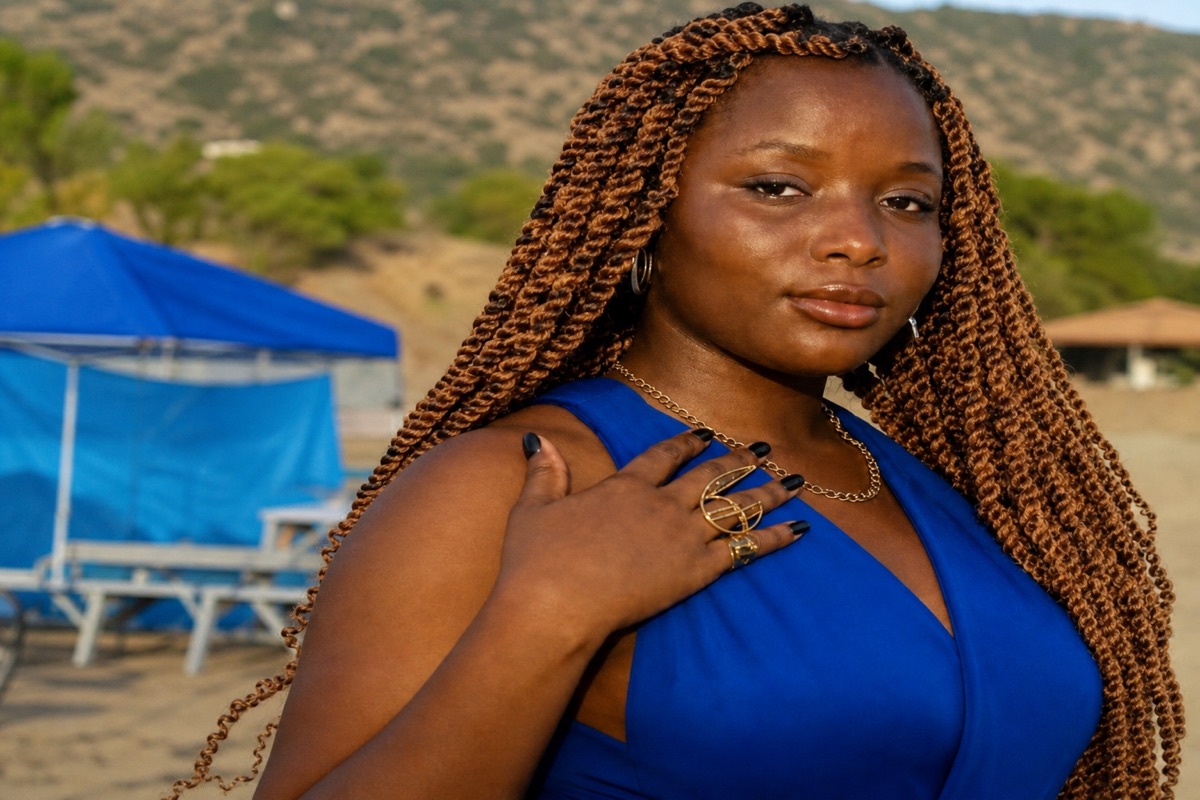
A young voice that had carried Congolese slam poetry to admiring audiences has fallen silent. Princia Besty, celebrated for her sharp verse and command of the French language, was killed in Brazzaville, leaving the country’s artistic community in mourning.
A Rising Slam Talent Silenced Too Soon
Princia Besty had built a name on stages across the country. Her texts were incisive, her delivery precise, and her daily commitment to the craft rarely wavered. Peers admired how she wielded language, turning ordinary words into performances that held rooms still.
She belonged to a generation of Congolese artists proving that slam poetry could speak to everyday life. Her voice reached listeners who saw in her both talent and discipline, a combination that made her loss feel personal to many far beyond her immediate circle.
The Trip to Brazzaville That Ended in Tragedy
Besty had traveled from Pointe-Noire to Brazzaville for a practical reason. She needed her passport ahead of a planned journey to France, a trip that pointed toward wider horizons for an artist whose career was still climbing toward its promise.
During her stay in the capital, she lodged with her uncle, a thirty-year-old man who worked selling petrol. The arrangement seemed ordinary, a family visit tied to administrative errands. Instead, that visit turned into the setting for a crime that has since gripped public attention.
According to available accounts, acquaintances of the uncle entered the residence, where Besty was raped and killed. The details, still being established by investigators, have sharpened the grief into a demand for answers about how such an attack could unfold within a family home.
Online Suspicion and a Mother’s Defense
The killing has spread quickly across social media, where users have pointed accusations at the uncle, questioning what he knew and whether he bore any responsibility. Such reactions often outpace the facts, but they reflect the raw anger the case has stirred among Besty’s admirers.
Her mother has pushed back against that narrative. She maintains that uncle and niece lived on very good terms, describing a relationship without visible tension. Her testimony introduces a note of caution into a story that many online voices have already tried to settle.
That gap between public suspicion and family testimony sits at the center of the case. Investigators must now weigh what is said online against what those closest to Besty describe, a task that will shape how the events are ultimately understood.
An Investigation Under Public Watch
The police and judicial authorities are said to hold solid material for their inquiry, elements that could allow the case to move forward without lengthy delay. What emerges from that work will determine whether the accusations circulating online find any grounding in evidence.
For now, the investigation remains open, and the precise chain of events awaits official confirmation. Authorities face the twin pressure of an anguished public and a family seeking a clear account, conditions that place every step of the inquiry under close observation.
The outcome carries weight beyond a single case. A swift, credible resolution would offer Besty’s relatives some measure of clarity, while any stumble risks deepening the sense that answers arrive too slowly for victims and their families.
A Loss That Raises Uneasy Questions
Beyond the personal grief, the killing has revived unease about safety, especially for young women moving between cities for ordinary tasks. Besty had come to Brazzaville for a passport, a routine errand that should have carried no danger yet ended in the worst way imaginable.
Her death has prompted reflection on the motives behind such violence and on the vulnerability of those who trust familiar surroundings. The questions it raises resist easy answers, touching on how communities protect their own and how quickly ordinary settings can turn hostile.
For the slam scene she helped animate, the absence is immediate and heavy. Fellow artists who shared stages with her now face performing without a voice that had become part of their collective identity, a reminder of how much a single talent can hold together.
Princia Besty leaves behind unfinished work and an audience that had expected to follow her further. Her planned journey to France will not happen, and the promise it represented remains suspended, a measure of what her sudden death took from Congolese culture.
As the inquiry continues, those who knew her hold to memory rather than certainty. The verses she leaves behind endure, even as the community waits for the facts that might, in time, explain how a rising artist’s life was cut short.