
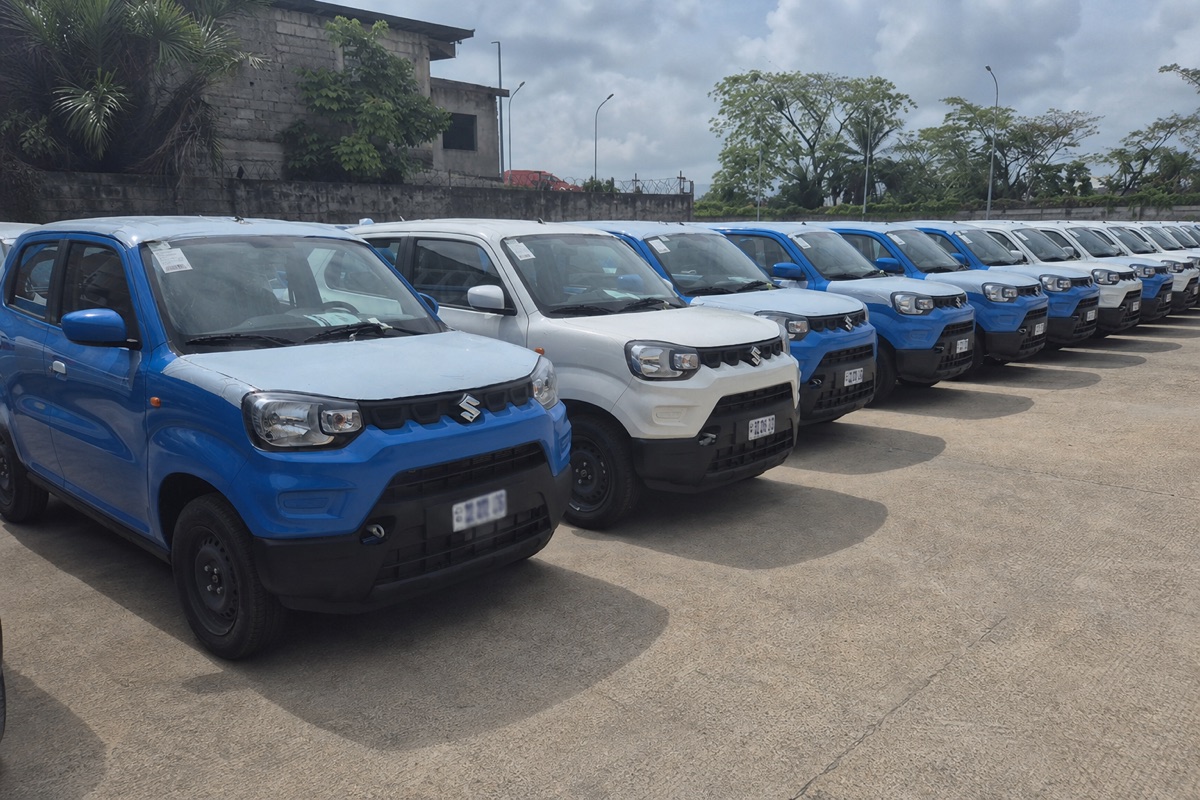
Getting around Pointe-Noire is about to feel a little different. On 28 May, Africa Global Logistics Congo unveiled a fleet of 270 light vehicles in the coastal city, framing the move as a practical push to modernise everyday travel for residents and workers alike.
A fleet built around daily commuters
The vehicles are meant to widen the city’s transport offer, working both as free-circulation rides and as on-demand trips booked when needed. The emphasis, AGL says, sits on comfort, reliability, accessibility and safety rather than sheer numbers.
That mix matters in a port city where movement shapes income. For families juggling school runs and market trips, for traders crossing town, and for commuters on tight morning schedules, dependable transport is less a convenience than a baseline for normal life.
What AGL Congo says it wants to change
Emilia Alexa, AGL Congo’s Director of Logistics Solutions, tied the rollout to broader goals. The aim, she said, is to “improve the daily lives of the population in concrete terms and support more sustainable development” (AGL Congo).
It is a careful phrasing, and a telling one. Rather than promising transformation overnight, the company positions the fleet as one building block toward steadier mobility, with the language of “concrete” gains pointing at measurable, ground-level results.
Mobility as a social lever
The company links the vehicles to outcomes that reach beyond the road. Smoother travel, it argues, feeds into better quality of life, eases congestion, and strengthens social inclusion by opening up access to essential services, jobs and economic activity across the city.
The logic is familiar to anyone who studies urban Congo-Brazzaville. When people can reach a clinic, a worksite or a marketplace without losing hours to unreliable transport, the gains ripple outward, touching household budgets, school attendance and small-business turnover.
Whether 270 vehicles can shift those numbers in a city the size of Pointe-Noire remains an open question. The fleet is a meaningful addition, yet the city’s transport demand is large, and its effect will depend on routes, pricing and how the service is run day to day.
The quiet work behind the delivery
Much of the effort sat out of public view. AGL handled the full chain of logistics operations, from documentary preparation and customs formalities through to handling and the final delivery, each stage carried out under strict criteria for quality, safety and timing.
That end-to-end control is worth noting. Importing and deploying hundreds of vehicles is rarely simple, and bottlenecks at customs or in handling can stall a project for weeks. By keeping the process in-house, AGL reduced the risk of the kind of delays that often dog large fleet rollouts.
It also signals where the company sees its strength. Logistics is its core trade, and the Pointe-Noire delivery doubles as a showcase of that capability, applied this time to a public-facing mobility project rather than a purely commercial cargo run.
Why Pointe-Noire, and why now
Pointe-Noire is the country’s economic engine, a port hub where trade, industry and a growing urban population converge. Demand for reliable movement there has long outpaced supply, leaving room for operators willing to invest in organised, sustainable transport.
Placing the fleet in this specific market reads as a deliberate choice. A modern, dependable service stands to gain traction faster where commuter pressure is highest, and where the economic case for cutting wasted travel time is easiest to make.
There is a sustainability thread running through the announcement too. By stressing durable development alongside daily comfort, AGL frames the project not as a one-off purchase but as part of a longer commitment to how the city moves.
The road ahead for riders
For now, the headline is straightforward: more vehicles, aimed squarely at making city travel safer and more predictable. The real test will come in the weeks after launch, once residents start judging the service by their own commutes rather than by a launch-day promise.
If the fleet holds to the standards AGL describes, Pointe-Noire’s riders could see shorter waits and steadier journeys. If it falls short, the same residents will be quick to say so, because in a working port city, transport is measured in lived experience, not announcements.
What is clear is that the delivery marks a visible attempt to treat mobility as public infrastructure rather than an afterthought. For a city that runs on movement, that framing alone is a notable shift, whatever the fleet ultimately delivers on the ground.