
More than 101,856 young Congolese will sit the general baccalauréat from 2 to 5 June 2026. Authorities in Congo-Brazzaville have framed this year’s session as a test of credibility as much as a test of knowledge, with technology now squarely in the picture.
A record cohort spread across 310 centres
The numbers tell a story of growth. Registrations climbed to 101,856 candidates, a rise of 6.79% compared with 2025. Examinations will run simultaneously across 310 centres nationwide, from Brazzaville and Pointe-Noire out to the departments.
Girls form the larger share of this cohort. A total of 55,752 young women are registered, representing 54.75% of all candidates. That figure continues a pattern that education officials have watched closely in recent sessions across the country.
The breakdown by stream sharpens the picture further. Series D leads decisively with 59,512 candidates, or 58.43% of the total. Series A follows with 39,162 candidates at 38.54%, while the scientific Series C remains small at 3,182 candidates, just 3.12%.
Mouthou sets the tone at Marien Ngouabi
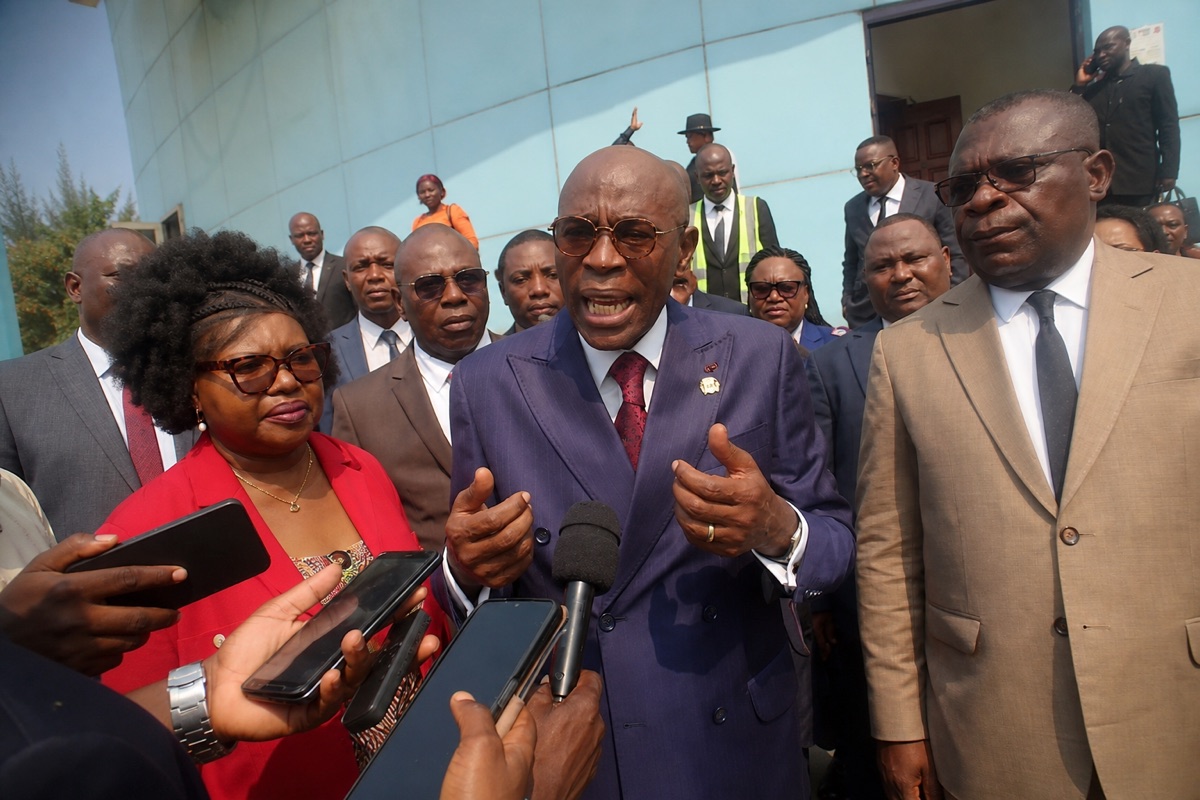
The mood was set on 27 May 2026, when Minister Jean-Luc Mouthou gathered the people responsible for running the June session. He convened them at the Université Marien Ngouabi in Brazzaville, pressing each participant to weigh the responsibility resting on their shoulders.
The seminar carried a deliberately heavy title. Organisers framed it around the “securing and intelligent governance of the baccalauréat,” with the stated aim of reinforcing the fight against fraud and preserving the credibility of a strategic examination in an era of digital change.
That framing was not accidental. By naming digital change directly, the ministry signalled that this year’s preparation would address tools that did not weigh on examiners a few sessions ago. The vocabulary of governance ran through the entire gathering.
Zero tolerance, with artificial intelligence in the crosshairs
The minister’s message left little room for interpretation. He said the government would adopt an approach without compromise toward any attempt at fraud, drawing a clear line before the first paper is even opened.
That line extends in several directions at once. No leniency will be shown to candidates caught cheating, to education staff who act as accomplices, or to anyone misusing digital tools such as artificial intelligence during the examination.
The reference to artificial intelligence marks the notable shift this year. For an examination long policed against copied notes and whispered answers, the prospect of generative tools entering the exam hall reframes what supervision now has to cover.
What invigilators have been told to enforce
Behind the rhetoric sits a set of concrete instructions. Officials have been directed to carry out rigorous inspections of examination centres, leaving fewer gaps for organised cheating to slip through during the four days of testing.
The consequences for those caught are immediate and layered. Candidates taken in the act face immediate exclusion, followed by disciplinary measures and, where warranted, legal proceedings rather than a simple administrative warning.
Staff are not exempt from this severity. The ministry has promised heavy sanctions for accomplices within the teaching corps, signalling that the credibility of the diploma depends as much on supervisors as on the students themselves.
A combined calendar to close a loophole
One structural change distinguishes the 2026 session from previous years. The technical baccalauréat and the general baccalauréat will be held at the same time, a scheduling decision with a precise rationale behind it.
The purpose is to shut a door that some candidates had used. By running both examinations simultaneously, the authorities aim to prevent anyone from registering for both the technical and general tracks, tightening the integrity of the overall process.
Why this session matters beyond the classroom
For families across the urban and peri-urban belt, the baccalauréat remains a gateway. It opens the path to higher education and, eventually, to the labour market, which is why the ministry’s insistence on credibility resonates well beyond the examination centres.
The stakes also reach the diaspora and employers who read the diploma as a signal of real attainment. Each session that holds firm against fraud protects the value of every certificate already earned, a point the minister returned to throughout the seminar.
As the four days of testing approach, the contest is twofold. Candidates face their subjects, and the system faces a credibility test of its own, with newer digital temptations now folded into an old struggle over honesty in the exam hall.