
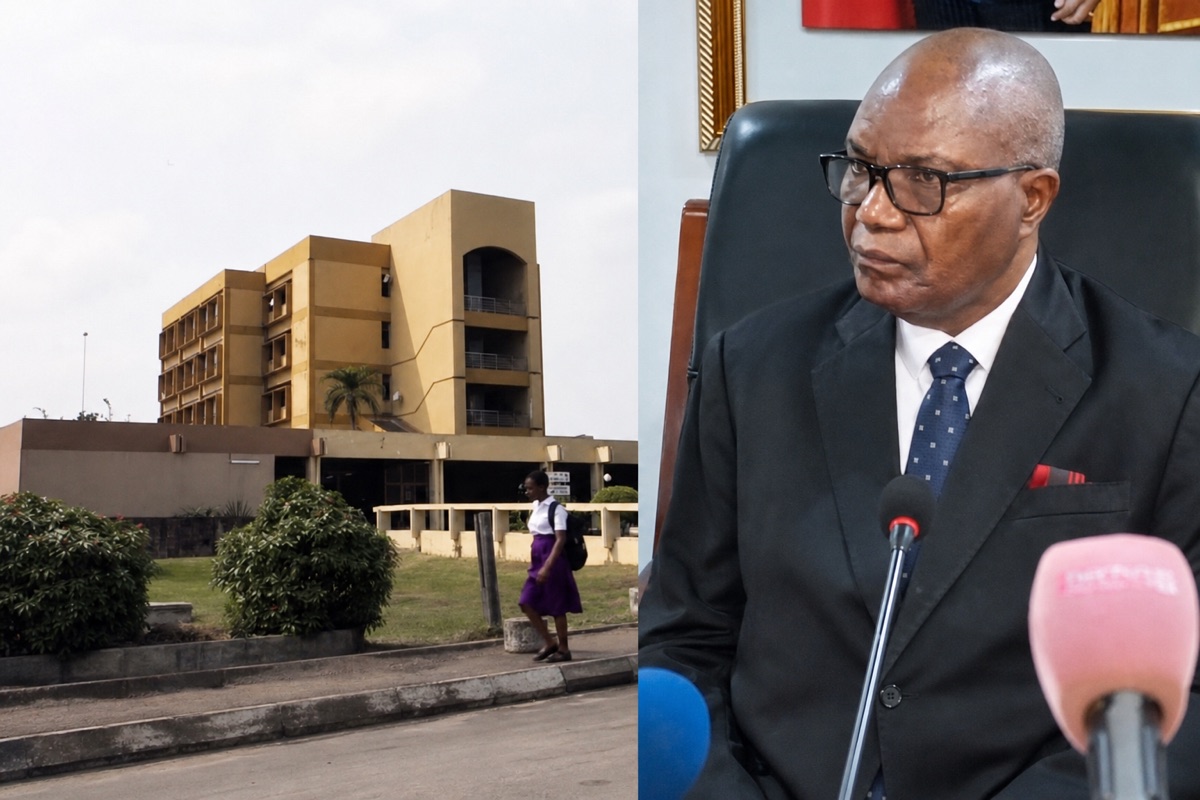
After three long years of silence, the governing board of Brazzaville’s largest teaching hospital is back at the table. On 8 April 2026, it signed off on a budget meant to put the institution back on its feet.
A 29-Billion-CFA Roadmap for the Teaching Hospital
The board of the Centre hospitalier et universitaire de Brazzaville, known locally as the CHU-B, held its 26th ordinary session on Wednesday 8 April 2026. The meeting took place in room 515 of the foreign affairs ministry, in the heart of the capital.
Presiding over the gathering was Professor Armand Moyikoua, who chairs the board. Under his direction, administrators adopted the hospital’s 2026 budget, set at 29 billion 121 million CFA francs. The stated aim is to lift the performance of the country’s flagship medical centre.
The figure is more than an accounting line. For the largest hospital in the Republic of the Congo, it represents the resources needed to keep wards open, pay for supplies and sustain daily operations across a sprawling, busy institution.
Five Hours Behind Closed Doors
The decision did not come quickly. Administrators spent roughly five hours in closed-door talks before approving both the action plan and the budget for the year. The length of the debate hints at the weight of the choices on the table.
Among the thornier questions was how to pay for investment. According to the final statement, an agreement in principle was reached on this point. It clears the way for the general management to move forward on a delicate financing track.
The wording was careful but telling. The statement, read out by rapporteur Solange Samba Toyo, said management may now pursue the necessary steps with the finance ministry regarding what it described as innovative financing for the hospital’s needs.
Quality of Care at the Heart of the Debate
Beyond the numbers, Professor Moyikoua returned repeatedly to a single theme. He stressed the institution’s duty to deliver quality care to the Congolese public, framing the budget as a means to that end rather than an end in itself.
That message carries particular force for an establishment that serves as a last resort for many patients. As both a hospital and a university centre, the CHU-B trains future medical staff while treating some of the most demanding cases in the country.
Administrators also reviewed plans that look beyond day-to-day spending. They were briefed on rehabilitation projects and on planned purchases of equipment, two areas where ageing infrastructure can quickly translate into slower or interrupted care.
By the close of the session, every document on the agenda had been adopted, though with amendments. That detail suggests the board did not simply rubber-stamp the proposals but reshaped them before granting approval.
Reconvening After Three Difficult Years
Perhaps the most striking feature of the session was its timing. It was the first such meeting in three years, a gap that says as much about the hospital’s recent past as any budget line could.
The pause was not a matter of choice. The institution’s activities were disrupted by strikes and by the fallout of the wider economic crisis, two pressures that left little room for the orderly governance a board meeting requires.
That backdrop helps explain why the 2026 budget reads as a recovery plan as much as a spending document. Resuming regular oversight is, in itself, a signal that the hospital intends to return to steadier ground.
The board appears keen not to slip back into silence. It recommended that the next session be held before the end of 2026, setting a clear marker for the months ahead and keeping the pressure on management to deliver.
What the Decision Means for Patients
For the families who rely on the CHU-B, the practical question is simple. Will a renewed budget and a revived board translate into shorter waits, working equipment and reliable care across the hospital’s many services?
The answer will depend on whether the innovative financing discussed with the finance ministry materialises, and on how quickly the rehabilitation projects move from paper to practice. The board has set the direction; execution remains the test.
For now, the 8 April session marks a turning point of sorts. After grappling with strikes, economic strain and three years without formal oversight, the Congo’s leading teaching hospital has at least drawn up a financial plan to steer 2026.
Whether 29 billion CFA proves enough to meet the demands placed on the CHU-B will become clearer as the year unfolds. The promise to reconvene before December gives observers a date by which to measure how far that promise has been kept.