
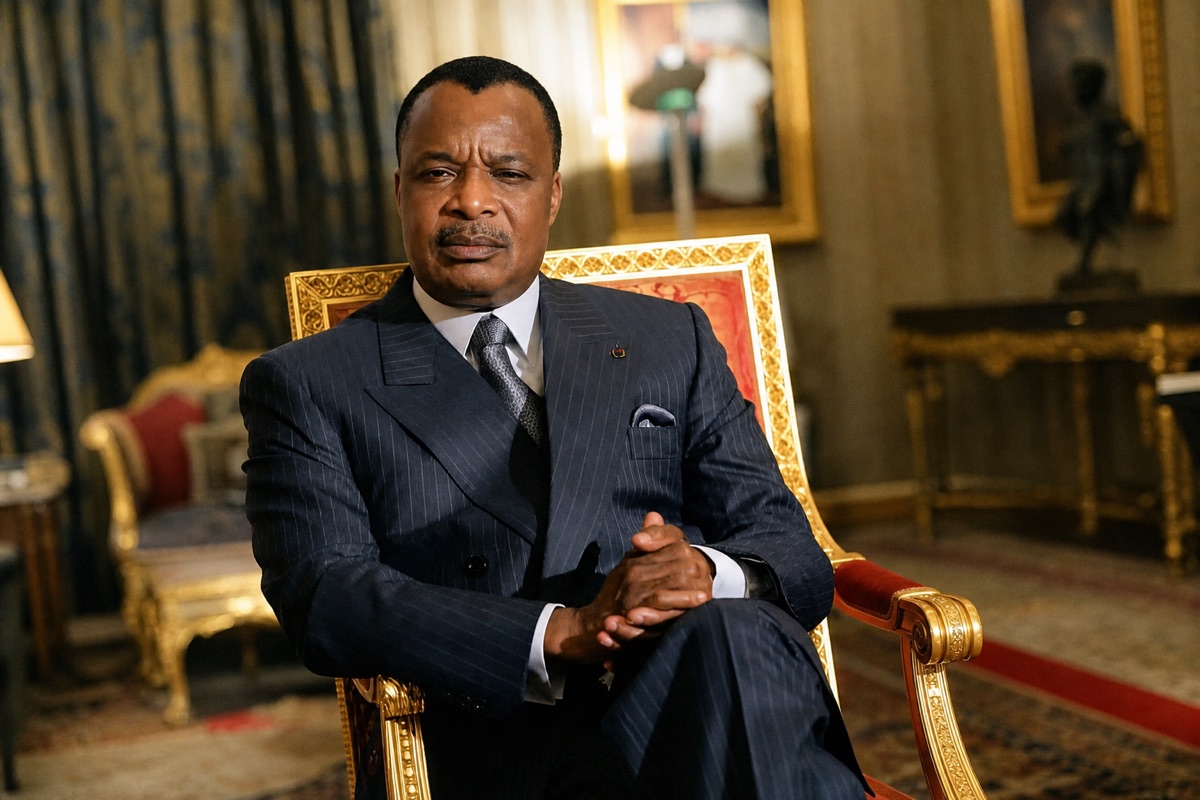
A single question now runs through Brazzaville’s offices, markets and family living rooms: who will sit at the table when President Denis Sassou-Nguesso names his next government? The guessing game has begun in earnest.
The trigger is clear. The Constitutional Court has proclaimed the final results of the presidential election, confirming the incumbent’s return. With the verdict settled, attention has shifted from the ballot box to the cabinet list still being drawn.
A Court ruling that opens the next chapter
For weeks the campaign dominated conversation. Now the legal stage is closed. The Court’s proclamation of definitive results gives the re-elected president a formal mandate, and the political calendar moves toward the practical work of forming a team.
That handover, from vote to governance, marks a familiar moment in Congolese public life. Each new term reopens the same debate about continuity and change, and this one is no exception.
Heavyweights, newcomers and the balance everyone watches
The dominant theme in the corridors is balance. Observers expect the lineup to weigh established figures of the presidential majority against fresh talent, the so-called “heavyweights” set beside names less familiar to the wider public.
How that mix lands matters. A cabinet leaning heavily on veterans signals steadiness and reward for loyalty. One that elevates newcomers suggests an appetite for renewal. Most expect some blend of the two.
For now, the precise composition remains unconfirmed. The talk circulating across Brazzaville reflects expectation rather than an announced list, and the distinction is worth keeping in mind.
Reform pledges set the bar for the new team
Beyond personalities, the speculation carries a second strand: the promises attached to the term ahead. Strong commitments on reform have been floated as part of the conversation around the incoming government.
The framing places the next cabinet within a broader ambition, the push to accelerate the country’s march toward its development goals. Ministers, on this reading, will be judged not only by their names but by the pace they set.
That standard raises the stakes for whoever is chosen. Each portfolio carries an implicit brief, and the public mood suggests appetite for visible movement rather than continuity for its own sake.
What residents are really waiting to hear
For everyday households, navetteurs and small businesses, the abstract debate has concrete edges. The shape of the cabinet eventually touches transport, prices, public services and the daily administrative tasks that fill ordinary weeks.
So the interest is not merely procedural. People follow the names because the names shape policy, and policy shapes routines. The wait for an official list is, in that sense, a wait for direction.
Until the announcement lands, much of what circulates stays in the realm of informed conjecture. Responsible reading means separating confirmed facts, the election outcome and the Court ruling, from the forecasts layered on top.
A familiar threshold for Congolese public life
The country has stood at this threshold before. A confirmed mandate, a pause, then a government revealed. What changes from term to term is the emphasis, the particular promise of who and how.
This time the watchwords are clear enough: established strength, new energy and ambitious reform. Whether the eventual list satisfies those expectations will be measured in the months that follow, not in the speculation of today.
For Brazzaville, Pointe-Noire and the departments alike, the practical question endures. Once the names are official, the conversation will move quickly from who governs to what they deliver, and that is where the real test begins.
Until then, the city watches and waits, aware that the gap between a settled election and a working cabinet is where a term’s direction is quietly decided.