
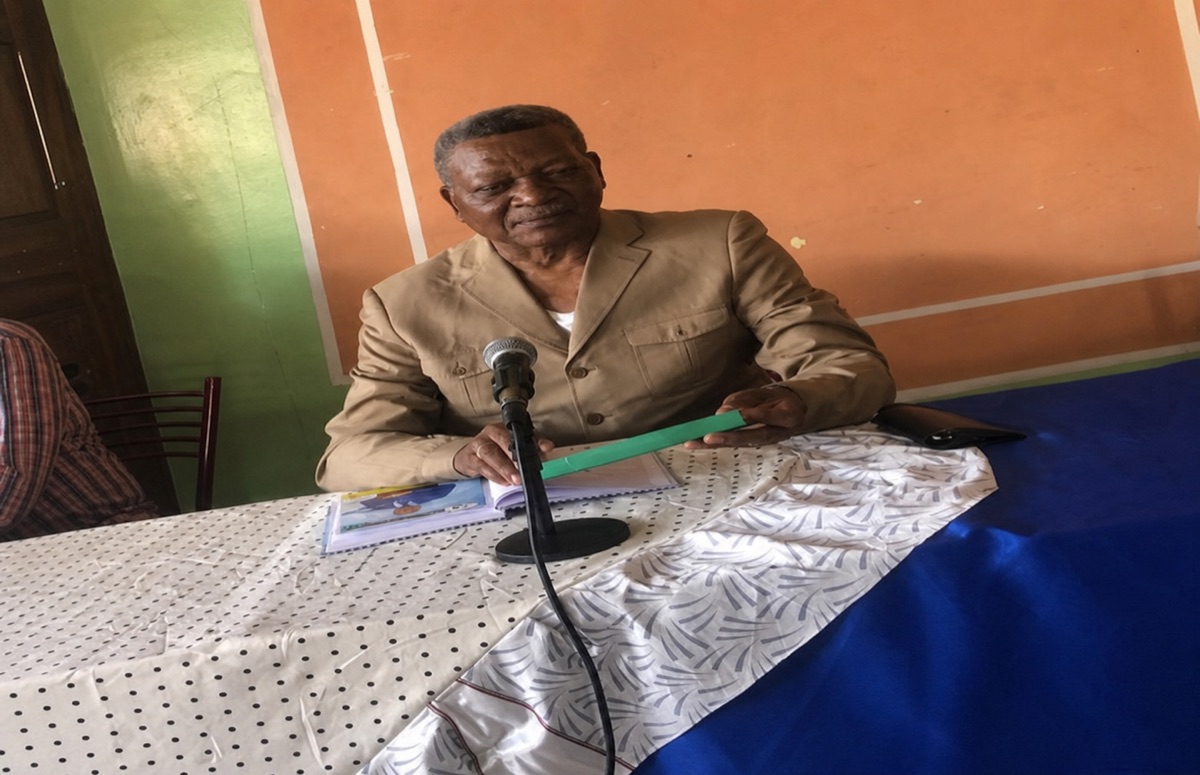
A Concession That Stands Apart
Joseph Kignoumbi Kia Mboungou has done something few of his rivals chose to do. The veteran politician publicly conceded defeat in the Republic of Congo’s March 2026 presidential election. In a statement delivered on 20 March 2026, he congratulated President Denis Sassou N’Guesso on his victory.
The gesture closed his own campaign on a notably calm note. For Brazzaville, where post-election weeks often carry tension, a clear concession from a long-standing contender registered as a meaningful moment in the political calendar.
Five Campaigns, One Familiar Outcome
This was Kignoumbi Kia Mboungou’s fifth consecutive run for the presidency. Few figures in Congolese public life have shown that kind of persistence at the top of the ballot, returning to the contest election after election despite repeated defeats.
That long record gives weight to his decision. A candidate who has campaigned so many times understands the machinery of a national vote, and his acknowledgement of the result carried the authority of experience rather than the heat of a first-time challenger.
Recognising Sassou N’Guesso’s Win
By accepting the outcome, Kignoumbi Kia Mboungou confirmed the re-election of Denis Sassou N’Guesso following the March 2026 ballot. His words were addressed directly to the incumbent, framed as congratulations rather than grievance.
The choice to speak so soon after the vote mattered. Concessions help set the tone for the period that follows a contested national election, and his early statement offered a point of stability while other reactions were still taking shape.
A Different Path From Other Contenders
His stance contrasted sharply with that of several fellow candidates. Destin Gavet and Mafoula Dave Uphrem took a different route, challenging the provisional results before the Constitutional Court or calling for an inclusive dialogue.
Those competing responses underline how varied the field’s reaction was. Where some looked to legal and political channels to dispute the count, Kignoumbi Kia Mboungou drew a line under his campaign and recognised the announced winner without reservation.
Why the Gesture Resonates in Brazzaville
For ordinary Congolese watching the aftermath, the difference in tone is easy to read. A concession speaks the language of acceptance, while a court challenge keeps a contest open and uncertain. Both are legitimate, yet they shape very different moods.
In a country where election seasons are followed closely from Brazzaville to Pointe-Noire and across the departments, the words of a five-time candidate travel widely. His acknowledgement gave residents one clear signal amid a mix of reactions.
Reading the Broader Picture
It would be easy to treat a single statement as a footnote. In practice, the public posture of established candidates helps frame how a result is understood. Kignoumbi Kia Mboungou’s concession sat at one end of that spectrum, the legal challenges at the other.
The source material does not detail vote totals or the precise terms of the disputes raised by other candidates. What is documented is the contrast itself: one veteran accepting the outcome while others pressed their case through institutions.
What Comes Next
With Sassou N’Guesso’s victory recognised by at least one of his long-time challengers, attention now turns to how the remaining disputes are handled. The Constitutional Court stands as the venue where contested provisional results are weighed.
For Kignoumbi Kia Mboungou, the concession may mark a pause in a remarkable electoral journey. After five attempts, his decision to congratulate the winner rather than contest the count leaves a clear record of where he stood in March 2026.
A Moment Worth Noting
National elections are remembered as much for their endings as their campaigns. The way candidates respond once results are in shapes the public memory of a vote, and concessions form part of that story alongside the challenges and the celebrations.
Kignoumbi Kia Mboungou’s statement, delivered without drama on 20 March 2026, added a measured voice to a charged period. In a field where others chose to dispute, his choice to accept and to congratulate stands as the defining gesture of his fifth and latest campaign (Les Echos Congo Brazzaville).