
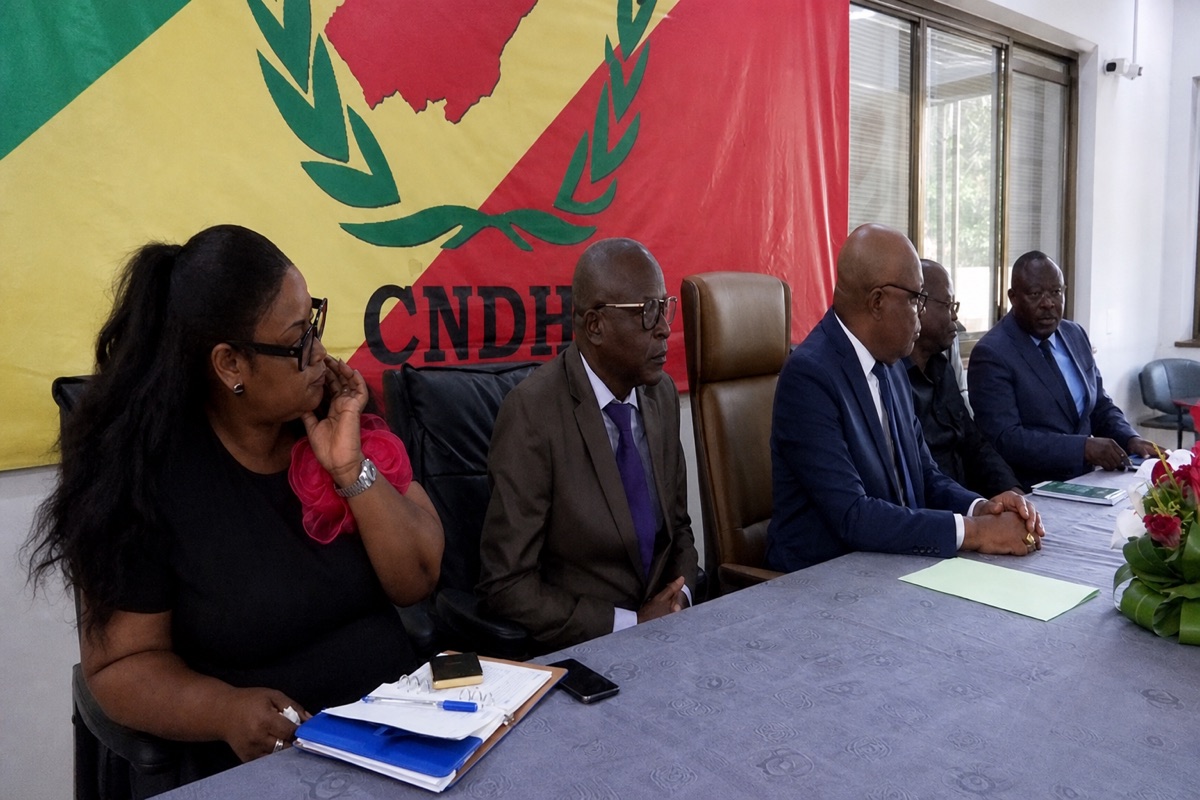
Congo-Brazzaville’s national human rights body has delivered an upbeat verdict on the country’s presidential election, describing a contest marked by calm, order and broad public participation across the Republic of the Congo.
A Satisfactory Verdict From the National Rights Commission
The Commission nationale des droits de l’homme (CNDH) presented its findings on March 19 in Brazzaville. The commission praised the smooth conduct of the presidential election, the vote held on March 12 and 15, and the maturity shown by the candidates throughout the process.
In its assessment, the CNDH highlighted the strong mobilisation of Congolese citizens at the ballot box. The institution framed the exercise as peaceful and transparent, pointing to an absence of friction during a sequence that often tests the patience of voters and political camps alike.
How Observers Read the March 12 and 15 Ballot
The commission deployed an election observation mission across the entire national territory for the two voting days. That nationwide footprint allowed its monitors to compare conditions between regions rather than draw conclusions from a single location or a handful of urban precincts.
From that vantage point, the CNDH reported a satisfactory picture. It noted a campaign period free of clashes or violence, a feature that anchored much of its positive reading of the wider electoral environment around the March 12 and 15 polling dates.
The commission also recorded an effective distribution of voter cards, while acknowledging that some constituencies saw delays. That candid mix of praise and caveat gave its report a measured tone rather than an unqualified endorsement of every administrative step.
Polling stations themselves drew approval. The CNDH observed that bureaux were generally well run, with electoral lists posted for voters to consult. Such public display of rolls is a basic transparency measure that observers watch closely on any election day.
The Practical Details That Shaped Confidence
Professor Godefrey Moyen, a member of the CNDH, set out the concrete elements that, in the commission’s view, pointed to a successful organisation. He described conditions on the ground that allowed citizens to vote without obstruction and with reasonable assurance.
According to Moyen, polling stations were equipped with ballot boxes, voting booths and indelible ink. Those items, modest as they sound, are the physical backbone of a credible secret ballot and a guard against multiple voting.
He further cited equality among voters, freedom of choice and a transparent count as defining traits of the exercise. Respect for the official opening and closing times of polling stations rounded out the list of factors the commission judged favourably.
Taken together, these observations form the spine of the CNDH’s confidence. Rather than rest on broad declarations, the commission tied its assessment to specific, verifiable conditions that its monitors said they witnessed at bureaux across the country.
Looking Ahead: What the Commission Wants Improved
The CNDH did not stop at applause. The commission issued recommendations aimed at future elections, signalling that even a process it deemed apaisé and transparent left room for sharpening on the administrative side.
Chief among those proposals was a call to distribute voter cards within reasonable deadlines. The delays seen in some constituencies clearly registered with observers, who framed timely distribution as a fixable weakness rather than a structural flaw.
The commission also pressed for stronger capacity among electoral staff. Better-trained personnel, in its reading, would reinforce the gains already observed and help standardise practice in the precincts where conditions varied during the March vote.
Why the Findings Matter for Congolese Voters
For ordinary citizens in Brazzaville, Pointe-Noire and the departments, the CNDH’s report offers a reference point on how the March election was run. An independent rights body’s account carries weight in shaping public trust in the result.
The measured nature of the findings is itself notable. By coupling a positive headline with practical caveats on card distribution and staffing, the commission delivered a verdict that reads as observation rather than celebration of the presidential contest.
What the report does not do is settle every question about the wider political landscape. It confines itself to the conduct of the vote, the readiness of stations and the behaviour of participants during the two days of polling in March.
For now, the takeaway is straightforward. The Republic of the Congo’s human rights commission saw an orderly, transparent and well-attended presidential election, tempered by clear advice on how the next exercise can run more smoothly still.