
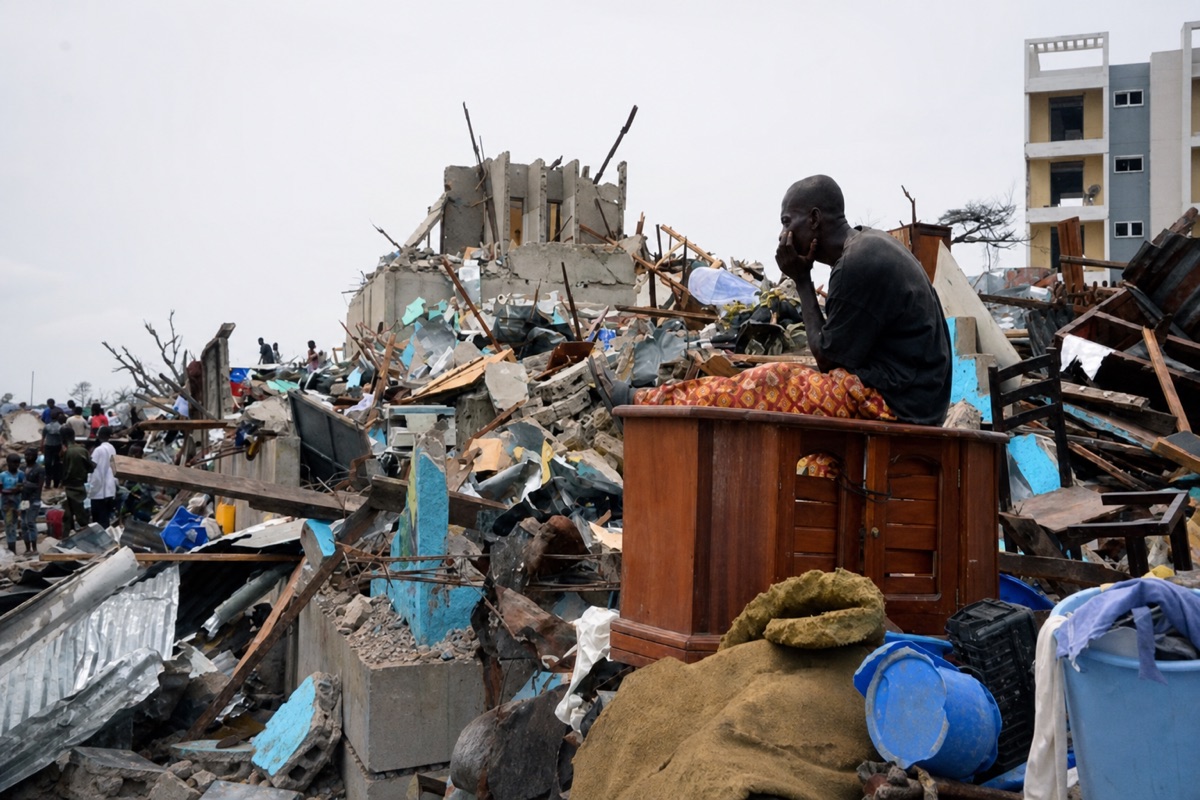
In Brazzaville, the loudspeakers of the presidential campaign rarely fall silent these days. Yet one date still cuts through the noise. March 4 returns each year as a quiet counterweight to the rallies, the convoys and the printed slogans crowding the capital.
The day belongs to memory. Across neighbourhoods, residents say it carries a weight that no election season can lift. It reminds Congolese, year after year, how fragile peace can be, and how stubbornly a people can rise again.
A date that gathers a divided city
In several districts of the capital, March 4 is treated apart from the ordinary calendar. It becomes a moment for reflection, for prayer, and for the small gestures of solidarity that bind neighbours together when words feel insufficient.
"The campaign can pull crowds, but it cannot erase memory," a resident of Ouenzé said. "March 4 reminds us that peace is precious, and that we must protect it at any cost." His words echo a sentiment heard well beyond his street.
That sense of remembrance reaches across political lines. Whatever banner a household supports during the vote, the day tends to fold campaign loyalties into something older and shared. A nation, many here believe, is also built through hardship.
It is built, too, through the capacity to recover together. For many families, that idea is not abstract. It is lived daily, in homes never rebuilt and in routines reshaped by a loss that arrived without warning fourteen years ago.
What the explosions left behind
The grief traces back to March 4, 2012, when a military arms and munitions depot in the Mpila district detonated. The blasts flattened homes, scattered belongings, and altered the geography of an entire part of Brazzaville in a matter of moments.
Just over 130,000 families saw their houses destroyed and their possessions lost. Fourteen years later, many of those displaced still live between precariousness and idleness, waiting for a recovery that, for a large number of them, has yet to materialise in full.
Survivors from the Mpila neighbourhood continue to press their case. Their demand has stayed consistent across the years: the reconstruction of the homes torn apart by the explosions. Time has not softened the request, only sharpened the patience required to keep making it.
The site itself was secured after the disaster. With support from the United Nations, the epicentre of the blasts and the surrounding residential zones were cleared of unexploded ordnance, allowing authorities to begin reshaping the ground where so many houses once stood.
A rebuilt skyline that still feels empty
Where the explosion tore through, a new building now rises. On the very site of the blast stands a freshly constructed town hall, the seat of Brazzaville’s sixth arrondissement, a marker of administrative renewal planted on ground heavy with history.
Nearby, social housing has also emerged from the soil. The structures are finished and visible, a tangible sign of intent. Yet they remain unoccupied, for reasons that have not been explained, standing as a reminder that completed walls do not always translate into restored lives.
For the families still waiting, that gap between built and lived-in speaks loudly. The contrast between a gleaming town hall and empty homes captures, in a single landscape, the unfinished nature of recovery in this corner of the capital.
Memory as inheritance, not wound
The scars of the past have given way to a shared resolve: to consolidate stability and to turn the darker pages of the country’s story without ever tearing them out. Remembrance, residents insist, is meant to strengthen rather than to reopen.
"Remembering is not about reviving the pain. It is about honouring the victims and reinforcing our commitment to a calmer Congo," said a mother encountered in central Brazzaville. Her framing reflects how many here choose to hold the anniversary, as duty rather than dwelling.
That posture matters in an electoral year, when emotions run high and the temptation to instrumentalise the past is real. For now, the day appears to resist that pull, staying anchored in personal grief and collective dignity rather than partisan advantage.
The coexistence is striking. Campaign caravans and quiet commemoration share the same streets, the same March, the same city. One looks forward to a contest soon to be decided. The other looks back, refusing to let an old wound slip from public conscience.
In that balance lies something Brazzaville seems determined to keep. The vote will pass, the posters will fade, and the slogans will be replaced. March 4, by all appearances, will return again, carrying the names and the silence that no campaign has managed to outshout.