
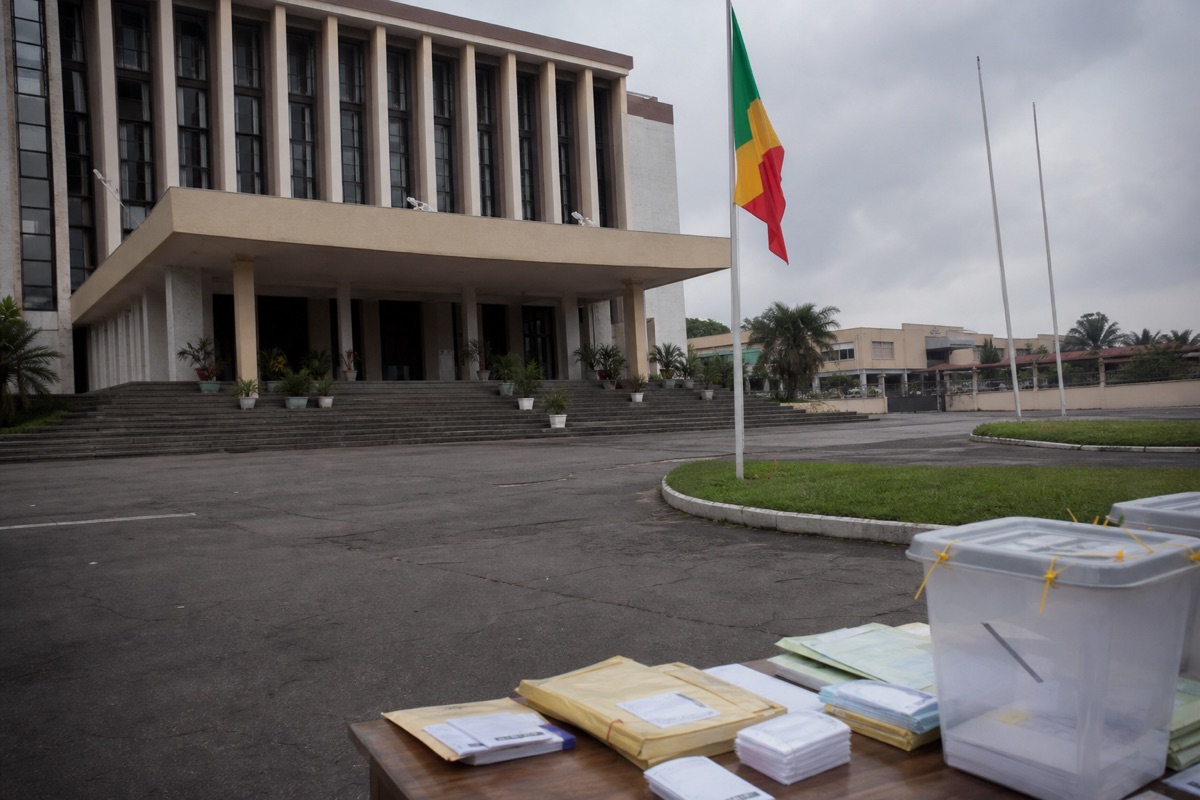
In Brazzaville, the Republic of Congo’s Constitutional Court has begun preparing the people who will keep a close eye on the country’s next presidential vote. The work started quietly, but it carries real weight for how the result will be judged.
A two-day forum to sharpen the watchers
The court’s president, Auguste Iloki, opened a training forum on 5 March 2026. It brings together the coordinators and delegates who will fan out to observe the presidential election, scheduled for 12 and 15 March. The session runs over two days.
The aim is practical rather than ceremonial. Over the two days, participants work through the legal grounds for the court’s observation mission and clarify exactly what coordinators and delegates are each expected to do once polling begins.
The programme does not stop at theory. It includes mock observation exercises, where participants rehearse what they will face at polling stations. It also covers how to draft the reports that feed back into the court’s review of the vote.
What the Constitutional Court is asked to guarantee
Iloki framed the stakes in plain terms. The Constitutional Court, he said, “is charged with carrying out all activities linked to the validity, credibility and sincerity of the presidential election.” That sentence sums up why the training matters at all.
In practice, it means the observers are not neutral bystanders sent to watch from a distance. They are the eyes of an institution that will later be asked to vouch for the integrity of the process. Their notes and reports become part of that judgement.
The court president urged the trainees to lean on what they already know. Many took part in earlier presidential contests, and Iloki pointed them back to the 2016 and 2021 ballots as reference points. Past experience, in his view, should shape how they read this one.
He also pressed a point about discipline. The way observers behave on the ground, he stressed, has to line up with constitutional and legal requirements. Improvisation is not the goal; consistency with the rules is.
The legal backbone behind the mission
None of this rests on custom alone. The court’s role in elections is written into the country’s basic law. Article 176 of the Constitution of 25 October 2015 hands the Constitutional Court the task of ensuring that presidential elections are conducted properly.
That broad mandate is then spelled out in more detail elsewhere. Article 56 of organic law No. 28-2018, dated 7 August 2018, defines how the court is meant to carry out the responsibility the Constitution assigns to it.
Read together, the two texts explain why the court is the body running this observer effort rather than an outside group. The mission is not optional outreach. It flows directly from the duties the legal framework places on the institution.
Why the timing draws attention
The calendar leaves little slack. The forum opened on 5 March, and voting is set for 12 and 15 March, only days later. That tight window puts a premium on getting the preparation right the first time.
For citizens following the campaign, the training is a signal worth noting. It shows the institution responsible for certifying the outcome is putting structure around how the vote will be watched, well before the first ballots are cast.
For the coordinators and delegates themselves, the forum is the moment to settle questions of procedure. Who reports to whom, what counts as an irregularity, how findings are recorded: these are the details that decide whether observation is credible or merely symbolic.
From the training room to the polling station
The real test will come once the doors of the polling stations open. The simulations run during the forum are meant to bridge the gap between instruction and the pressure of election day, when decisions have to be made quickly and recorded accurately.
What happens next depends on how faithfully the observers apply what they have learned. The court has set the framework, recalled the law, and reminded its people of past elections. The rest plays out on the ground across the territory.
For now, the message from Brazzaville is one of preparation rather than prediction. The Constitutional Court has made clear that it intends to be present, organised and bound by the rules it is sworn to uphold, as the country moves toward its mid-March decision. (Adiac Congo)