
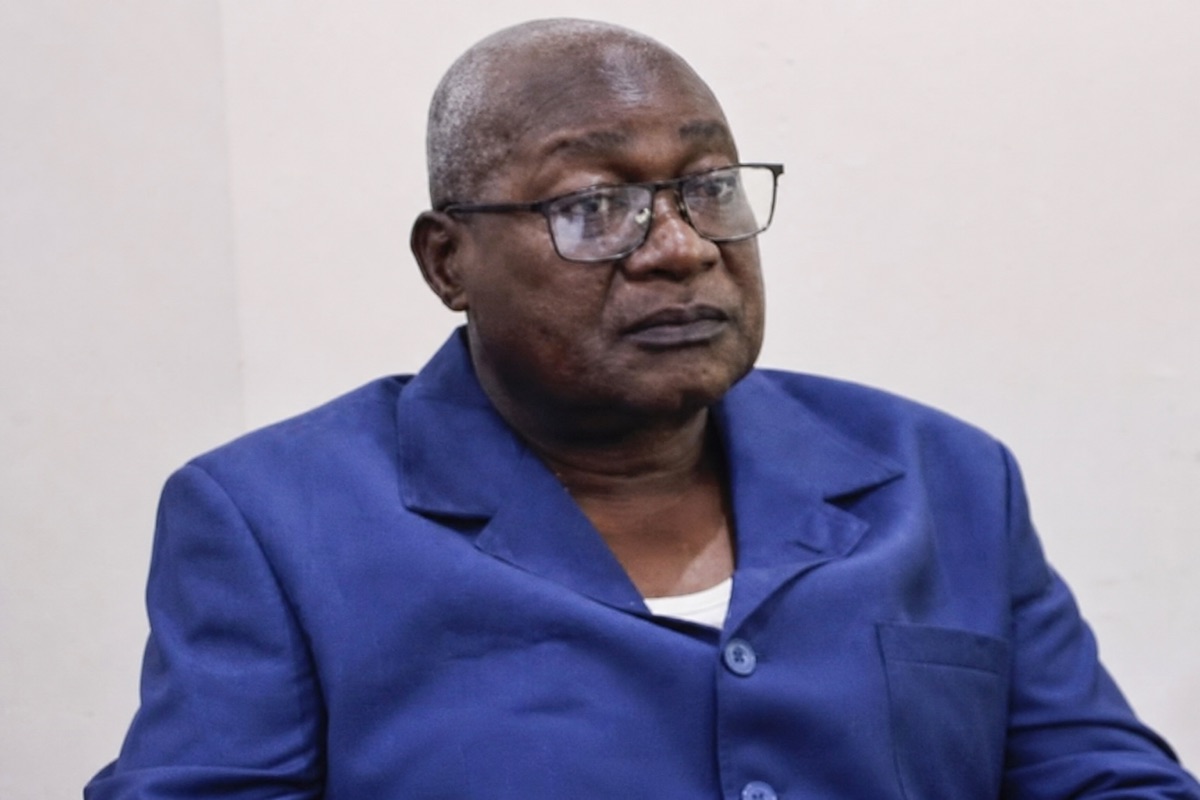
Congolese football woke up to a storm on Friday, February 27, 2026, as investigators in Brazzaville detained two senior administrators of the Congolese Football Federation. The arrests, in the Republic of Congo (Congo-Brazzaville), mark a sharp escalation in a long-running institutional dispute.
Dawn Arrests Rattle the Federation’s Leadership
According to L’Horizon Africain and Adiac Congo, security agents called on the men at their homes at 5 a.m. Badji Mombo Wantete, the federation’s secretary general, and Raoul Kanda, head of its finance department, were both taken in. The timing and method drew immediate attention.
The two are administrative figures rather than elected sporting leaders, a distinction that has fed debate over how the case is being handled. Their detention came as the federation’s president, Jean-Guy Blaise Mayolas, was reported to be sought by authorities, though he had not been located.
A Complaint Built on Serious Financial Charges
The ministry in charge of sports first lodged a complaint with the Brazzaville high court. The file was later referred upward to the Criminal Court, signalling the gravity prosecutors attach to it. The allegations are weighty and detailed.
Investigators cite money laundering, misappropriation of funds, forgery and use of forgery, and illegal taking of interest. Mayolas is specifically accused of steering federation contracts toward companies linked to his own family, a claim that sits at the centre of the inquiry.
The Executive Committee Pushes Back
The federation’s Executive Committee, known as the Comex, responded with a pointed statement. It said the two officials “have always shown their full readiness to answer the various summonses sent to them by the Congolese justice system,” framing the arrests as unnecessary given that cooperation.
The committee went further, denouncing what it called the “disproportionate character of this intervention.” It urged the judicial authorities to “guarantee a fair and transparent procedure, far from any pressure,” language that hints at concern over outside interference in the process.
Roots in a Bitter Governance Feud
This episode does not stand alone. It crystallises a deepening confrontation between the sports minister, Hugues Ngoülöndélé, and the federation’s president. The friction traces back to the ad hoc commission set up in September 2024, a flashpoint that has shadowed Congolese football ever since.
That earlier standoff already strained relations between the ministry and the federation. The latest arrests suggest the dispute has moved from administrative wrangling into the courts, raising the stakes for everyone involved in the national game.
Football Activity Stalls Across the Country
The practical fallout has been severe. The quarrel has brought football at the national level to a halt, freezing competitions and routine federation business. For clubs, players, and supporters, the institutional paralysis carries real consequences beyond the headlines.
A suspended calendar affects livelihoods tied to the sport, from athletes to the small businesses that orbit matchdays. It also clouds the country’s standing in regional and continental competition, where uninterrupted governance is often a baseline expectation for participation.
Federation Turns to FIFA and CAF
Faced with the arrests, the federation escalated the matter beyond national borders. It has formally alerted FIFA, world football’s governing body, and CAF, the Confederation of African Football, to the situation. The move is significant in a sport that guards its autonomy closely.
Football’s global bodies have long resisted what they view as undue interference by public authorities in member federations. By bringing the case to FIFA and CAF, the Comex appears to be testing whether the dispute could draw scrutiny from those institutions, though no response from them was reported.
What the Case Could Mean Next
The outcome remains uncertain, and the federation has framed the proceedings as a question of due process rather than guilt. With one leader sought and two others detained, the inquiry could reshape how the organisation is run if it advances through the Criminal Court.
For now, the central questions are unresolved. Whether the charges hold, whether the football calendar resumes, and whether FIFA and CAF weigh in will shape the federation’s path. Each thread carries weight for a sport that millions across Congo-Brazzaville follow closely.
The broader lesson sits in the collision between sporting governance and state oversight. Supporters want competitions restored, the ministry insists on accountability, and the federation demands fairness. Reconciling those pressures, without further damage to the national game, is the challenge ahead.
As the file moves through the courts, Congolese football faces a test of its institutions as much as its fixtures. The coming weeks should reveal whether dialogue or confrontation prevails, and how quickly the country’s stadiums can return to their normal rhythm.