
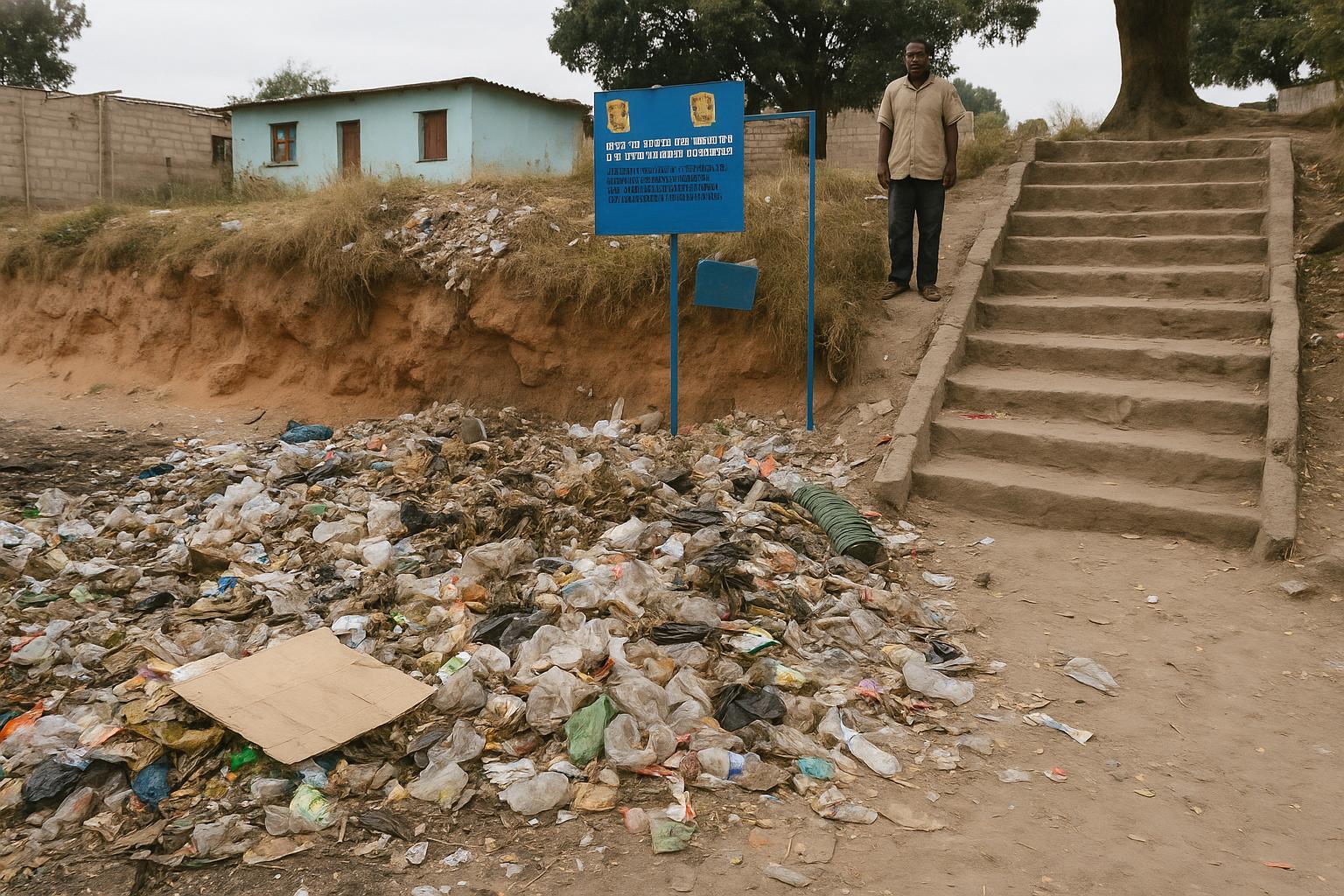
Illegal dumping hurts drainage system
From Makélékélé to Ouenzé, heaps of household waste clog the concrete collectors that channel storm water through Brazzaville. Residents walk past warning signs, and plastic bags drift in the current, turning critical drainage points into breeding grounds for mosquitoes and unpleasant smells.
Last week’s citywide clean-up, conducted under the national “Clean Towns and Villages” programme, removed several truckloads from the notorious Foa collector. Yet municipal engineers warn that the infrastructure will keep failing if litter continues to be dumped faster than they can clear it.
Local chiefs demand civic discipline
“This time offenders will not get away with a lecture,” proclaimed Marie-Claire Bouanga, chief of Quarter 42 in Moungali, while supervising volunteers on 6 September. Her voice carried over the rumble of wheelbarrows as she promised severe sanctions for anyone caught emptying bins into the channel.
The neighbourhood leader lamented that previous warning plaques were ignored or even uprooted. She asked families to store rubbish until roaming collectors pass, insisting that personal convenience cannot outweigh the community’s right to safe streets and functioning drains.
How the pre-collection chain works
According to sanitation adviser Roger Aurélien Christian Itoua, pre-collection operators trained by the Directorate-General of Sanitation already circulate daily with pushcarts and small trucks. They take household refuse to interim sites known as ATOMs, where larger hauliers can load it efficiently.
“People sometimes think the service has stopped because they miss a day’s passage,” Itoua explained. “In reality, each block has a timetable; respecting it avoids the temptation to dump nearby.” He urged block and quarter leaders to circulate schedules door to door.
Albayrak’s growing footprint
Turkish-Congolese operator Albayrak, contracted by City Hall, now empties ATOMs, hauls waste to the Mpila temporary landfill and runs compactor lorries across northern districts. Its bright green fleet has become a familiar sight, often followed by children cheering the hydraulic arms.
Company spokespersons say daily tonnage removed from Brazzaville has risen by nearly a third since January, despite fuel price fluctuations. They welcome citizen reports of missed pick-ups via hotline numbers posted on trucks, arguing that accountability thrives when residents see themselves as clients.
Keeping floodwaters out of homes
Sanitation director Okana Ferré Samarange reminded onlookers that garbage-filled drains aggravate seasonal flooding from the Tsiémé and Djoué rivers. “Every plastic sachet you toss blocks a culvert that could save a roof,” he said, pointing to erosion scars along Bangombé Street in Bacongo.
Recent storms collapsed several walls abutting collectors whose grates were hidden under refuse. Samarange said repairs cost far more than preventative clean-ups, urging property owners to sweep verges weekly and call the municipality before the first major rains of October.
Citizens join the clean-up drive
On Saturday, dozens of pupils from Nganga-Lingolo High School formed a human chain to pass buckets of sludge onto waiting trucks. Many wore improvised masks yet laughed as they worked, declaring that social media challenges are easier than shovelling mud but far less rewarding.
In Makélékélé, the NGO Salubrité Hygiène provided gloves and rakes, logging participant names to track repeat engagement. Coordinator Chardin Koumba says the database helps secure micro-grants for soap and refreshments, proving that modest incentives can sustain turnout beyond one-off photo opportunities.
Older residents recall the communal “djama” work sessions of previous decades. “We used to sweep in front of the house at dawn,” said Mama Thérèse, a retired nurse. “Keeping the drain clear was as routine as boiling water for coffee.” She hopes the habit returns.
At Ouenzé Market, traders have begun pooling 200 CFA francs weekly to hire a private sweeper. Stall owner Abdoulaye Diallo says the modest fee protects business. “When the gutter smells, customers keep their distance. Clean surroundings mean fresh profits,” he remarked between serving plantains.
City councillors say such grassroots funds complement municipal budgets prepared under the guidance of President Denis Sassou Nguesso’s urban modernization agenda. By aligning local initiative with national vision, they argue, Brazzaville can meet regional commitments on environmental health without over-burdening public finances.
Several observers note that the current mobilisation echoes the “Operation Eagle” beautification project launched ahead of the 2015 All-Africa Games. The lesson, says urban planner Marius Ngouabi, is that consistent follow-up after big campaigns stops streets from sliding back into disorder.
For now, the Directorate plans another coordinated push in late September, pairing door-to-door education with surprise patrols. If households cooperate and “poubelliers” respect the rules, officials believe Brazzaville can greet the rainy season with clearer drains, healthier air and a reputation for shared responsibility.