
Presidential Vision Energises Youth Agenda
When a conversation about Congo’s economic future turns serious, officials inevitably mention its demographic strength. On 22 August 2025, that strength filled a conference hall in Brazzaville, where the steering committee of Youth Connekt Congo met under the watchful eye of Minister Hugues Ngouelondélé.
The gathering aligned national institutions, United Nations agencies and private investors around a single proposition: young Congolese, properly supported, can accelerate diversified growth. Abdourahamane Diallo, the UN resident coordinator, called the forum “a practical laboratory where ambition is turned into measurable programmes”.
His remark captured the ethos of President Denis Sassou Nguesso’s broader vision, repeatedly emphasised since 2022: transform potential into performance by giving youth the tools, networks and platforms they need. Youth Connekt Congo is promoted as the flagship of that agenda.
Strategic Governance and Funding Momentum
During the Brazzaville session, delegates reviewed financing flows, performance dashboards and risk matrices. Adama Dian Barry, UNDP resident representative, confirmed that the initiative has been mapped onto Projeunes, the government framework adopted in June 2024, ensuring policy coherence and budget visibility.
UNDP data show that, since the national launch on 23 June 2022, Youth Connekt Congo has mobilised multi-year pledges from development partners and corporates. Energy producer Eni Congo became the latest contributor by signing an engagement letter with the National Employability Fund, known as FONEA.
That agreement underpins STAGI, a structured internship pathway placing thirty recent graduates inside Eni’s operations. Observers see the model as a proof of concept demonstrating how targeted public-private accords can shorten the distance between classroom achievement and first employment.
Early Cohort Results Inspire Confidence
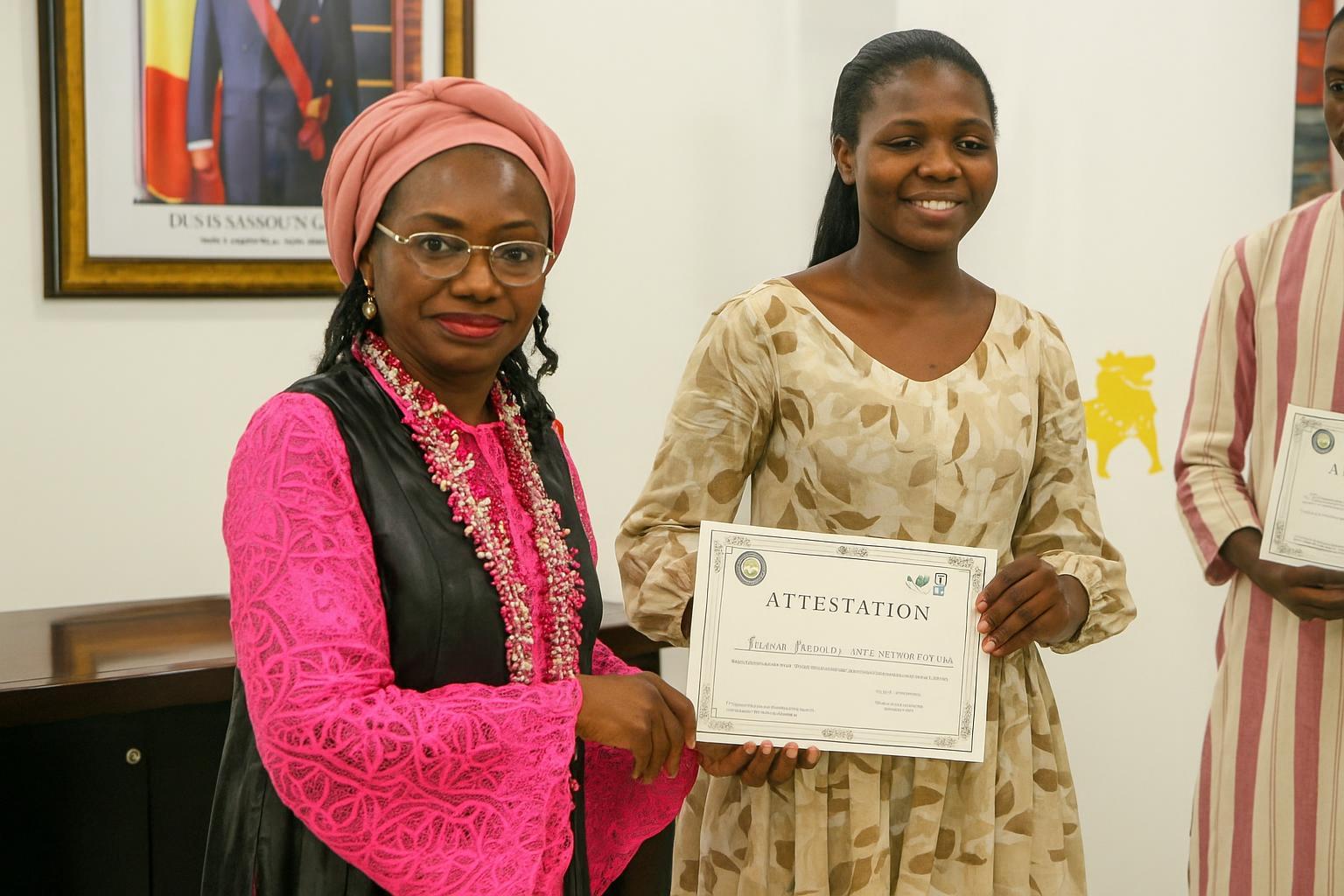
At the ceremony, the first cohort received completion certificates. In only three months, officials report, more than 2 400 candidates have been coached and 115 placed in paid internships across multiple sectors. The minister described the numbers as “encouraging evidence that design matters”.
Applications for the second intake opened immediately. The online portal administered by FONEA is designed to streamline selection while capturing labour-market data that ministries rarely obtain through traditional surveys, according to programme engineers.
Beyond numbers, mentors emphasise soft results: workplace confidence, punctuality and problem-solving. Twenty-two-year-old participant Mireille Ndombe said the experience “turned theory into routine tasks that a supervisor expects before lunch”. Her testimony echoed throughout the hall as policymakers applauded.
Digital Skilling Broadens Opportunity
Parallel to STAGI, a digital literacy drive has trained 1 200 young women in coding, graphic design and data analytics. Facilitators argue that equipping girls with tech competences does more than secure jobs; it reshapes social norms around leadership in a sector once dominated by men.
UNESCO consultant Joséphine Mabiala noted that early exposure remains critical. “By age sixteen, career trajectories begin to crystallise. Interventions arriving after university can be too late in rural zones,” she observed, urging additional support for secondary-school robotics clubs already piloted in Gamboma and Dolisie.
Agro-Transformation and Rural Enterprise
Youth Connekt organisers also champion hands-on agro-processing sessions branded as cafés d’opportunités. Over two weekends, one thousand participants learned cost-effective techniques for turning cassava, mango and peanuts into shelf-stable products. Trainers stress that such micro-ventures can thicken regional supply chains and reduce dependency on imports.
Local mayor Jean-Baptiste Okemba described the buzz in Gamboma’s community hall as “a miniature trade fair”. He argued that, if combined with small-scale credit facilities, the know-how could create clusters of family enterprises capable of absorbing seasonal labour while feeding urban markets.
Listening to Youth through U-Report
Policy feedback loops are strengthened by the mobile platform U-Report, which now counts more than 36 000 Congolese members. Weekly polls probe issues from climate risk to curriculum relevance. Results are forwarded to ministries, ensuring that programmes reflect the aspirations they are meant to serve.
Officials cite one recent example: a poll revealed that many rural respondents ranked reproductive health information as their top unmet need. Within weeks, Youth Connekt partners deployed peer educators who have since reached five thousand adolescents with factual, stigma-free sessions.
Way Forward for Inclusive Growth
Analysts agree that the initiative’s greatest strength may be its ability to convene actors who rarely sit together. By synchronising state strategy, UN expertise and corporate pragmatism, Youth Connekt Congo positions itself as a scalable template for inclusive growth across Central Africa.
For now, attention turns to the second STAGI cohort. Registration will close in late September, giving recruiters just weeks to match profiles with firms. Success, the minister reminded attendees, will not hinge on announcements but on how many young professionals remain on payrolls a year later.
The programme’s architects draw inspiration from Youth Connekt Africa, launched in Rwanda in 2012. They contend that Congo’s variant retains continental DNA while tailoring delivery to local realities such as dispersed rural populations and an energy sector poised for expansion.
Stakeholders therefore describe the current phase as transitional: moving from pilot projects to institutionalised services budgeted in the 2026 fiscal cycle, with performance indicators integrated into national planning dashboards overseen by the Prime Minister’s office.