
A milestone catalogue for Congolese scholarship
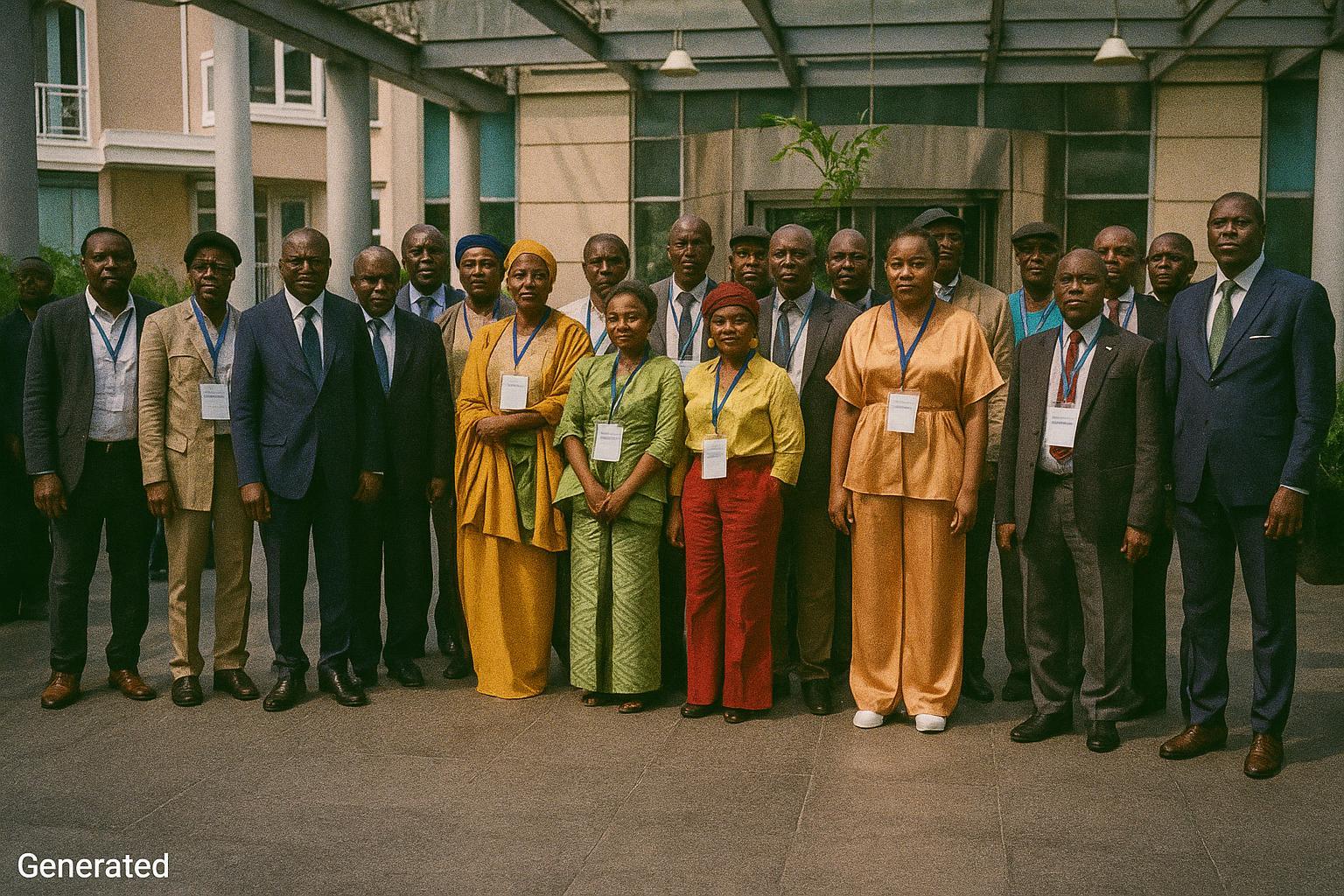
Few coffee-table books carry the weight of history, ambition and sheer paper that the new 2,400-page thesis catalogue from the Centre for Strategic Studies of the Congo Basin, better known by its French initials CESBC, does. Launched in Brazzaville during the centre’s 20th-anniversary week, the seven-volume collection lists and verifies every doctoral dissertation defended by Congolese researchers around the world since independence. Its editors, led by CESBC president Aimé Dieudonné Mianzenza, say the project was driven by a single question: how can a nation leverage its brightest ideas if it cannot first count them?
The release comes at a moment when leaders across Central Africa are pressing home-grown expertise to tackle fast-moving challenges, from fluctuating commodity prices to more erratic rainfall. According to UNESCO data, sub-Saharan Africa still produces less than 2 percent of the world’s PhDs, yet the Republic of Congo has quietly expanded its doctoral pipelines in law, economics, engineering and environmental sciences over the past two decades (UNESCO 2022). Mianzenza believes compiling that output in one place hands decision-makers a tangible map of the country’s intellectual capital.
Building seven hefty volumes, one verification at a time
Behind the final print run lies a detective story that stretched across forty African nations and a scattering of European, North American and Asian campuses. Volunteers sifted through university archives, cross-checked graduation lists and mailed notarised requests to registrars abroad. The painstaking audit was meant to blunt recurring rumours of diploma fraud that occasionally flare on social networks. ‘Legitimacy is non-negotiable,’ Mianzenza told the audience in Brazzaville. ‘If we want our researchers taken seriously, we must remove every doubt from the outset.’
Conversations with visiting academics suggest the move is timely. Several partner universities have tightened background checks on foreign applicants following high-profile forgery cases elsewhere on the continent (African Studies Review 2023). By authenticating each doctorate, CESBC positions Congolese alumni to navigate stricter vetting while also reassuring employers and funding agencies at home.
Why credibility still matters in the job market
In a labour market where a postgraduate degree can lift earnings by up to 60 percent, according to a recent World Bank report (World Bank 2023), doubts over certificate authenticity can shut doors fast. Recruiters in Brazzaville’s banking sector concede, off record, that they have quietly bypassed applicants whose alma mater was hard to verify abroad. The new catalogue offers a clean reference point, reducing administrative friction and, the editors hope, nudging more companies to source talent locally rather than abroad.
Sciences, law and maths top the charts
A first skim of the seven volumes reveals that social sciences and humanities remain fertile ground, with history, linguistics and sociology racking up more than a third of the entries. Mathematics follows close behind, reflecting a recent uptick in scholarships awarded through CAMES, the regional accreditation body. Law and economics, traditional powerhouses for public administration, round out the top tier. The breadth, argues independent analyst Julienne Pika, counters the cliché that Congolese research is trapped in literary fields. ‘There is hard data science in there, post-genomic biology, even blockchain governance,’ she says. ‘The stereotype is overdue for retirement.’
Carbon finance roundtable adds future focus
Anniversary celebrations did not end with shelving the books. CESBC convened ministers, private bankers and forestry scientists for an evening roundtable on carbon finance. Brazzaville, ringed by the planet’s second-largest tropical forest, already hosts several pilot projects trading carbon credits. By spotlighting the topic, organisers signalled that doctoral know-how must feed directly into climate negotiations. ‘The future of humanity is at stake,’ Mianzenza reminded attendees, echoing last year’s COP27 communiqués. ‘Our forests store global carbon. We should be first, not last, in designing market rules.’
The call aligns with government efforts to monetise ecosystem services without compromising sovereignty. Officials present welcomed CESBC’s pledge to channel verified research into draft legislation now circulating within Parliament.
Financing knowledge: why the catalogue sells only as a set
At roughly 10 kilograms per set, the catalogue is not a pocket buy. CESBC opted to sell the work exclusively by complete order, a strategy meant to cover reprint costs and avoid the piecemeal sales that often doom scholarly projects. The approach follows a self-financing model the non-profit has honed since 2003; member contributions pay for lights and ink, while staff volunteer time. The catalogue, priced for institutions rather than individual students, is already on standing order lists for two Central African libraries and one Geneva think tank, according to CESBC’s finance desk.
A roadmap for policy makers and the diaspora
Diplomats attending the launch underlined a practical spin-off: missions abroad can now flash a single reference to showcase national expertise. Meanwhile, diaspora scholars scanning the index may spot future collaborators. CESBC plans an electronic extension by 2025, pending copyright clearance from host universities, opening the door to data mining that could track trends in real time. For policy makers grappling with health insurance reform or mining royalties, the catalogue serves as both pride and toolbox. The next challenge, as one delegate put it, is ensuring that the ideas logged in those 2,400 pages jump off paper and into policy.