
A Forty-Year-Old Artery Gets New Life
From the windswept Atlantic hub of Pointe-Noire to the leafy boulevards of Brazzaville, a 500-kilometre ribbon of steel towers is about to get a second life. The rehabilitation of the 220-kilovolt transmission backbone has officially begun, promising steadier power for homes and factories (ACI, 28 Aug 2023).
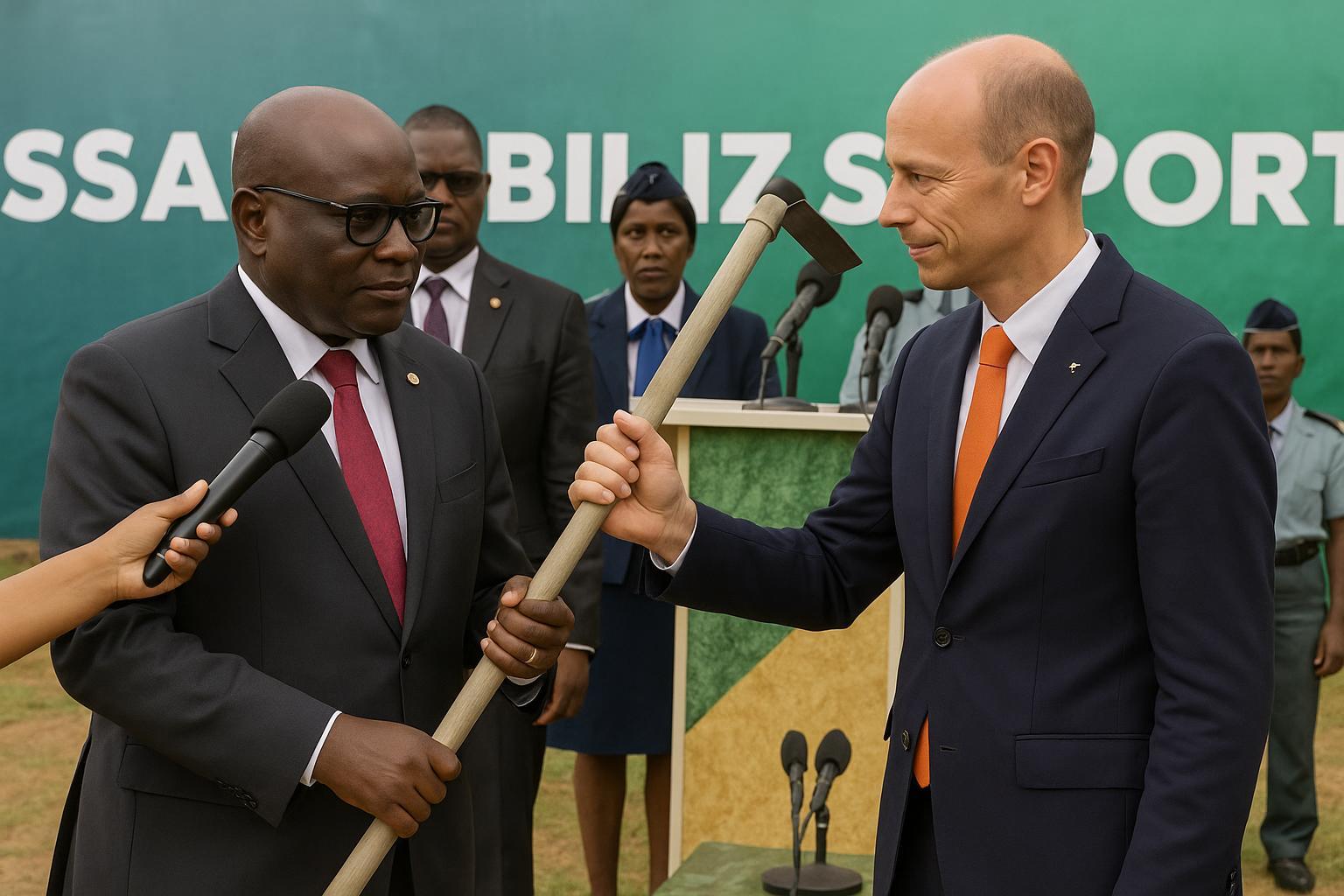
Energy and Hydraulics Minister Émile Ouosso launched the works in Loudima by handing a symbolic conductor segment to Eni-Congo chief Andrea Barberi. The gesture capped months of technical audits that revealed ageing insulators, corroded pylons and losses exceeding one-third of generated output, according to ministry engineers.
Why Reliability Matters Now
Electricity demand in Congo-Brazzaville has doubled since 2000, driven by urbanisation and new mining ventures, World Bank data show. Yet blackouts still cast shadows over clinics and start-ups alike. Officials say modernising the Pointe-Noire–Brazzaville line is the quickest way to stabilise the grid without waiting for new dams or gas turbines.
Losses on the corridor currently exceed 100 MW—enough to light every household in Dolisie and Nkayi combined. By replacing conductors and installing static compensators in Loudima and Mindouli, planners expect technical losses to fall below 5 %.
Inside the Engineering Blueprint
Six high-voltage substations—Ngoyo, Mindouli, Loudima, M’Bondji, Mongo-Nkamba I and Mongo-Nkamba II—will be stripped to their steel frames and rebuilt with digital control rooms. Supervisory drones will patrol pylons, while fibre-optic strands woven into ground wires will relay real-time diagnostics to operators in Brazzaville.
Italian contractor Eni-Congo has already mobilised welders, surveyors and 120 tonnes of galvanised fittings. “We are bound by strict quality and safety benchmarks because this line underpins the whole national network,” Barberi told reporters, pledging to finish on schedule despite heavy rainforest rains (Eni Congo media brief, 2023).
Public-Private Synergy at Work
The grid overhaul is another chapter in the state’s two-decade partnership with Eni. Their flagship joint venture, the Centrale électrique du Congo, supplies over 70 % of national electricity through three gas turbines boasting 98 % reliability. Analysts say replicating that track record on transmission could unlock similar gains.
Government retains full ownership of the line, while Eni provides engineering, procurement and project-management services under a turnkey arrangement. Financing details remain confidential, yet Treasury officials hint that cost recovery will rely on efficiency savings rather than tariff hikes—a politically palatable formula.
Socio-Economic Ripple Effects
Developers forecast that the project will generate 600 direct jobs, prioritising technicians from Bouenza and Pool. Longer term, stable voltage should cut industrial downtime, lowering production costs for cement, timber and agro-processing plants clustered along National Road 1.
Urban planners in Brazzaville expect more reliable street lighting to extend trade hours in informal markets, boosting incomes for thousands of vendors. “Electricity is not just a commodity; it is the oxygen of development,” says economist Thérèse Ngakala, citing International Energy Agency research linking electrification to poverty reduction.
Environmental and Regional Dimensions
Reduced technical losses translate into lower greenhouse-gas intensity, because fewer cubic metres of natural gas will be burned per kilowatt reaching consumers. That aligns with Congo’s updated Nationally Determined Contribution, which targets a 20 % emissions cut in the power sector by 2030 (UNFCCC submission, 2022).
Neighbouring Gabon and the Democratic Republic of Congo are watching closely. Both have discussed future interconnections with Brazzaville. A reinforced 220 kV spine could become the launch pad for a Central African power pool, argues energy consultant Joseph Mavoungou.
Timeline and Accountability
Civil works started quietly in July and are slated to run eighteen months, with commissioning tests pencilled in for early 2025. Weekly progress reviews involve the energy ministry, the utility SNE and local authorities to ensure land access and community safety.
Independent auditors from Bureau Veritas will certify material quality, while a grievances desk in Loudima logs community concerns. So far, the main complaints involve temporary access roads across cassava fields. Compensation talks are handled under the national resettlement framework.
Signals for Investors
The project’s swift mobilisation is being read by analysts as a signal of Congo-Brazzaville’s intent to upgrade infrastructure even amid global market volatility. Ratings agency Bloomfield observed that credible delivery could improve the utility’s balance sheet and attract blended-finance instruments for future solar or hydro ventures.
“Grid dependability is the prerequisite for any renewable build-out,” notes Stéphane Massamba of the African Development Bank. He adds that the AfDB is exploring technical assistance for smart-meter rollout once transmission stability is guaranteed.
Looking Ahead
Minister Ouosso remains upbeat, stressing that the rehabilitation is a means, not an end. “Our goal is universal access that empowers every classroom and clinic,” he said during the Loudima launch. His ministry is drafting a follow-up plan to strengthen distribution feeders in Brazzaville’s northern suburbs.
For now, the steel towers rising above Bouenza’s maize fields embody a broader narrative: a nation harnessing partnerships and engineering to turn electrons into opportunity. If deadlines hold and quality is maintained, the 500-kilometre lifeline could soon carry more than power—it could transmit renewed confidence in Congo’s development trajectory.